Paris

He stayed here 24 times between 1861 and 1893. Among the works he wrote here: The Maid of Orleans, Mazepa, and Symphony No. 4.

Coordinates
48.8605, 2.3423

Paris is the capital and largest city of France, and the centre of its Île-de-France region.

Paris and the places around it in his lifeMap of the area around Paris, with 3 other places from Tchaikovsky's life nearby. Arrows lead to the places he came from and went on to, most often Saint Petersburg, Berlin, London. The inset shows where this area lies in Europe.Saint Petersburg → Paris: 1 timeParis → Saint Petersburg: 6 timesBerlin → Paris: 3 timesParis → Berlin: 3 timesLondon → Paris: 2 timesParis → London: 2 timesMoscow → Paris: 2 timesParis → Moscow: 2 timesRouen → Paris: 1 timeParis → Rouen: 2 timesAachen → Paris: 1 timeParis → Aachen: 1 timeLe HavreSensRouenParis
Arrived fromWent on toOther places in his lifeThicker lines: more journeys.A name with an arrow is farther away, beyond the edge of the map.

Paris in his time

1861–1893His favourite city abroad, visited more than twenty-five times between 1861 and 1893: to rest, to compose and, from 1888, to conduct.

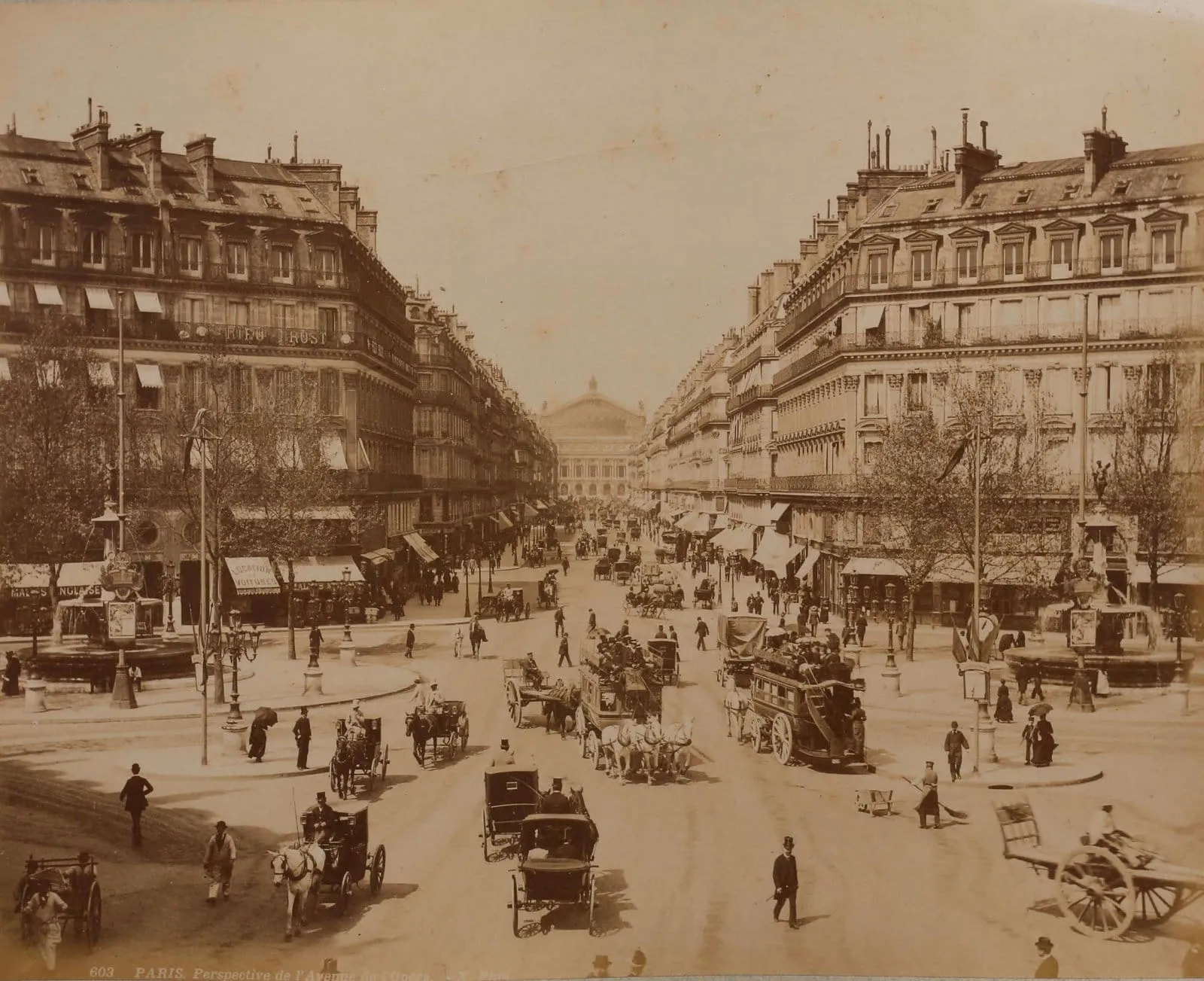
Sepia photograph of a wide avenue lined with tall stone buildings, full of horse cabs and double-decker horse omnibuses, with the domed opera house at the far end
The Avenue de l'Opéra with the Palais Garnier at its end, about 1885–1890 Neurdein, public domain, Wikimedia Commons

Gaslight on the new boulevards

Paris had 1,851,792 inhabitants in 1872, and between 1876 and 1881 it grew by another 14 per cent. The city he walked was Haussmann's. The Palais Garnier opera house opened on 5 January 1875, and the Avenue de l'Opéra leading to it was finished by 1889.

In 1870 the streets were lit by 56,573 gas lamps. Electric street lights came with the Exposition of 1878 and reached the Grands Boulevards in 1881. Horse omnibuses and horse trams carried the crowds; by 1878 forty tram lines were running. In spring 1889 he saw the new Eiffel Tower, built for that year's Exposition, "from quite close up".
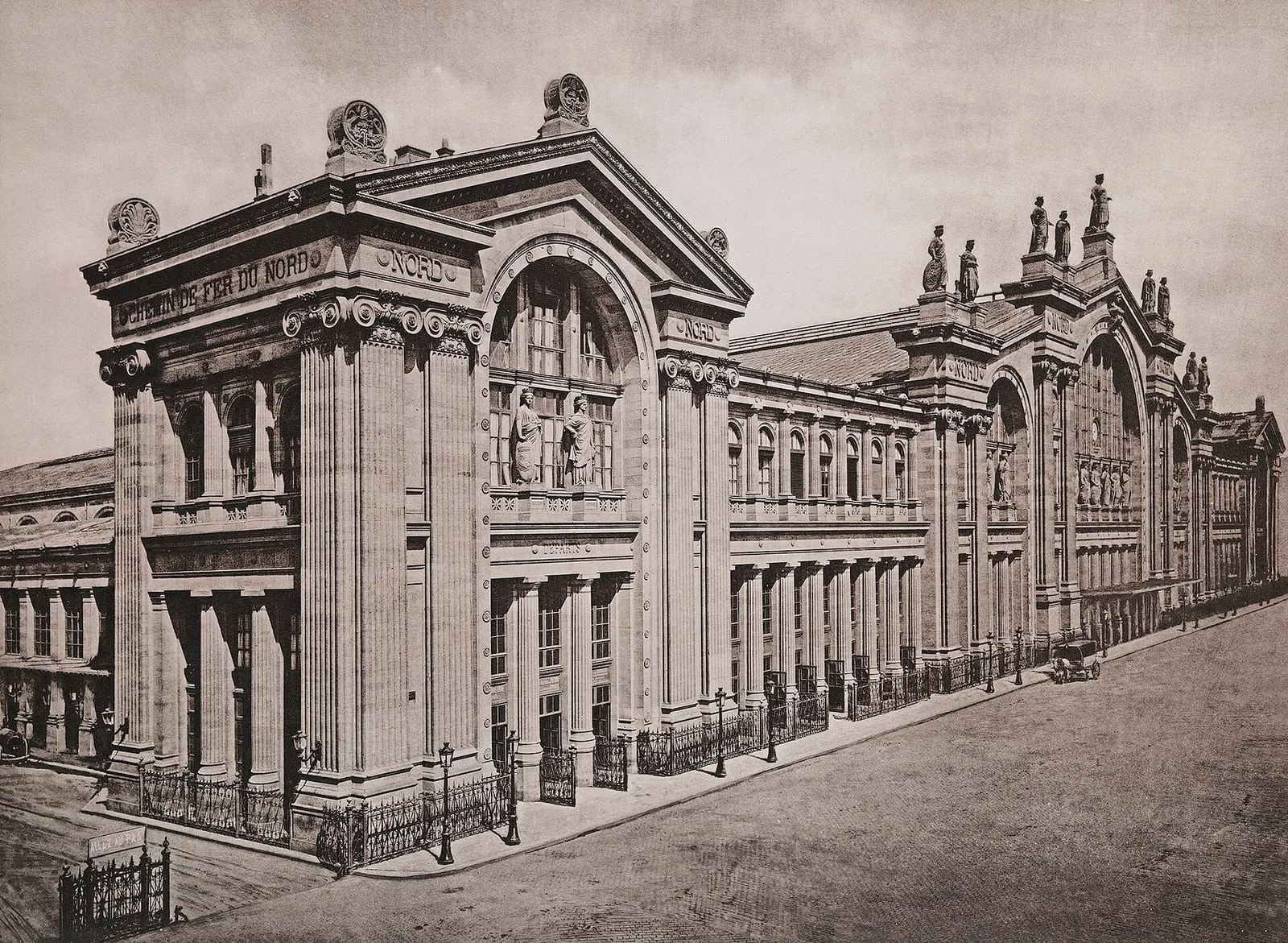
Photograph of the long stone front of the Gare du Nord, with columns, tall arched windows and statues along the roofline, and an almost empty street
The Gare du Nord, 1883 Unknown author, public domain, Wikimedia Commons

Sleeping car from Cologne

From Russia he came by way of Berlin. In January 1883 he told Modest to take the noon train from Berlin's Friedrichstrasse station, change at Cologne into the ten o'clock sleeping car, and wake up in Paris.

The Gare du Nord, rebuilt by Jacques Ignace Hittorff in 1861–65, carries statues of the cities its trains served, Berlin and Cologne among them. In March 1881 he stood there while the coffin of Nikolay Rubinstein was nailed into a wooden box and put in a luggage van for Moscow. In town he walked, or took the omnibus.

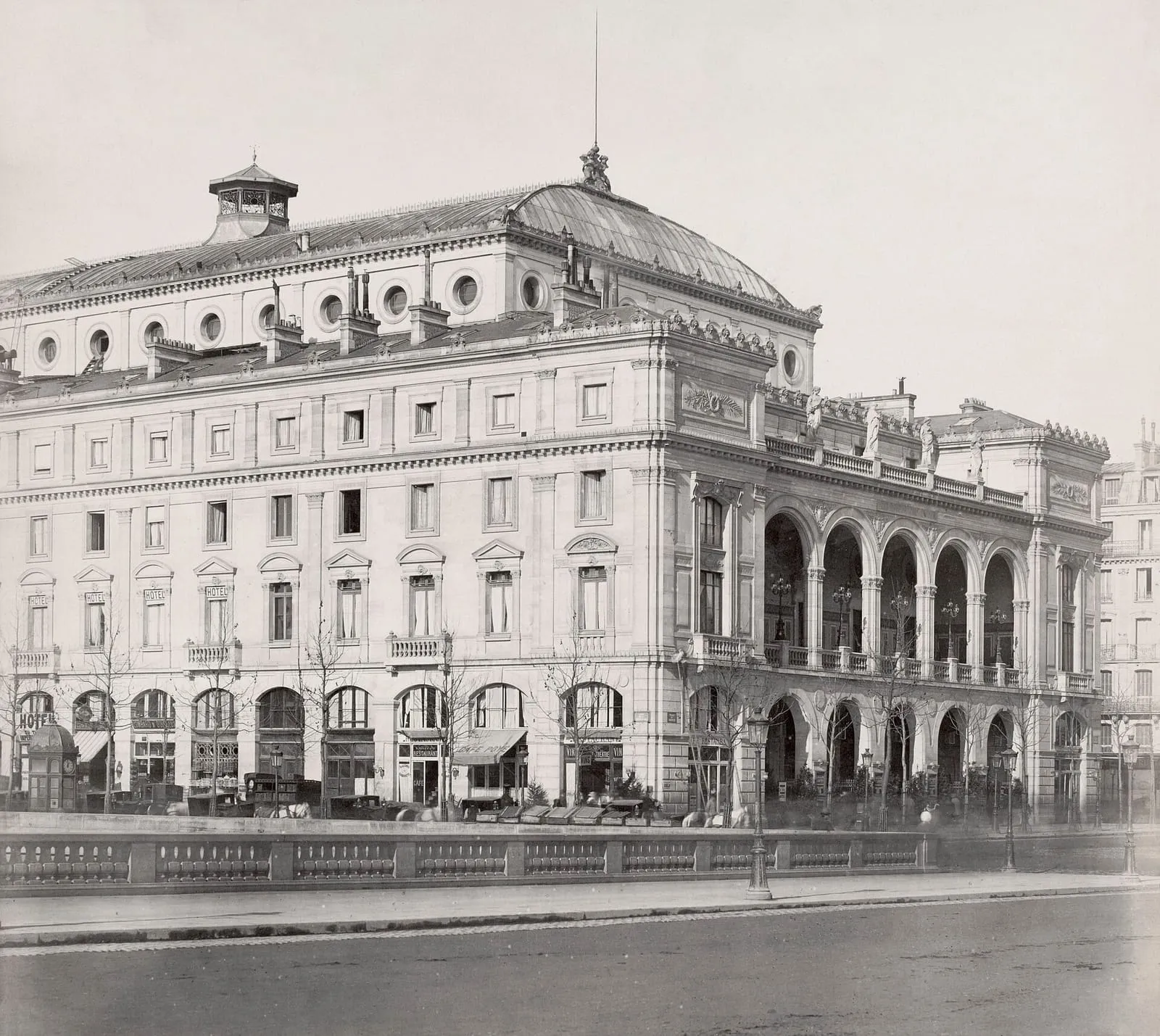
Photograph of a large stone theatre with an arcaded loggia and round attic windows, seen across a quay with a stone balustrade and gas lamps
The Théâtre du Châtelet, where Colonne's orchestra played and he conducted in 1888 and 1891. Photograph from the 1860s Charles Marville, public domain, Wikimedia Commons

From the Rue de la Paix to the Châtelet

In 1876–79 he stayed at the Hôtel de Hollande on the Rue de la Paix. In 1879 he moved to the Hôtel Meurice on the Rue de Rivoli, facing the Tuileries, and there finished the sketches of The Maid of Orleans and the Piano Concerto No. 2. In 1883 he spent four months at the small Hôtel Richepanse, paying 5 francs a day for a cold top-floor room, looking after his niece Tatyana Davydova and orchestrating Mazepa.

The Théâtre du Châtelet, built in 1860–62 for 2,200 people, was home to Édouard Colonne's orchestra. There in 1879 he heard Berlioz's La Damnation de Faust, and then his own The Tempest met with whistles. He came back as a conductor: on 4 and 11 March 1888, and on 5 April 1891, when Vasily Sapelnikov played the Second Concerto.

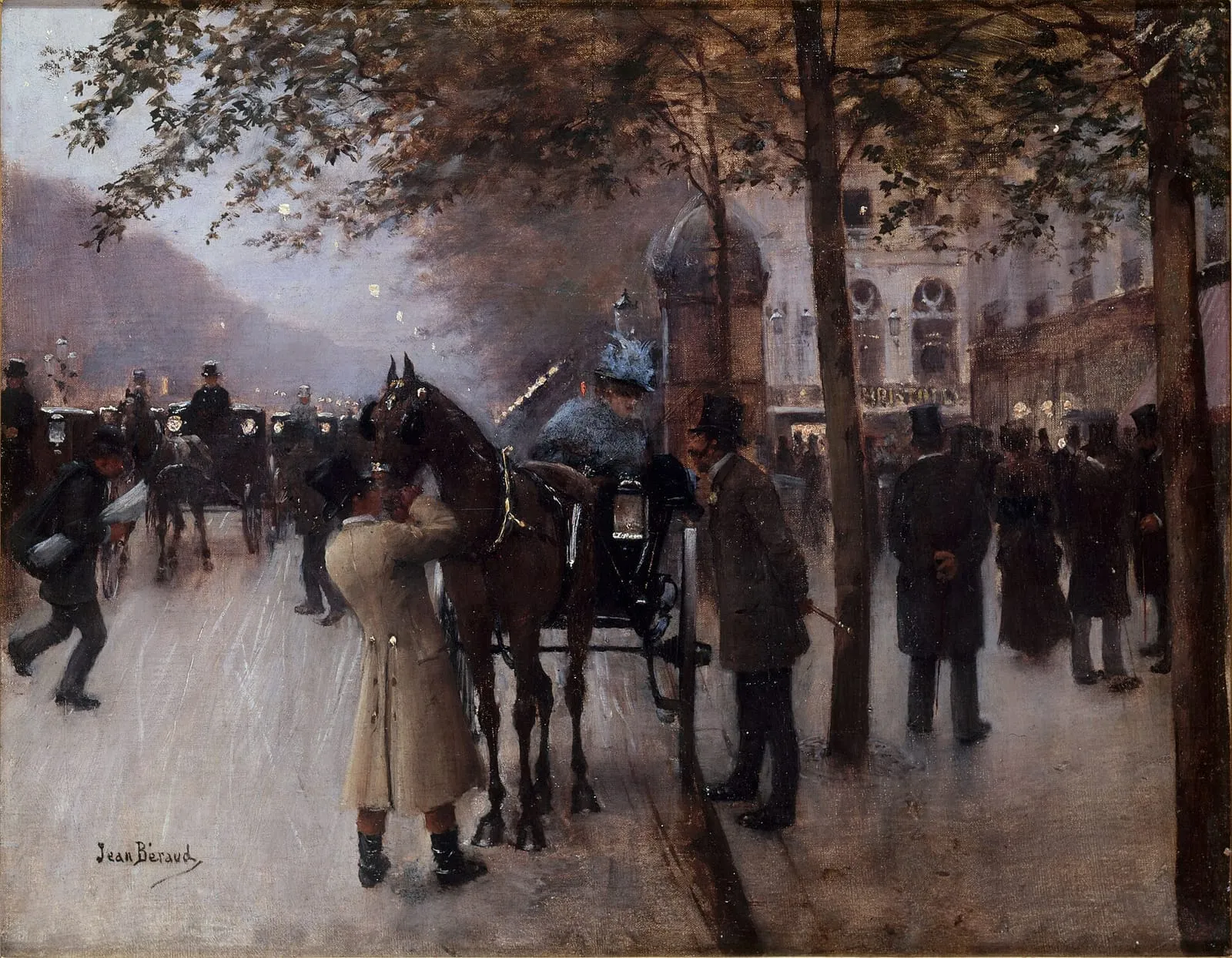
Painting of a tree-lined boulevard at dusk: a lady in a light carriage, a groom holding the horse, men in top hats and lit café fronts behind
Evening on the Boulevard des Capucines, outside the Café Napolitain. Painting by Jean Béraud, about 1880 Jean Béraud, public domain, Wikimedia Commons

In his words

On the whole, life in Paris is extremely agreeable. In this place you can do anything you like, the only impossible thing being to feel bored. You only have to go out into the boulevards for your spirits immediately to rise.

I love Paris very much, but how noisy it is here, what bustle! It is true that on account of the approaching New Year and the thousand little stalls with étrennes set up along the boulevards, the animation in the streets is doubled.

I felt neither any particular pleasure at finding myself on the boulevards, nor the slightest surprise at their splendour; it's just as though I left here only yesterday.

I saw the famous Eiffel Tower from quite close up. A grandiose thing!

Before and after

Each row is one stay, from his first to his last surviving letter written here, between where he wrote from just before and just after.

Came fromParisWent on to
London until 14 June 15 – 27 June 1893 Grankino from 1 July
Brussels until 12 January 16 – 19 January 1893 Odessa from 27 January
Montbéliard until 1 January 3 – 5 January 1893 Brussels from 10 January
Saint Petersburg until 14 June 19 – 23 June 1892 Vichy from 24 June
Hamburg until 20 January 22 – 29 January 1892 Saint Petersburg from 6 February
Rouen until 15 April 17 April 1891 Rouen from 17 April
Berlin until 20 March 24 March – 7 April 1891 Rouen from 11 April
Frolovskoye until 17 March 21 March – 8 April 1889 London from 10 April
16 earlier stays
Came fromParisWent on to
Prague until 22 February 26 February – 19 March 1888 London from 20 March
Aachen until 13 August 16 August 1887 Aachen from 17 August
Marseilles until 25 May 28 May – 24 June 1886 Saint Petersburg from 28 June
Zürich until 30 November 3 – 15 December 1884 Saint Petersburg from 21 December
Berlin until 20 February 22 February – 12 March 1884 Saint Petersburg from 16 March
Moscow until 12 January 15 January – 22 May 1883 Berlin from 24 May
Nice until 23 March 25 March – 1 April 1881 Saint Petersburg from 7 April
Rome until 8 March 11 – 14 March 1880 Berlin from 16 March
Berlin until 24 November 25 November – 17 December 1879 Turin from 19 December
Clarens until 16 February 18 February – 12 March 1879 Berlin from 16 March
Florence until 28 December 30 December 1878 – 7 January 1879 Dijon from 9 January
Clarens until 12 November 13 – 14 November 1877 Florence from 18 November
Lyons until 25 July 8 – 10 August 1876 Bayreuth from 14 August
Kamenka until 30 June 4 August 1873 Moscow from 15 September
Moscow until 28 April 1 August 1868 Moscow from 22 September
London until 10 August 24 August 1861 Saint Petersburg from 4 November

Works written here

Letters written here

18611 letter
18681 letter
18731 letter
18762 letters
18773 letters
18784 letters
187981 letters
18805 letters
188110 letters
1883113 letters
188437 letters
188626 letters
18871 letter
188823 letters
188915 letters
189116 letters
189212 letters
189323 letters

Mentioned in letters

Letters in which Tchaikovsky names this place.

18616 letters
18681 letter
18692 letters
18707 letters
18724 letters
18731 letter
18743 letters
18751 letter
187610 letters
187716 letters
187854 letters
187991 letters
188026 letters
188122 letters
18826 letters
1883103 letters
188446 letters
18856 letters
188646 letters
188725 letters
188866 letters
188942 letters
189014 letters
189141 letters
189235 letters
189344 letters

Events here

Pictures

Sources

Licence: CC BY-NC-SA 4.0. Tchaikovsky Research (en.tchaikovsky-research.net).

Cite this page

Plain text

Paris. Dear Tchaikovsky, https://deartchaikovsky.com/en/places/paris/. Last updated 18 November 2026.

Chicago

“Paris.” Dear Tchaikovsky. Last updated 18 November 2026. https://deartchaikovsky.com/en/places/paris/.

BibTeX

@misc{deartchaikovsky-places-paris,
  title = {Paris},
  howpublished = {Dear Tchaikovsky},
  url = {https://deartchaikovsky.com/en/places/paris/},
  date = {2026-11-18},
}