Composers in his world

He called Mozart “the God of music”, spent New Year’s Day 1888 drinking with Brahms in Leipzig, received his doctorate in Cambridge on the same day as Saint-Saëns, and went to the first night of Rachmaninoff’s first opera. These are the composers in his life, with what he said about them in the letters kept in this archive.

Those he revered

The composers he grew up on, or learnt from.

Wolfgang Amadeus Mozart

1756–1791named in 63 of his lettersTheir page in the archive

Mozart was his idol from early childhood, when he heard excerpts from Don Giovanni played on an orchestrion. He later credited the whole opera, heard in his teens, with his decision to give his life to music. For the opera’s centenary in 1887 he arranged four Mozart pieces as Mozartiana, his Suite No. 4, and conducted its first performance himself.

Dates and places

  1. 12 June 1886 · Paris

    Pauline Viardot showed him Mozart’s autograph score of Don Giovanni. The visit set him thinking about a tribute for the opera’s centenary.

  2. 26 November 1887 · Moscow

    He conducted the first performance of Mozartiana. Of the tributes he planned for the centenary, it was the only one he finished.

  3. February 1888 · Prague

    On his first visit to Prague he went to the Villa Bertramka, where Mozart had stayed.

In his letters

“I not only love Mozart — I idolise him.”

Letter 790 to Nadezhda von Meck, 16/28 March 1878

“Is it not because "Don Giovanni" was the first opera to give impetus to my musical sensibilities, opening me up to a whole previously unknown horizon of the utmost musical beauty?”

Letter 2195 to Nadezhda von Meck, 11/23 January 1883

“I consider Mozart the God of music.”
Letter 3529a to Konstantin Koninsky, 15/27 March 1888
Sources

Mikhail Glinka

1804–1857named in 37 of his lettersTheir page in the archive

Glinka died when Tchaikovsky was sixteen, and they never met. His affection for Glinka was second only to his love of Mozart: at ten he saw A Life for the Tsar with his mother, and he preferred it to Ruslan and Lyudmila. He called himself a child of Glinka, and in one of his last interviews named him the corner-stone of Russian music.

Dates and places

  1. 3 September 1850 · Saint Petersburg

    Aged ten, he heard A Life for the Tsar with his mother.

  2. 13 September 1866 · Moscow

    At the opening of the Moscow Conservatory, where he had just been hired, he insisted that the first music heard there should be Glinka’s, and played the overture to Ruslan and Lyudmila from memory.

  3. June 1885 · Smolensk

    He went to Smolensk for the unveiling of the monument to Glinka.

    Letters: 2693

In his letters

“While Glinka wrote truly Russian operas and created an utterly new, if not a school, then at least a nursery of music, to whose sphere I belong, as a child of Glinka.”

Letter 1837 to Pyotr Jurgenson, 19/31 August 1881

“However proud we may be of Glinka, it must be acknowledged that he did not fulfil the task that lay before him, given his astonishing talent.”

Letter 862 to Nadezhda von Meck, 24 June / 6 July 1878

“I am well aware that were it not for Wagner, I should have written differently; I confess that even the Handful are reflected in my operatic writings; probably both Italian music, which in my childhood I loved passionately, and Glinka, which I adored in my youth, have had a powerful effect on me as well, not to mention Mozart.”

Letter 4302 to Sergey Taneyev, 14/26 January 1891
Sources

Robert Schumann

1810–1856named in 31 of his lettersTheir page in the archive

Schumann was a favourite from his student years: in 1862 he and Herman Laroche played Schumann’s duets, and Anton Rubinstein set him the orchestration of the Symphonic Études. He translated Schumann’s rules for young musicians, published in 1868, and modelled his Children’s Album of 1878 on Kinderszenen. He loved Schumann’s Manfred so much that in 1882 he declined to write one of his own, though he found fault with the orchestration of Schumann’s symphonies.

In his letters

“Schumann's magnificent 3rd Symphony, which I love so much.”

Letter 664 to Nadezhda von Meck, 27 November / 9 December 1877

“I love his Manfred extremely and am so used to merging in a single indivisible notion Byron's Manfred with Schumann's Manfred, that I cannot conceive how I might approach this subject in such a way as to elicit from it any music other than that which Schumann furnished it with.”

Letter 2158 to Mily Balakirev, 12/24 November 1882
Sources

Ludwig van Beethoven

1770–1827named in 38 of his lettersTheir page in the archive

Beethoven’s symphonies were what first made him want to write one, he recalled in 1889. Yet Beethoven inspired awe in him rather than love: in a diary entry of 1886 he set him against Mozart, liking the middle period and disliking the last, the late quartets above all. In his letters Beethoven is the measure he holds other composers against.

In his letters

“Yet look at what divine musical edifices Beethoven and Glinka constructed from these!”

Letter 862 to Nadezhda von Meck, 24 June / 6 July 1878

“Since I began to write, I set myself the task of conducting my business in the manner in which the greatest musical masters — Mozart, Beethoven, Schubert — conducted theirs”

Letter 4114 to Grand Duke Konstantin Konstantinovich, 18/30 May 1890
Sources

Georges Bizet

1838–1875named in 7 of his lettersTheir page in the archive

They never met: Bizet died in June 1875, three months after Carmen opened. Tchaikovsky studied the vocal score that summer, heard the opera in Paris the following January, and bought a photograph of Bizet. In 1880 he played Carmen through again and wrote that within ten years it would be counted a masterpiece.

Dates and places

  1. 20 January 1876 · Paris

    With his brother Modest he heard Carmen at the Opéra-Comique, with Célestine Galli-Marié in the title role. He bought a photograph of Bizet and wrote the date on it.

In his letters

“In recent years I have not known anything that has seriously enchanted me, except for Bizet's "Carmen" and Léo Delibes ballet.”

Letter 660 to Nikolay Kashkin, 26 November / 8 December 1877

“Because I'm prepared to swear that in ten years' time "Carmen" will be considered the absolute chef d'oeuvre.”

Letter 1541 to Modest Tchaikovsky, 18/30 July 1880
Sources

Léo Delibes

1836–1891named in 12 of his lettersTheir page in the archive

After Bizet he thought Delibes the most gifted French composer. He knew Sylvia from the piano score in 1876, and when he saw it staged in Vienna the next year he ranked his own Swan Lake far below it. Nikolay Kashkin recalled that he later came to prefer Coppélia. They missed each other in Paris in 1886 and met at last in 1888.

Dates and places

  1. December 1877 · Vienna

    He heard Sylvia in Vienna, given after Cherubini’s opera The Water Carrier.

    Letters: 659, 660, 662

  2. 20 June 1886 · Paris

    Delibes called on him first and left his card; they did not meet on this visit.

    Letters: 2971

  3. March 1888 · Paris

    They met during his first European conducting tour.

    Letters: 3507

In his letters

“Without any false modesty whatsoever, I can assure you that "The Lake of Swans" is not fit even to hold a candle to "Sylvia".”

Letter 659 to Nadezhda von Meck, 23 November / 5 December 1877

“in Vienna I also heard the ballet "Sylvia" by Léo Delibes — yes, I say heard because this is the first ballet in which the music constitutes not just the principal, but also the sole interest.”

Letter 681 to Sergey Taneyev, 7/19 December 1877

“Delibes is the most agreeable.”

Letter 3507 to Modest Tchaikovsky, 25 February / 8 March 1888
Sources
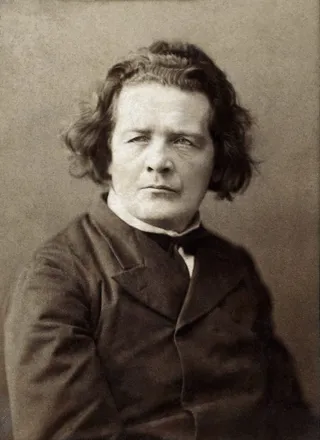
Portrait of Anton Rubinstein
J Ganz, Brussels · Public domain

Anton Rubinstein

1829–18942 letters from him to themnamed in 131 of his lettersTheir page in the archive

Tchaikovsky was in the first intake of the Saint Petersburg Conservatory, which Rubinstein founded in 1862, and studied instrumentation and then composition with him until 1865. Rubinstein judged his student works harshly, yet recommended him for the harmony post at the new Moscow Conservatory. Tchaikovsky dedicated three works to his teacher, and Rubinstein dedicated a Scherzo to him in 1876. In private Tchaikovsky resented both Rubinstein’s coolness and his fame.

Dates and places

  1. 10 January 1866 · Saint Petersburg

    His graduation cantata, An die Freude to Schiller’s ode, was performed at the Mikhailovsky Palace, with Rubinstein conducting.

    Letters: 1000

In his letters

“In 1865, I completed my studies under the supervision of Mr Zaremba and A. Rubinstein (the latter taught me instrumentation)”

Letter 2854 to Félix Mackar, 14/26 January 1886

“Remove Rubinstein's virtuosity, and his greatness immediately plummets to the level of my insignificance.”

Letter 1562 to Pyotr Jurgenson, 12/24 August 1880
Sources

Those he knew

Contemporaries he met, wrote to, argued with or conducted beside.

Johannes Brahms

1833–1897named in 16 of his lettersTheir page in the archive

For years Tchaikovsky dismissed Brahms in his letters as dry and overpraised. They met on New Year’s Day 1888 at the violinist Adolph Brodsky’s in Leipzig, and the man disarmed him: modest, kind and fond of a drink. The music still left him cold. They met once more, in Hamburg in March 1889, and never became friends.

Dates and places

  1. 1 January 1888 · Leipzig

    Tchaikovsky came to dinner at Brodsky’s and found Brahms at the piano, rehearsing his new Piano Trio in C minor, Op. 101, with Brodsky and the cellist Julius Klengel. Edvard and Nina Grieg arrived as the trio ended, and they all sat down to dinner. That evening Brahms conducted his Double Concerto at the Gewandhaus.

    Letters: 3439, 3440, 3442

  2. 12 March 1889 · Hamburg

    Brahms, staying in the same hotel, put off his departure by a day to sit through Tchaikovsky’s first rehearsal of the Fifth Symphony. Tchaikovsky reported that he approved of it, though not of all of it: the finale did not please him. Over lunch Tchaikovsky invited him to conduct in Russia, and Brahms declined. He left before the concert on 15 March, and they never met again.

    Letters: 3812, 3813, 3818

In his letters

“I went on a binge with Brahms; he loves terribly to drink; he's a very kind fellow and not as haughty as I'd imagined.”

Letter 3442 to Pyotr Jurgenson, 24 December 1887 / 5 January 1888

“we are awkward with one another because we don't like each other, however, he tries awfully hard to be polite.”

Letter 3440 to Modest Tchaikovsky, 21 December 1887 / 2 January 1888

“Did I write that Brahms deliberately stayed an extra day for the symphony, sat through the whole rehearsal, very much approved of the symphony (although not all of it), that we went on a binge, etc.?”

Letter 3818 to Modest Tchaikovsky, 5/17 March 1889

“It is impossible not to respect Brahms; one cannot fail to bow before the chaste purity of his aspirations; one cannot but marvel at his steadfastness and proud refusal to make the least concession to triumphant Wagnerism, but it is difficult to like him.”

Letter 3685 to Grand Duke Konstantin Konstantinovich, 2/14 October 1888

In their words

“Where is Tchaikovsky and how is he?”

Brahms’s first words to the publisher Daniel Rahter in Hamburg, September 1889, as Rahter reported them to Tchaikovsky. Quoted in Tchaikovsky Research: Johannes Brahms
Sources

Edvard Grieg

1843–19073 letters from him to themnamed in 16 of his lettersTheir page in the archive

Grieg’s music had moved him long before they met, and the two took to each other at once at Brodsky’s in Leipzig on New Year’s Day 1888. Over the following weeks the Brodskys brought them together as often as they could, Nina Grieg sang her husband’s songs, and Grieg came to all of Tchaikovsky’s Leipzig rehearsals. Tchaikovsky first meant to dedicate his Fifth Symphony to Grieg, then dedicated the Hamlet overture to him instead. They wrote to each other in German but never met again: Grieg was too ill to come to Cambridge in 1893.

Dates and places

  1. 1 January 1888 · Leipzig

    The Griegs walked into Brodsky’s just as Brahms finished rehearsing his trio, and stayed for dinner.

    Letters: 3439, 3440

  2. 6 January 1888 · Leipzig

    The Griegs sat beside him at a chamber concert of his own music given by the Liszt Society.

  3. 8 February 1888 · Berlin

    Grieg travelled to Berlin to hear Tchaikovsky conduct there.

In his letters

“Grieg is an exceptionally agreeable little man of my age.”

Letter 3439 to Anatoly Tchaikovsky, 21 December 1887 / 2 January 1888

“But the one who utterly fascinated me was Grieg.”

Letter 3442 to Pyotr Jurgenson, 24 December 1887 / 5 January 1888

“I consider Grieg to be immensely talented.”

Letter 3478 to Modest Tchaikovsky, 20 January / 1 February 1888

In their words

“You cannot imagine what joy my meeting with you has given me. No, not joy, but much more! You have left such a strong impression on me both as an artist and as a human being.”

Grieg to Tchaikovsky, Leipzig, 12 April 1888. Quoted in Tchaikovsky Research: Edvard Grieg

“We must meet again! Be it in Russia, in Norway, or wherever! After all, kindred spirits do not grow on trees!”

Grieg to Tchaikovsky from Funen, 26 May 1888. Quoted in Tchaikovsky Research: Edvard Grieg
Sources
Portrait of Antonín Dvořák
Unknown author · Public domain

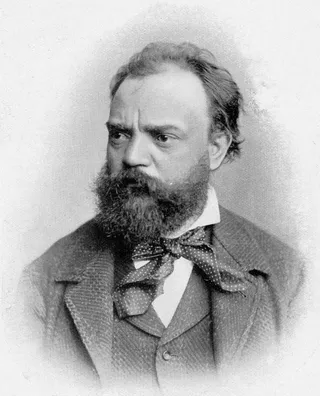
Antonín Dvořák

1841–19043 letters from him to themnamed in 16 of his lettersTheir page in the archive

They met in Prague in February 1888, when Tchaikovsky came to conduct two concerts, and saw a great deal of each other; Dvořák gave him an inscribed score of his Second Symphony. Tchaikovsky came back that December to conduct Yevgeny Onegin, its first staging outside Russia, and Dvořák wrote to him afterwards about it. At Tchaikovsky’s urging the Russian Musical Society invited Dvořák to Moscow; he toured Russia in March and April 1890, while Tchaikovsky was in Italy.

Dates and places

  1. 12 February 1888 · Prague

    During ten days in Prague Dvořák called on him and sat with him for two hours, and later had him to dinner. Tchaikovsky conducted his own music on 19 and 21 February.

    Letters: 3490, 3496

  2. 6 December 1888 · Prague

    Dvořák was in the audience when Tchaikovsky conducted Yevgeny Onegin.

In his letters

“Yesterday morning I had a visit from Dvořák, who sat with me for 2 hours”

Letter 3490 to Modest Tchaikovsky, 2/14 February 1888

“I'm friends with Dvořák and all the local composers.”

Letter 3496 to Modest Tchaikovsky, 10/22 February 1888

“I embrace you, dear Dvořák!!!”

Letter 3772 to Antonín Dvořák, 18/30 January 1889

In their words

“I do not hesitate to say that not one of your compositions has pleased me so much as Onegin has.”

Dvořák to Tchaikovsky, in Czech, after the Prague Onegin of December 1888. Quoted in Tchaikovsky Research: Antonín Dvořák
Sources
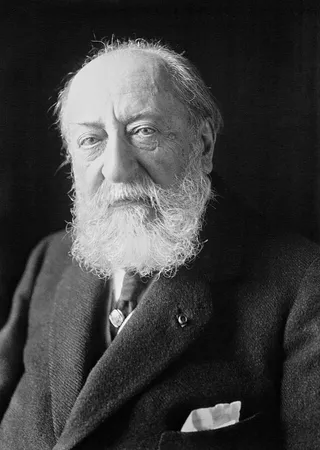
Portrait of Camille Saint-Saëns
Agence de presse Meurisse · Public domain

Camille Saint-Saëns

1835–19214 letters from him to themnamed in 30 of his lettersTheir page in the archive

They took to each other when Saint-Saëns came to Moscow on a concert tour in November 1875; Tchaikovsky liked his briskness and wit, and Saint-Saëns advised him to give a concert of his own works in Paris. In private Tchaikovsky also measured himself against the more famous Frenchman. They met again only in 1893, in London and at Cambridge, where both received honorary doctorates on 13 June.

Dates and places

  1. November 1875 · Moscow

    Modest Tchaikovsky tells how the two, then 35 and 40, improvised a little ballet, Galatea and Pygmalion, at the Conservatory: Saint-Saëns played the statue, Tchaikovsky the sculptor, and Nikolay Rubinstein at the piano was the orchestra. Nobody else saw it.

    Letters: 425

  2. 1 June 1893 · London

    At a Philharmonic Society concert Tchaikovsky conducted his Fourth Symphony, and Saint-Saëns played in the second half. The next day the Society gave the two of them a dinner at the Westminster Club.

    Letters: 4940

  3. 12 June 1893 · Cambridge

    At the Guildhall concert Tchaikovsky conducted Francesca da Rimini and Saint-Saëns played the piano part of his Africa. The next day both received honorary doctorates, with Arrigo Boito and Max Bruch.

    Letters: 4945, 4949

In his letters

“I got along very well with Saint-Saëns, a famous and bright Frenchman, who can render me a great service by spreading my fame in Paris.”

Letter 425 to Anatoly Tchaikovsky, 11/23 December 1875

“It would be unbearable for me to have to stand humbly in front of Saint-Saëns, say, and sense his patronising glance directed at me when in my heart of hearts I consider myself to be a whole Alpine mountain higher than him.”

Letter 720 to Karl Albrecht, 8/20 January 1878

“The concert went off brilliantly, i.e. by unanimous opinion I had a real triumph, such that Saint-Saëns, who appeared after me, suffered somewhat as a consequence of my extraordinary success.”

Letter 4940 to Modest Tchaikovsky, 22 May / 3 June 1893

In their words

“[Tchaikovsky], the gentlest and most affable of men here gave free rein to a frenzied storm and showed no more clemency towards the musicians and his listeners than Satan towards the sinners in hell.”

Saint-Saëns on Francesca da Rimini at Cambridge, in Portraits et souvenirs (1900). Quoted in Tchaikovsky Research: Camille Saint-Saëns

“His death is a great loss for the art of music, since he had many years of creative work ahead of him, perhaps even his finest years”

Saint-Saëns to the Russian Embassy in Paris, November 1893. Quoted in Tchaikovsky Research: Camille Saint-Saëns
Sources

Richard Wagner

1813–1883named in 35 of his lettersTheir page in the archive

As a student in 1863 he went to all six of Wagner’s concerts in Saint Petersburg. In August 1876 he covered the first Bayreuth festival, the first complete Ring cycle, for the Moscow paper Russkiye vedomosti; in print he called it an event of the age, while privately he found the Ring tedious. He called on Wagner there and was not received, and saw him only from a distance. Lohengrin and Tannhäuser he loved all his life.

Dates and places

  1. 12 August 1876 · Bayreuth

    He arrived the day before Das Rheingold opened the cycle, sharing lodgings with Nikolay Rubinstein. Wagner was receiving no one; Tchaikovsky glimpsed him from afar at the reception for Emperor Wilhelm I.

    Letters: 490, 491

In his letters

“I went to see Wagner, who now receives nobody, etc.”

Letter 490 to Modest Tchaikovsky, 2/14 August 1876

“In my opinion Wagner is a symphonist at heart.”

Letter 661 to Nadezhda von Meck, 26 November / 8 December 1877

“Wagner's tetralogy, that grandiose monument to artistic self-delusion, is also a result of theorising, albeit a more profound one than ours.”

Letter 1554 to Sergey Taneyev, 1/13 August 1880
Sources

Franz Liszt

1811–1886named in 34 of his lettersTheir page in the archive

Tchaikovsky never warmed to Liszt’s music and doubted that Liszt cared for his. Still, they were linked: in 1874 Tchaikovsky orchestrated Liszt’s song Der König von Thule, and in 1880 Liszt wrote a piano paraphrase of the Polonaise from Yevgeny Onegin. They met at Bayreuth in August 1876, where Liszt received him warmly.

Dates and places

  1. August 1876 · Bayreuth

    They met during the first festival.

    Letters: 490

In his letters

“I went to see Liszt, who received me with exceptional courtesy”

Letter 490 to Modest Tchaikovsky, 2/14 August 1876

“Despite all his genius, despite all his enormous service to the arts, I know very well that Liszt is an insincere fellow and something of a play-actor.”

Letter 567a to Adele Hippius, 23 May / 4 June 1877

“As for Liszt, that old Jesuit responds with exaggeratedly enthusiastic compliments to everything sent for his august review.”

Letter 1341 to Nadezhda von Meck, 18/30 November 1879

In their words

“You played magnificently. This is truly music!”

Liszt to the cellist Wilhelm Fitzenhagen after he played the Variations on a Rococo Theme in Wiesbaden, 1879, as Fitzenhagen wrote to Tchaikovsky. Quoted in Tchaikovsky Research: Franz Liszt
Sources
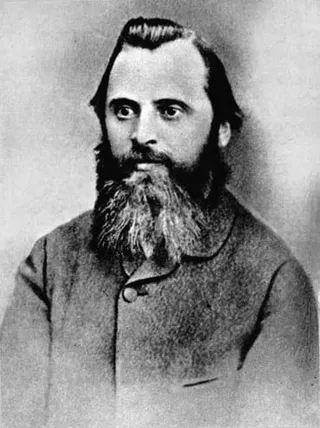
Portrait of Mily Balakirev
Unknown author · Public domain

Mily Balakirev

1837–191047 letters from him to themnamed in 44 of his lettersTheir page in the archive

The leader of the Saint Petersburg nationalists hoped to bring Tchaikovsky into his circle and never did, but he shaped two of his best-known works. In 1869 he proposed Romeo and Juliet, laid out its plan and keys, and pressed him to revise it. In 1882 he sent Tchaikovsky a programme for a Manfred symphony, a version of one Vladimir Stasov had written in 1867, and kept at him until Manfred was written in 1885. Tchaikovsky dedicated Fatum, Romeo and Juliet and Manfred to him.

Dates and places

  1. April 1868 · Saint Petersburg

    On a visit to Saint Petersburg he met Balakirev and his circle.

  2. August 1869 · Moscow

    Balakirev spent late summer in Moscow and saw him daily; it was then that he proposed an overture on Romeo and Juliet.

    Letters: 143, 146, 156, 159

  3. October 1884 · Saint Petersburg

    After a coolness they made it up, and Balakirev raised Manfred again and sent the programme a second time.

    Letters: 2580, 2587

In his letters

“Balakirev is leaving today: no matter how exhausting he is, it's only fair to say that he's a very honest and good man, and as an artist he stands immeasurably higher than the average.”

Letter 146 to Anatoly Tchaikovsky, 19/31 August 1869

“You can then tear it to pieces as much as you like; I shall take note of everything and in my next composition I will try to do things better.”

Letter 156 to Mily Balakirev, 28 October / 9 November 1869

“I'm more frightened of Balakirev than almost everyone in the world.”

Letter 632 to Pyotr Jurgenson, 28 October / 9 November 1877

“Balakirev so pestered me with this Manfred that I caved in and gave my word.”

Letter 2730a to Herman Laroche, 3/15 July 1885

In their words

“The first D-flat major theme is beautiful, although somewhat overripe, but the second D-flat tune is simply delightful”

Balakirev on the Romeo and Juliet themes Tchaikovsky sent him in November 1869. Quoted in Tchaikovsky Research: Romeo and Juliet
Sources
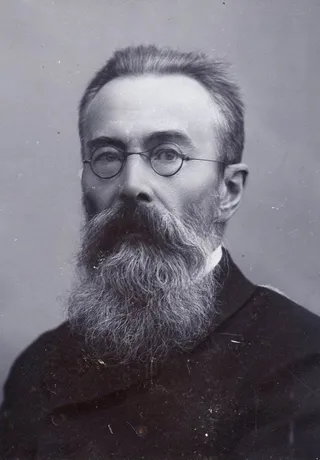
Portrait of Nikolay Rimsky-Korsakov
Karl Fischer · Public domain

Nikolay Rimsky-Korsakov and the Five

1844–190818 letters from him to themnamed in 73 of his lettersTheir page in the archive

Tchaikovsky’s first music review, in 1868, was of Rimsky-Korsakov’s Serbian Fantasy. Of Balakirev’s circle, the Five, he wrote in 1878 that they were gifted but self-satisfied amateurs, with Rimsky-Korsakov the one exception, a self-taught composer who had sat down to learn his craft. From November 1887 he was often in Saint Petersburg among the composers around the publisher Mitrofan Belyayev, and conducted at Belyayev’s Russian Symphony Concerts. After hearing Capriccio espagnol he bought a laurel wreath and presented it to its composer.

Dates and places

  1. November 1887 · Saint Petersburg

    At Belyayev’s Russian Symphony Concerts, which Rimsky-Korsakov conducted, he heard Rimsky-Korsakov’s Third Symphony and became a regular in the circle.

In his letters

“I think that Korsakov is so nice and kind (I don't know the others so well), and furthermore so highly gifted”

Letter 159 to Mily Balakirev, 17/29 November 1869

«Исключение из них в последнее время составляет Римский-Корсаков. Он такой же самоучка, как и остальные, но в нем совершился крутой переворот. Это натура очень серьёзная, очень честная и добросовестная.»

Letter 705 to Nadezhda von Meck, 24 December 1877 / 5 January 1878 (Russian original: this letter has no English translation in the archive.)

“Rimsky-Korsakov, whom I deeply respect”

Letter 3114 to Vladimir Stasov, 2/14 December 1886

In their words

“devoid of all striving after effect, [to] give a healthy, beautiful sonority”

Rimsky-Korsakov in his memoirs, My Musical Life, on Tchaikovsky’s orchestration, which he held up to his students. Quoted in Wikipedia: Pyotr Ilyich Tchaikovsky
Sources
Portrait of Nikolay Rubinstein
Luckardt F (Vienne) · Public domain

Nikolay Rubinstein

1835–188119 letters from him to themnamed in 296 of his lettersTheir page in the archive

Anton’s younger brother hired Tchaikovsky in 1866 to teach theory at the new Moscow Conservatory, and lodged him in his own apartment. From 1866 to 1880 he conducted the first performances of almost all Tchaikovsky’s orchestral works, and Tchaikovsky dedicated more works to him than to anyone else. Their worst moment came over the First Piano Concerto, which Rubinstein attacked when Tchaikovsky played it to him; he later played it himself. He died in Paris in March 1881, and Tchaikovsky wrote his Piano Trio in his memory.

Dates and places

  1. 13 September 1866 · Moscow

    Tchaikovsky began teaching at the new Moscow Conservatory.

  2. 5 January 1875 · Moscow

    On Christmas Eve 1874, Old Style, in a Conservatory classroom, Tchaikovsky played the new concerto to Rubinstein and Nikolay Hubert. Rubinstein heard it out in silence, then attacked it and demanded changes. Tchaikovsky refused to change anything.

    Letters: 736

  3. 25 March 1881 · Paris

    Hearing of Rubinstein’s death in Nice, he went to Paris for the funeral service.

    Letters: 1716

In his letters

“I played the first movement. Not a single word, not a single comment!”

Letter 736 to Nadezhda von Meck, 21 January / 2 February 1878

“With the death of Rubinstein, I've completely lost interest in the symphonic genre.”

Letter 1751 to Anatoly Tchaikovsky, 13/25 May 1881
Sources
Portrait of Jules Massenet
Eugène Pirou · Public domain

Jules Massenet

1842–19123 letters from him to themnamed in 18 of his lettersTheir page in the archive

He rated Massenet highly, if below Bizet and Delibes. In 1878–79 he fell in love with the opera Le Roi de Lahore, wept over the oratorio Marie-Magdeleine in 1880, and found Manon nauseating. His call in Paris in March 1888 found Massenet out; they became acquainted in Paris a year later. Massenet agreed to conduct in Moscow but never came.

Dates and places

  1. 6 March 1888 · Paris

    Massenet was out when he called; Tchaikovsky left his card with a note.

  2. 24 March 1889 · Paris

    They met at the conductor Édouard Colonne’s house. A week later Massenet was at Colonne’s concert at the Châtelet, where Tchaikovsky’s Theme and Variations was played.

    Letters: 3826

In his letters

“I was so moved by the deeply felt music in which Massenet succeeded in expressing in sound the infinite goodness of Jesus, that I shed streams of tears.”

Letter 1541 to Modest Tchaikovsky, 18/30 July 1880

“I've seen Massenet several times: he is most flattered and glad to come”

Letter 3826 to Pyotr Jurgenson, 21 March / 2 April 1889

In their words

“Tchaikovsky came to see me [when I wasn't in] and left me a delightful note”

Massenet to a friend, 11 March 1888. Quoted in Tchaikovsky Research: Jules Massenet
Sources

Charles Gounod

1818–1893named in 14 of his lettersTheir page in the archive

At first he disliked Faust; hearing Désirée Artôt as Marguerite changed his mind, and in 1892 he conducted Faust for Ippolit Pryanishnikov’s opera company without a fee. In 1877 he defended Gounod against Vladimir Stasov, and in 1883 praised him as one of the few composers who wrote from feeling rather than theory. They met in Paris in 1888, and in 1892 Gounod supported his election to the Académie des Beaux-Arts.

Dates and places

  1. 1 March 1888 · Paris

    They met at a chamber matinée at the house of the flautist Paul Taffanel. Days later Gounod made a show of his delight at Tchaikovsky’s concert.

    Letters: 3507

In his letters

“Gounod is a first-class master, if not a first-class creative genius.”

Letter 548 to Vladimir Stasov, 8/20 April 1877

“Gounod is one of the few composers in our times who writes not in compliance with preconceived theories, but as their feeling suggests to them.”

Letter 2253 to Sergey Taneyev, 1/13 April 1883

“Gounod expressed his delight at the concert”

Letter 3507 to Modest Tchaikovsky, 25 February / 8 March 1888
Sources

Gustav Mahler

1860–1911named in 1 of his lettersTheir page in the archive

They met briefly in Leipzig in January 1888. Four years later, in Hamburg, Mahler prepared the German premiere of Yevgeny Onegin; Tchaikovsky took the dress rehearsal but, unable to follow the recitatives in German, left the performance to Mahler, whom he called a genius. Mahler went on to conduct Iolanta in Hamburg and Vienna and The Queen of Spades in Vienna and New York, and made Onegin a fixture of the German-language stage.

Dates and places

  1. 28 January 1888 · Leipzig

    A brief first meeting at a musical soirée.

  2. 19 January 1892 · Hamburg

    The evening before, Mahler’s Tannhäuser impressed him greatly. At the first German performance of Yevgeny Onegin, Mahler conducted and Tchaikovsky sat in the audience. The public was lukewarm.

    Letters: 4593

In his letters

“By the way, the conductor here is not some second-rate fellow, but positively a genius, and he is burning with eagerness to conduct the first performance.”

Letter 4593 to Vladimir Davydov, 7/19 January 1892

In their words

“an elderly gentleman, very likeable, with elegant manners, who seems to be quite rich”

Mahler describing Tchaikovsky in a letter written around the Hamburg Onegin, January 1892. Quoted in Tchaikovsky Research: Gustav Mahler
Sources

Richard Strauss

1864–1949

No meeting between them is recorded. In Berlin on 23 January 1888 Tchaikovsky heard a new symphony by the 23-year-old Strauss at a Philharmonic concert with Hans von Bülow, Strauss’s champion, and wrote home in disgust. By 1892, in an interview, he named the young Richard Strauss among the leading German composers of the day.

Dates and places

  1. 23 January 1888 · Berlin

    At the Philharmonic, with Bülow, he heard Strauss’s new symphony.

    Letters: 3470, 3472

In his letters

“In my opinion there has never been a more outrageous mediocrity, full of pretensions.”

Letter 3472 to Modest Tchaikovsky, 12/24 January 1888
Sources

Those who came after

Pupils and younger composers he helped, and those who later built on his music.

Portrait of Sergey Taneyev
Unknown author · Public domain

Sergey Taneyev

1856–1915114 letters from him to themnamed in 178 of his lettersTheir page in the archive

His composition pupil at the Moscow Conservatory from 1871, Taneyev became a lifelong friend and his most candid critic, and later succeeded him as professor. He gave the Moscow premiere of the First Piano Concerto in 1875, and Tchaikovsky dedicated Francesca da Rimini to him. After Tchaikovsky’s death Taneyev completed works from his sketches, among them the Andante and Finale for piano and orchestra and the duet Romeo and Juliet.

Dates and places

  1. 3 December 1875 · Moscow

    Taneyev played the First Piano Concerto at its Moscow premiere, with Nikolay Rubinstein conducting.

  2. 30 September 1893 · Moscow

    At Taneyev’s flat, Taneyev and Lev Konyus played him his own piano-duet arrangement of the Sixth Symphony; Rachmaninoff played his fantasia The Rock.

  3. 20 October 1893 · Moscow

    He showed Taneyev the Third Piano Concerto, and Taneyev criticised it sharply.

In his letters

“I wonder what people would have said if the first movement, say, of Brahms's symphony had been played only once at a rehearsal.”

Letter 807 to Sergey Taneyev, 4/16 April 1878

“You are my sole comfort, my sole ray of hope, when I think about Moscow and our Conservatory.”

Letter 1839 to Sergey Taneyev, 23 August / 4 September 1881
Sources
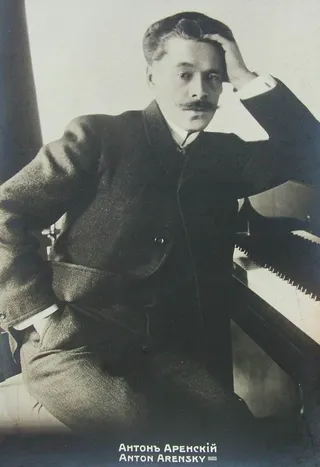
Portrait of Anton Arensky
Unknown author · Public domain

Anton Arensky

1861–19068 letters from him to themnamed in 40 of his lettersTheir page in the archive

A pupil of Rimsky-Korsakov in Saint Petersburg, Arensky graduated in 1882 and taught at the Moscow Conservatory until 1894, where his music came to show Tchaikovsky’s influence. Tchaikovsky recommended his First Symphony to Balakirev and in January 1891 went to Moscow to hear his opera A Dream on the Volga, on the play Tchaikovsky had set in his own first opera, The Voyevoda. In 1894 Arensky wrote his Second String Quartet in Tchaikovsky’s memory; its slow movement, variations on Tchaikovsky’s song Legend, became the Variations on a Theme by Tchaikovsky for string orchestra.

Dates and places

  1. January 1891 · Moscow

    He went to Moscow to hear A Dream on the Volga and wrote to the director of the Imperial Theatres urging a Saint Petersburg production.

    Letters: 4283, 4296, 4302

In his letters

“There is a young composer in Moscow, A. S. Arensky (he is a pupil of Rimsky-Korsakov), who has written a very talented and elegant symphony.”

Letter 2400 to Mily Balakirev, 14/26 December 1883

“And I'll go so far as to say that Arensky is an astonishingly clever musician; he considers everything so nicely and correctly.”

Letter 4302 to Sergey Taneyev, 14/26 January 1891
Sources
Portrait of Aleksandr Glazunov
Unknown author · Public domain

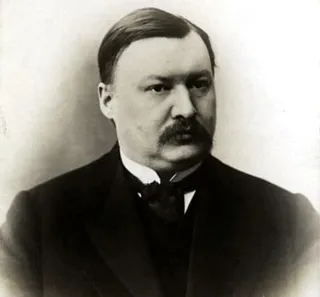
Aleksandr Glazunov

1865–193613 letters from him to themnamed in 19 of his lettersTheir page in the archive

Tchaikovsky heard Glazunov’s First Symphony in 1882, when its composer was sixteen, and met him about two years later. In Saint Petersburg they saw each other often; Tchaikovsky promoted his music, and Glazunov dedicated his Third Symphony to him. In 1896 Glazunov conducted the first performance of Tchaikovsky’s student overture The Storm.

In his letters

“I wouldn't presume to advise you to print Glazunov's symphony — but I highly recommend the symphonic piece in D-flat that he wrote recently.”

Letter 2587 to Pyotr Jurgenson, 7/19 November 1884
Sources

Sergei Rachmaninoff

1873–1943named in 12 of his lettersTheir page in the archive

Rachmaninoff first saw Tchaikovsky as a boy, at his teacher Nikolay Zverev’s in Moscow, and Tchaikovsky, examining at the Conservatory, later recommended him to Taneyev. According to Rachmaninoff’s memoirs, Tchaikovsky recommended his graduation opera Aleko to the Bolshoi; he went to its first night in May 1893, applauded, and proposed pairing it with his own Iolanta. After Tchaikovsky’s death that autumn Rachmaninoff wrote the Trio élégiaque No. 2 in his memory.

Dates and places

  1. 11 March 1893 · Moscow

    Rachmaninoff gave him a copy of his Morceaux de fantaisie, Op. 3, with an inscription.

  2. 9 May 1893 · Moscow

    First night of Aleko at the Bolshoi Theatre, with Tchaikovsky in the audience.

    Letters: 4926

  3. 30 September 1893 · Moscow

    Their last meeting, at Taneyev’s: Rachmaninoff played him The Rock.

In his letters

“I like Rachmaninoff's opera, which I bought for myself, very much.”

Letter 4789 to Aleksandr Ziloti, 23 October / 4 November 1892

“It's a delightful thing that I liked very much.”

Letter 4926 to Ilya Slatin, 3/15 May 1893

In their words

“Of all the people and artists whom I have had occasion to meet, Tchaikovsky was the most enchanting. His delicacy of spirit was unique.”

Rachmaninoff in his memoir essay “Difficult moments of my career”, 1930. Quoted in Tchaikovsky Research: Sergei Rachmaninoff
Sources

Igor Stravinsky

1882–1971

His father, the bass Fyodor Stravinsky, created roles in three of Tchaikovsky’s operas. In October 1921, three weeks before Diaghilev’s London production of The Sleeping Beauty opened as The Sleeping Princess, The Times printed Stravinsky’s open letter to Diaghilev under the title “The Genius of Tchaikovsky”. He dedicated his opera Mavra (1922) to the memory of Pushkin, Glinka and Tchaikovsky. His ballet Le baiser de la fée (1928), an homage for the 35th anniversary of Tchaikovsky’s death, is built on melodies from his piano pieces and songs.

Dates and places

  1. 27 November 1928 · Paris

    First performance of Le baiser de la fée, commissioned by Ida Rubinstein and choreographed by Bronislava Nijinska.

Sources

Jean Sibelius

1865–1957

There is no record that they met, and Tchaikovsky’s letters in this archive do not mention him. Commentators hear echoes of Tchaikovsky in Sibelius’s early works, among them the First Symphony, written in 1898–99 and first performed in Helsinki on 26 April 1899.

Sources
Portrait of Mikhail Ippolitov-Ivanov
Unknown author · Public domain

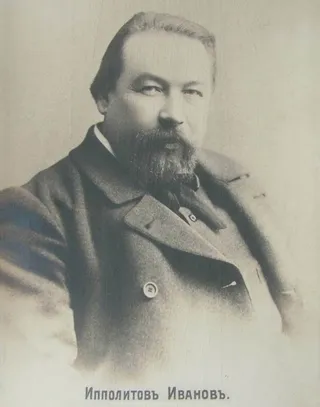
Mikhail Ippolitov-Ivanov

1859–193530 letters from him to themnamed in 30 of his lettersTheir page in the archive

Director of the Russian Musical Society’s music school in Tiflis from 1882, he began writing to Tchaikovsky in December 1885 and met him in Tiflis the following April. Tchaikovsky promoted his music in Moscow and Saint Petersburg and promised help in staging his opera Ruth, which Ippolitov-Ivanov meant to dedicate to him. He moved to Moscow in 1893 as a professor at the Conservatory, and stayed in touch with Tchaikovsky to the end.

Dates and places

  1. 13 April 1886 · Tiflis

    The day after Tchaikovsky reached Tiflis, Ippolitov-Ivanov appears in his diary; many visits followed that month, and Tchaikovsky read the score of Ruth.

    Letters: 2931

  2. 1 May 1886 · Tiflis

    At a concert in Tchaikovsky’s honour, Ippolitov-Ivanov conducted the first known performance of the final version of Romeo and Juliet.

  3. 30 September 1893 · Moscow

    He was at Taneyev’s when Rachmaninoff played The Rock to Tchaikovsky.

In his letters

“I received a long letter from Ippolitov-Ivanov and read it with pleasure, because everything that vividly reminds me of Tiflis is extremely pleasant for me.”

Letter 2999 to Praskovya Tchaikovskaya, 8/20 July 1886

In their words

“The symphonic poem went down very well with everyone, especially with Pyotr Ilyich, who was fascinated by its colouring.”

Ippolitov-Ivanov remembering the evening at Taneyev’s, September 1893, when Rachmaninoff played The Rock. Quoted in Tchaikovsky Research: Sergei Rachmaninoff
Sources

The same years, elsewhere

His major works on the top lane; below them, music first heard across Europe and America between 1865, when he left the Saint Petersburg Conservatory, and 1894, the year after his death. Choose a year to see what was new.

1865’66’67’68’691870’71’72’73’741875’76’77’78’791880’81’82’83’841885’86’87’88’891890’91’92’93’94 Tchaikovsky Russia Germany and Austria France and Belgium Italy Elsewhere

Filled dot: first performance. Ring: the year it was written or published. Lanes follow the composer’s country, not the city of the premiere. Dates are New Style.

1865

His music

None of his major works was first heard this year.

Elsewhere

1866

His music

None of his major works was first heard this year.

Elsewhere

1867

His music

None of his major works was first heard this year.

Elsewhere

1868

His music

Elsewhere

1869

His music

None of his major works was first heard this year.

Elsewhere

1870

His music

Elsewhere

1871

His music

None of his major works was first heard this year.

Elsewhere

  • 24 December 1871 Giuseppe Verdi, Aida, Cairo

1872

His music

None of his major works was first heard this year.

Elsewhere

1873

His music

Elsewhere

1874

His music

Elsewhere

1875

His music

Elsewhere

1876

His music

Elsewhere

1877

His music

Elsewhere

1878

His music

Elsewhere

1879

His music

Elsewhere

1880

His music

Elsewhere

1881

His music

Elsewhere

1882

His music

Elsewhere

  • 10 February 1882 Nikolay Rimsky-Korsakov, The Snow Maiden, Saint Petersburg
  • 26 July 1882 Richard Wagner, Parsifal, Bayreuth

1883

His music

None of his major works was first heard this year.

Elsewhere

  • 14 April 1883 Léo Delibes, Lakmé, Paris
  • 4 November 1883 Emmanuel Chabrier, España, Paris
  • 2 December 1883 Johannes Brahms, Symphony No. 3, Vienna

1884

His music

  • 15 February 1884 Mazepa, Moscow

Elsewhere

  • 19 January 1884 Jules Massenet, Manon, Paris
  • 30 December 1884 Anton Bruckner, Symphony No. 7, Leipzig

1885

His music

None of his major works was first heard this year.

Elsewhere

1886

His music

Elsewhere

1887

His music

Elsewhere

  • 5 February 1887 Giuseppe Verdi, Otello, Milan
  • 12 November 1887 Nikolay Rimsky-Korsakov, Capriccio espagnol, Saint Petersburg

1888

His music

Elsewhere

1889

His music

None of his major works was first heard this year.

Elsewhere

1890

His music

Elsewhere

1891

His music

None of his major works was first heard this year.

Elsewhere

1892

His music

Elsewhere

1893

His music

Elsewhere

1894 · after his death

His music

None of his major works was first heard this year.

Elsewhere