Tchaikovsky for young explorers
Pyotr Tchaikovsky was a Russian composer. He wrote the music for The Nutcracker and Swan Lake. Here is his life in short, with true facts you can use in a school project.
- Born
- 7 May 1840, in Votkinsk, Russia
- Died
- 6 November 1893, in St Petersburg, aged 53
- Job
- Composer and conductor
- Famous for
- The Nutcracker, Swan Lake, the 1812 Overture
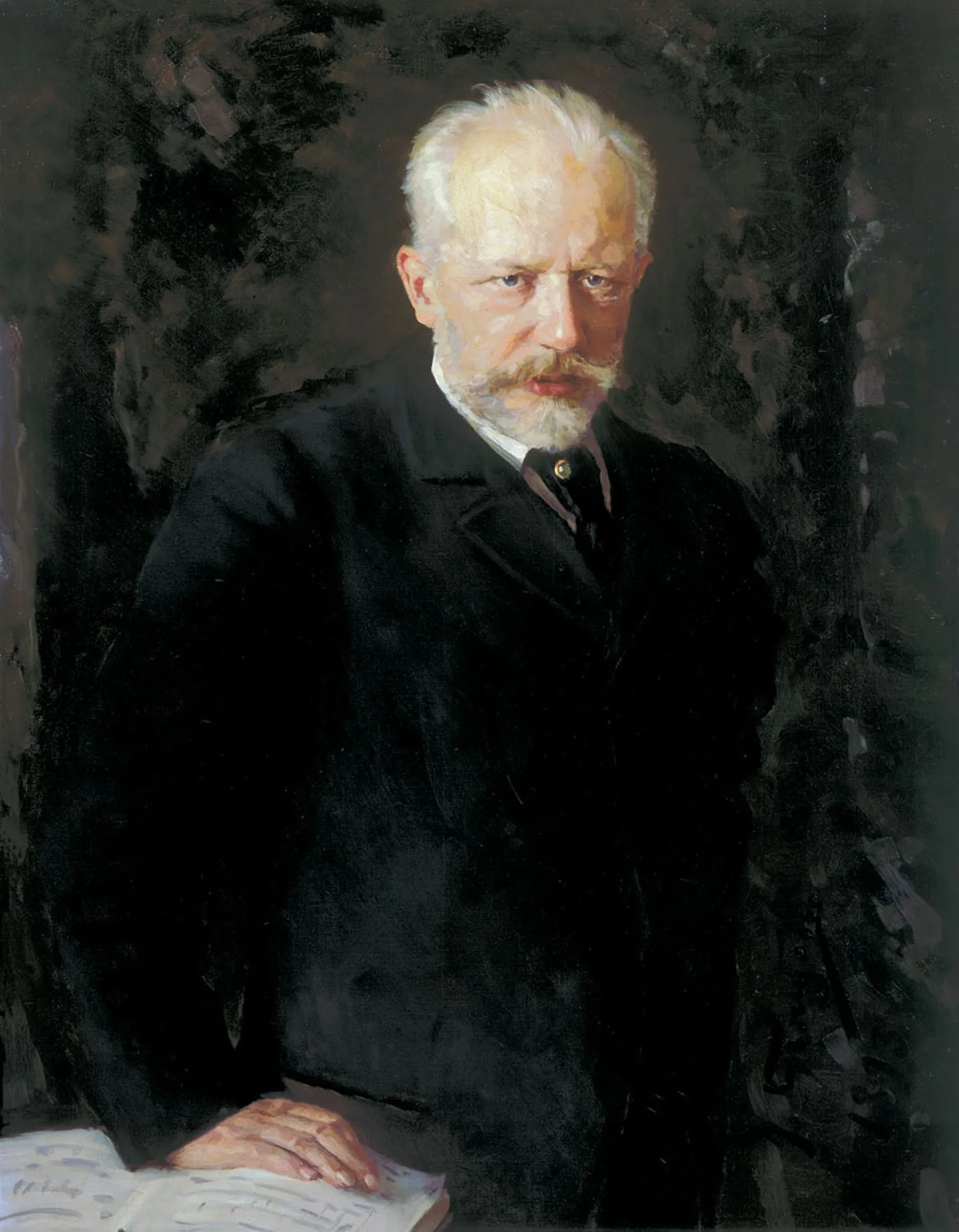
His life in short
-
A boy from Votkinsk
Pyotr was born on 7 May 1840 in Votkinsk, a small factory town nearly 1,000 kilometres east of Moscow. His father ran the ironworks there.
The family had a French governess, Fanny Dürbach, who taught the children. Pyotr started piano lessons when he was five.
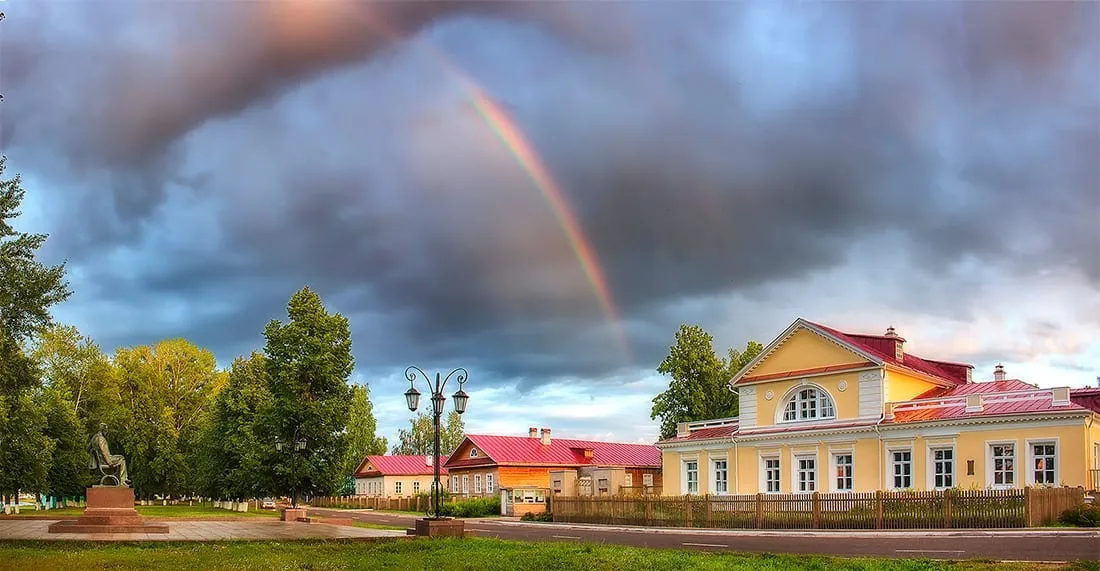
Tchaikovsky Museum, Votkinsk“Усадьба в Воткинске” by Wacher98, CC BY-SA 4.0, via Wikimedia Commons -
A school for lawyers
When he was ten, his parents sent him to a boarding school in St Petersburg that trained boys to become lawyers. When he was fourteen, his mother died of cholera, a dangerous illness.
At nineteen he finished school and went to work in a government office, the Ministry of Justice. In his free time he went to the opera, the theatre and concerts.
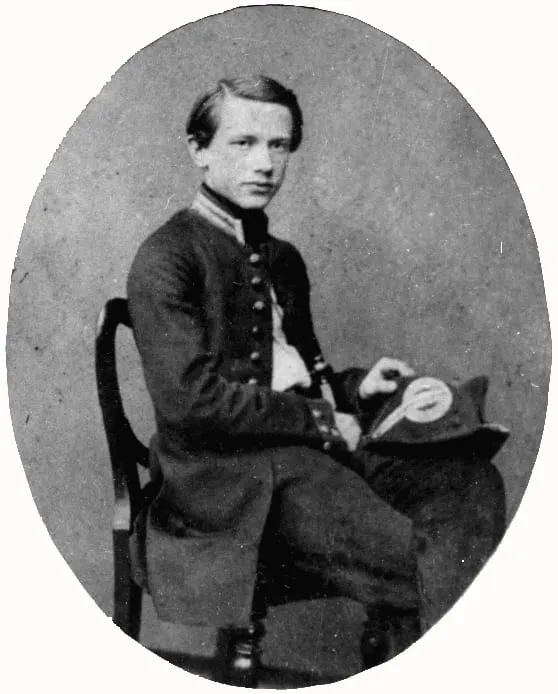
Tchaikovsky in 1859, the year he graduated from the School of Jurisprudence in St PetersburgUnknown author, public domain, via Wikimedia Commons -
Music at last
In 1862 a new music school opened in St Petersburg, the Conservatory, and he became one of its first students. The next year he left his office job to study music full time.
In 1866 he moved to Moscow to teach at its new conservatory. His first symphony was played there in 1868.
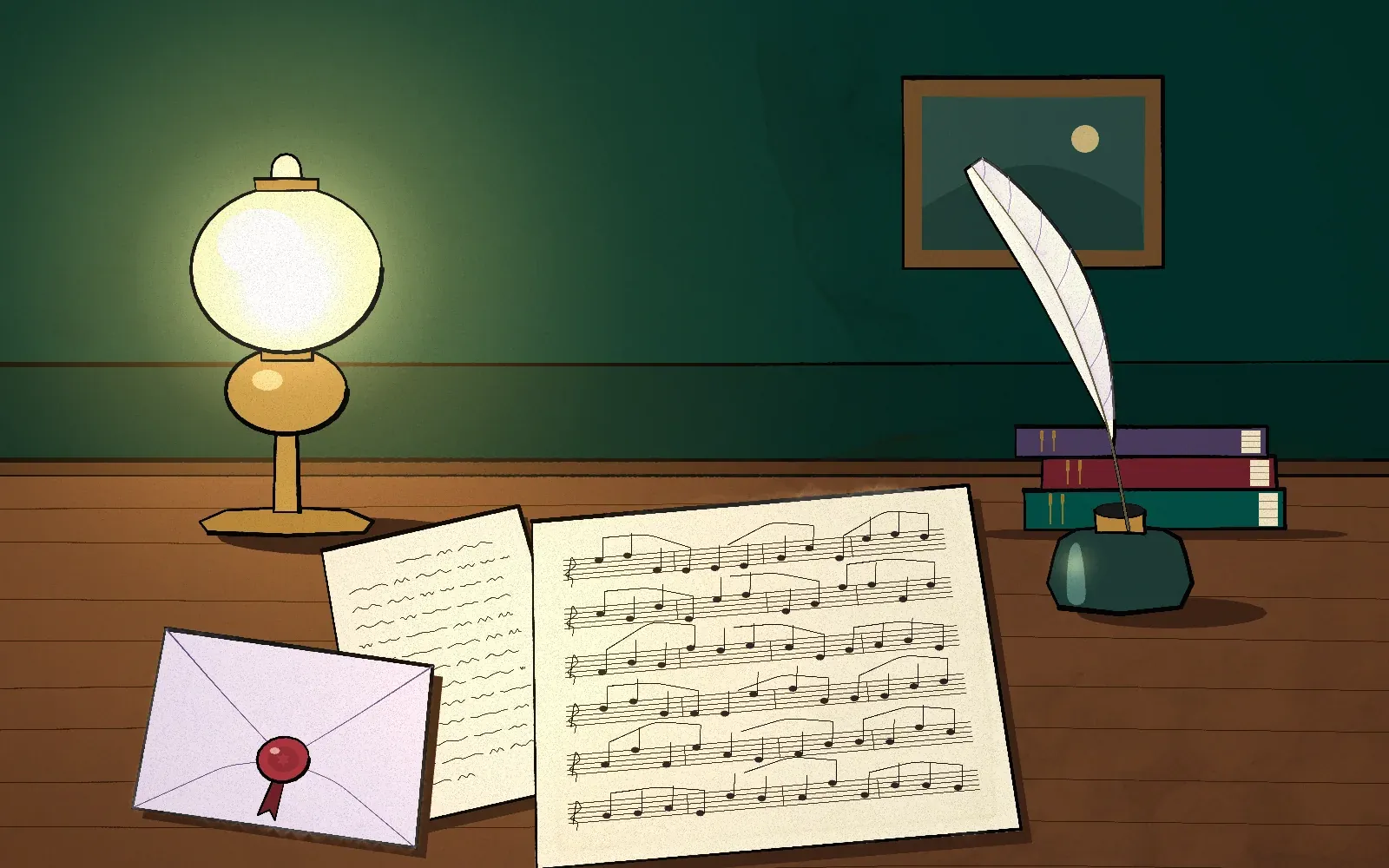
Painted for Dear Tchaikovsky, CC BY-NC-SA 4.0
-
Ballets, symphonies and operas
He wrote three ballets: Swan Lake (first danced in 1877), The Sleeping Beauty (1890) and The Nutcracker (1892). He also wrote operas, six numbered symphonies, concertos, songs, and piano pieces for children.
A rich widow, Nadezhda von Meck, sent him money every year, so he could stop teaching and spend all his time writing music.
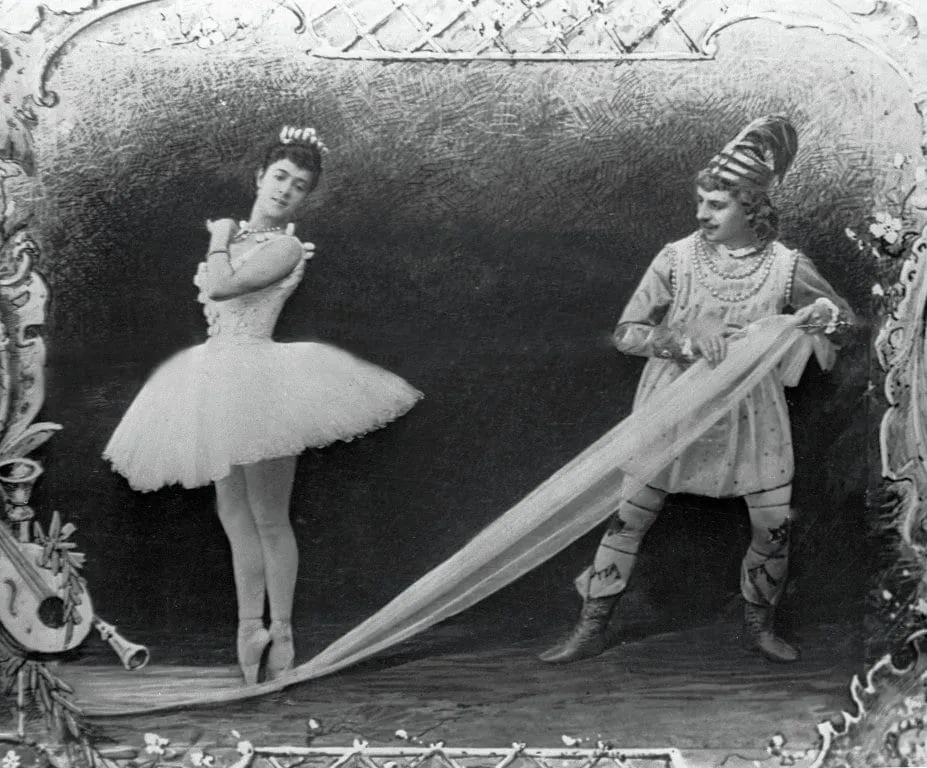
A scene from the first production of The Nutcracker, Mariinsky Theatre, 1892Unknown author, public domain, via Wikimedia Commons -
Letters and long journeys
He wrote thousands of letters, to his brothers, his friends and his publisher. This site has 5,387 of them, in Russian and English.
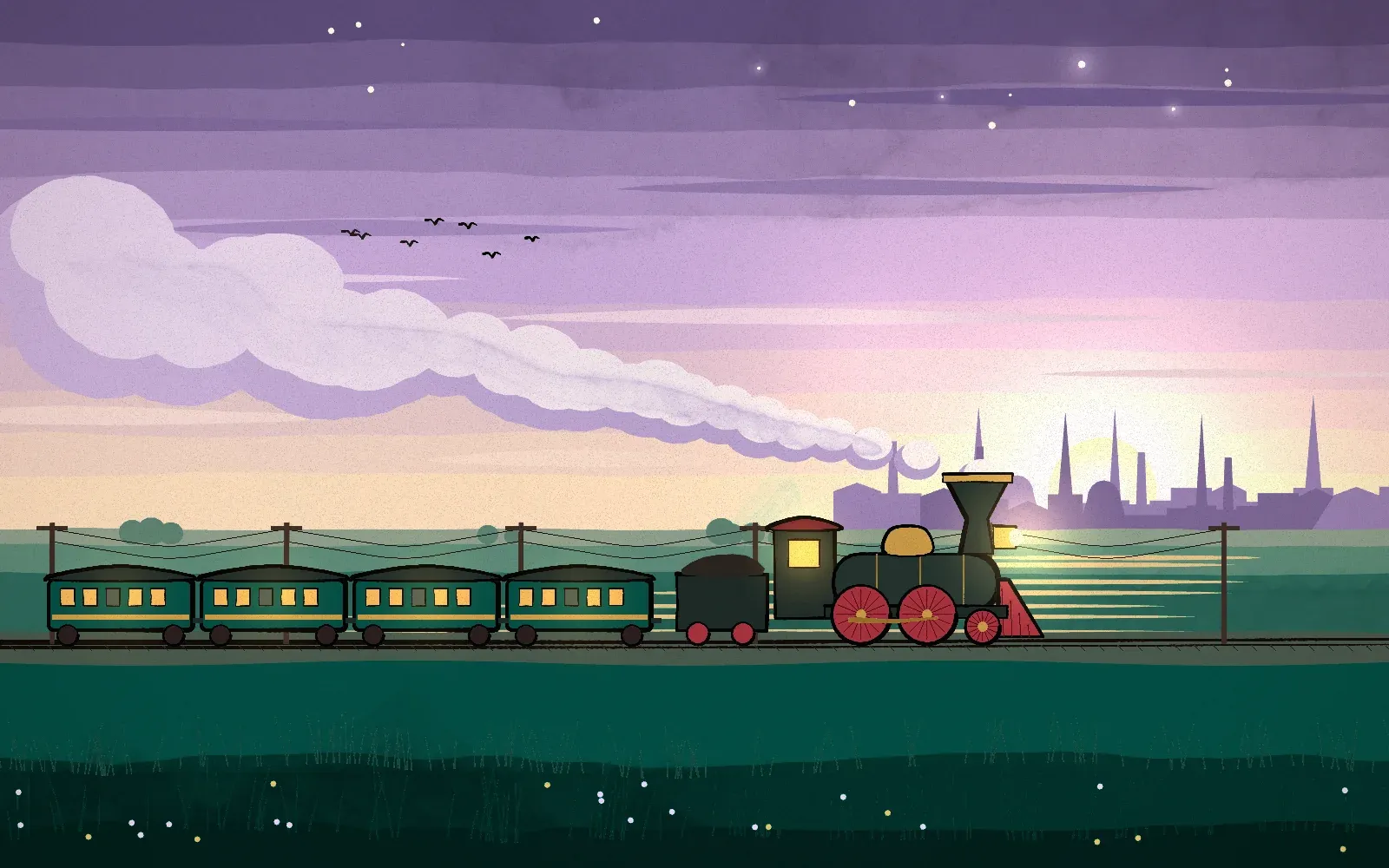
He travelled by train all over Europe to conduct his music, and in 1891 he crossed the ocean by steamship to America. In 1893 the University of Cambridge in England gave him an honorary degree.
Painted for Dear Tchaikovsky, CC BY-NC-SA 4.0
-
Home near Klin
In his last years he lived in the countryside near Klin, a town outside Moscow. There he wrote his last symphony, the Sixth.
He died in St Petersburg on 6 November 1893, of cholera. He was 53. His house in Klin became a museum, and you can still visit it.
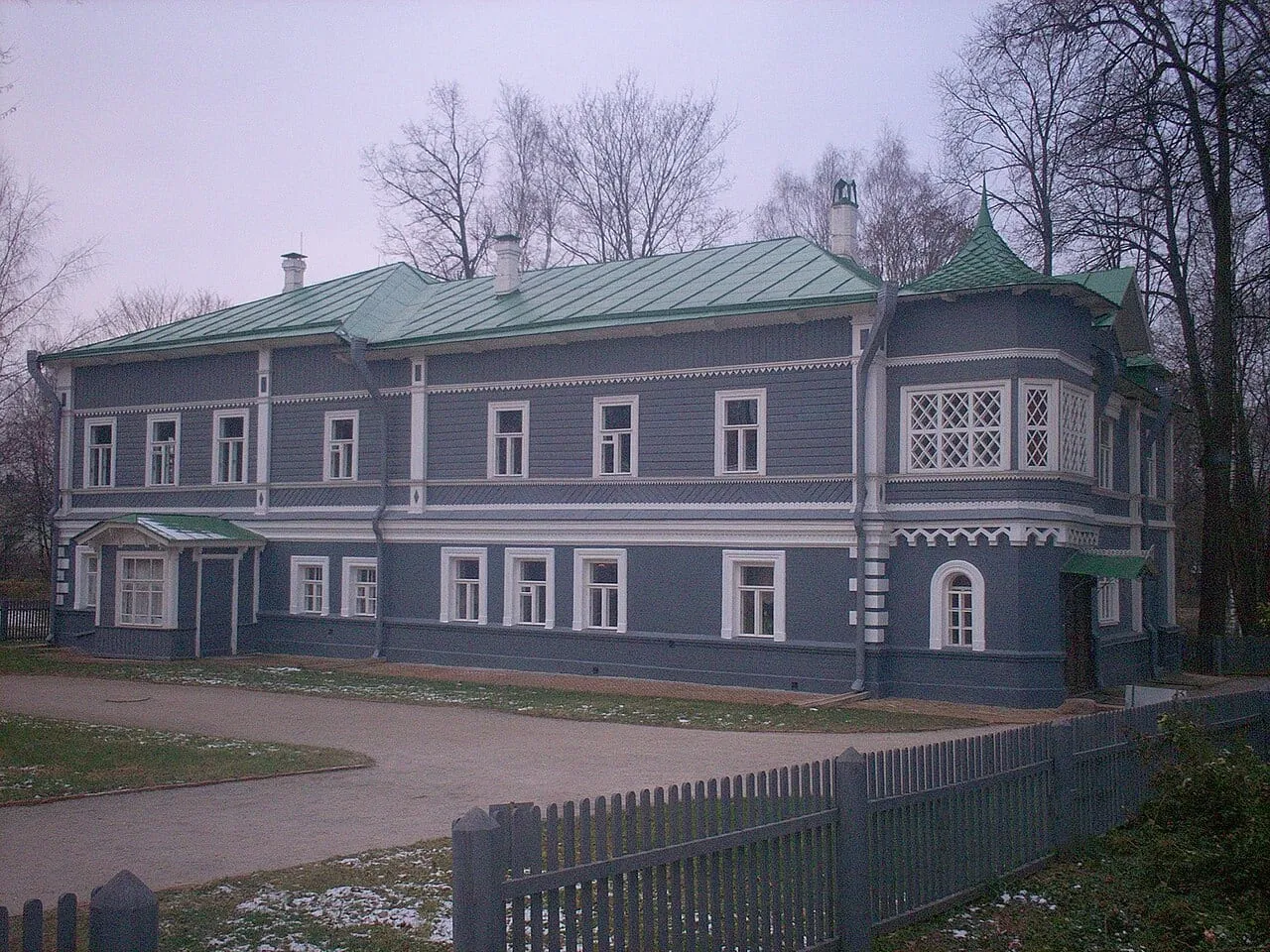
Tchaikovsky State House-Museum, KlinStoljaroff, public domain, via Wikimedia Commons


What was he doing at your age? Pick an age and see.
The longer story, chapter by chapter, is on the Life page.
Russia used an older calendar in his time, 12 days behind ours. So on this site you will see dates like “25 April / 7 May 1840”. The second date is the one we use today.
Ten true facts
Each one comes with the place we found it, so you can check it yourself.
-
When he was four, he and his little sister Sasha made up a song called “Our Mama in Petersburg”.
Source: Tchaikovsky Research: Chronology
-
By the age of six he could speak French and German. He learned them with his governess, Fanny Dürbach.
-
Before music was his job, he worked in an office. He trained as a lawyer and spent nearly four years as a civil servant at the Ministry of Justice, from 1859 to 1863.
Source: Tchaikovsky Research: Chronology
-
In Paris he found a new instrument, the celesta. It looks like a small piano but sounds like soft bells. He asked his publisher to keep it secret, so that two other composers would not use it before him. You hear it in the Dance of the Sugar Plum Fairy.
-
On 5 May 1891 he conducted at the opening concert of a new hall in New York. Today it is called Carnegie Hall.
Source: Tchaikovsky Research: New York
-
Nadezhda von Meck wrote letters with him for almost fourteen years, but the two of them chose never to meet.
-
He wrote 24 short piano pieces for children, the Children's Album, and dedicated them to his nephew Volodya, whom the family called Bob.
-
Swan Lake was his first ballet. It was first danced at the Bolshoi Theatre in Moscow on 4 March 1877.
Source: Tchaikovsky Research: Swan Lake
-
In June 1893 the University of Cambridge in England made him an honorary Doctor of Music. A photo shows him in the gown and cap.
Source: Tchaikovsky Research: Chronology
-
The score of the 1812 Overture asks for cannon. In a letter to his publisher he explained that he meant a big drum, the kind theatres used for cannon shots, not a real cannon.
Listen to these five first
Press Play to hear the tune and watch the notes light up. Where there is an old recording of the whole piece, it is underneath.
-
Dance of the Sugar Plum Fairy
From The Nutcracker
The bell sound is the celesta, the secret instrument from Paris. Every note is short, as if the fairy dances on tiptoe.
The notation and its sound need JavaScript. The text above says what to listen for.
Simplified melody line, not the full score. Source: Dance of the Candy Fairy, piano duet arr. E. Langer (G. Schirmer, 1918), primo part, on Wikimedia Commons, public domain. The whole piece, in an old recording
-
The swan theme
From Swan Lake
An oboe sings a sad, slow tune while the violins shiver underneath. It is the music of the swan-maidens, and it comes back each time their story turns.
The notation and its sound need JavaScript. The text above says what to listen for.
Simplified melody line, not the full score. Source: Wikimedia Commons, Theme lac des cygnes hautbois (LilyPond transcription by Cdang), public domain. -
March of the Wooden Soldiers
From Children's Album
One of the 24 pieces in his Children's Album, written for children to play on the piano. Press “Show score and play”, then Play, and follow the notes.
No. 5. March of the Wooden Soldiers
Mutopia Project, typeset by Anonymous, after Schirmer, 1904 · Public domain
Click any note to play from there. Notation rebuilt from the Mutopia MIDI file, so slurs, dynamics and some accidentals are simplified. Played with a piano sound: Salamander Grand Piano by Alexander Holm (CC BY 3.0). Rendered with Verovio, loaded from jsDelivr when you open the score.
-
The 1812 Overture
From The Year 1812
It begins very quietly, with an old church tune played by only six string players. It ends loudly, with bells and cannon shots.
The notation and its sound need JavaScript. The text above says what to listen for.
Simplified melody line, not the full score. Source: Wikipedia, 1812 Overture; top line of the cellos and violas, CC BY-SA 4.0. The whole piece, in an old recording
-
The waltz in five
From Symphony No. 6
A waltz usually has three beats in a bar. This one, from his Sixth Symphony, has five. Try counting along: one-two, one-two-three.
The notation and its sound need JavaScript. The text above says what to listen for.
Simplified melody line, not the full score. Source: Wikipedia, Symphony No. 6 (Tchaikovsky), CC BY-SA 4.0. The whole piece, in an old recording

Eight music words
Words you will meet on this site, in plain language. Each one links to a page that says more.
- Composer
-
A person who makes up music and writes it down, so that others can play it.
Other composers of his time - Orchestra
-
A big group of musicians who play together: string, wind and brass instruments, and drums.
How he used the orchestra - Conductor
-
The person who stands in front of the orchestra and keeps everyone together, showing the beat with a thin stick called a baton. Tchaikovsky conducted his own music.
First performances he conducted - Symphony
-
A long piece for orchestra, usually in four parts called movements: often fast, slow, a dance, then fast again.
More about the symphony - Concerto
-
A piece where one player, like a pianist or a violinist, plays the main part and the orchestra plays with them.
More about the concerto - Ballet
-
A story told by dancers, with music and no words.
More about ballet - Opera
-
A play in which the actors sing their words, with an orchestra playing.
More about opera - Celesta
-
A keyboard instrument that looks like a small piano. Its hammers hit metal bars, so it sounds like soft bells.
Hear the celesta
For your school project
- Start with the quick facts at the top of this page. They are checked.
- Write the facts in your own words. If you use a sentence exactly as it is, put it in quotation marks and say where it came from.
- His letters are real. Each letter page says who he wrote to, when and where, and who translated it into English.
- Under each picture on this site it says who made it. Write that down too if you use the picture.
How to say where you found it
Write the name of the page, the name of the site, the web address and the day you looked at it. Like this:
“The Nutcracker”, Dear Tchaikovsky, https://deartchaikovsky.com/en/works/th14-the-nutcracker/, seen on 18 November 2026.
Your teacher may ask for a different style. Pages about a work, a person or a place have a “Cite this page” box at the bottom with the grown-up versions.
For teachers and parents: three lesson plans with worksheets