How to use this site
Ten short articles on what is here and how to use it, with pictures of the real pages. Written for curious readers and teachers; you do not need to read music.
-
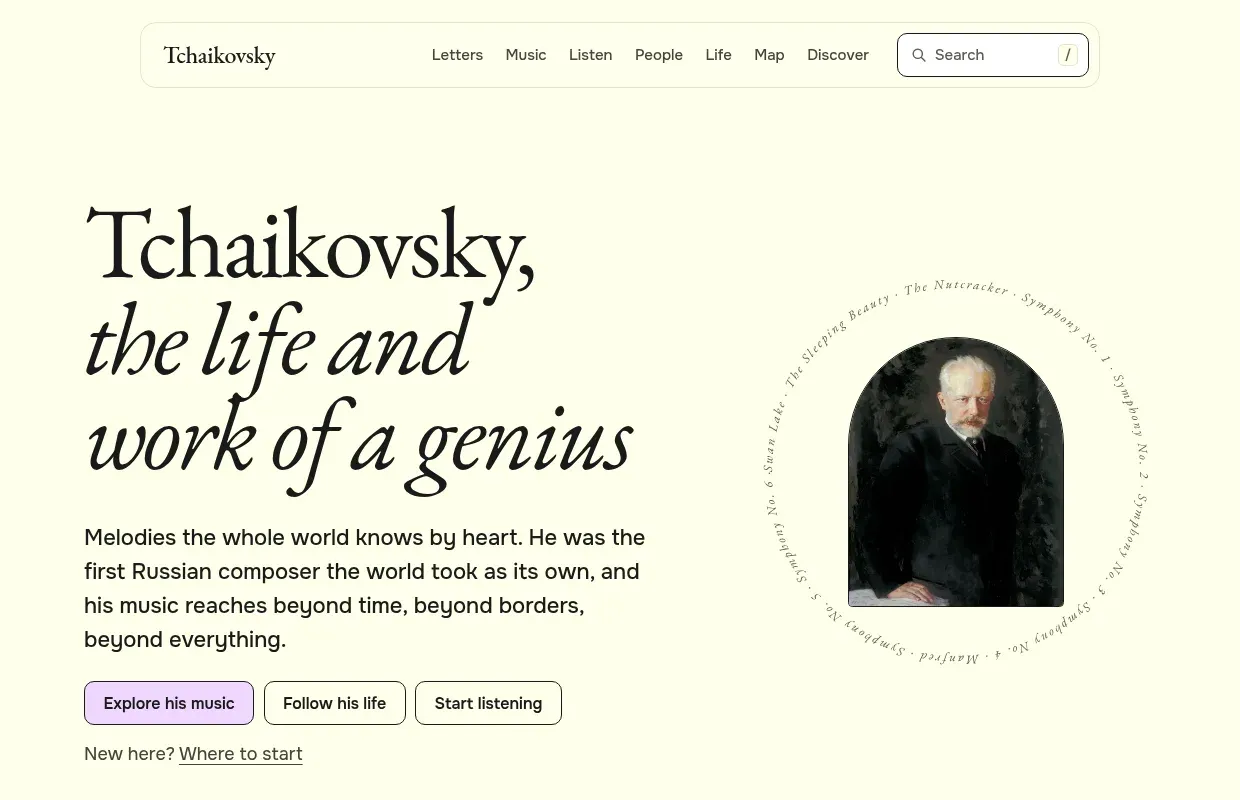
Start here: what Dear Tchaikovsky is and how to find your way
What is on the site, how much of it there is, the main sections and the four quickest ways in: search, Start listening, the age slider and the letter of the day.
-
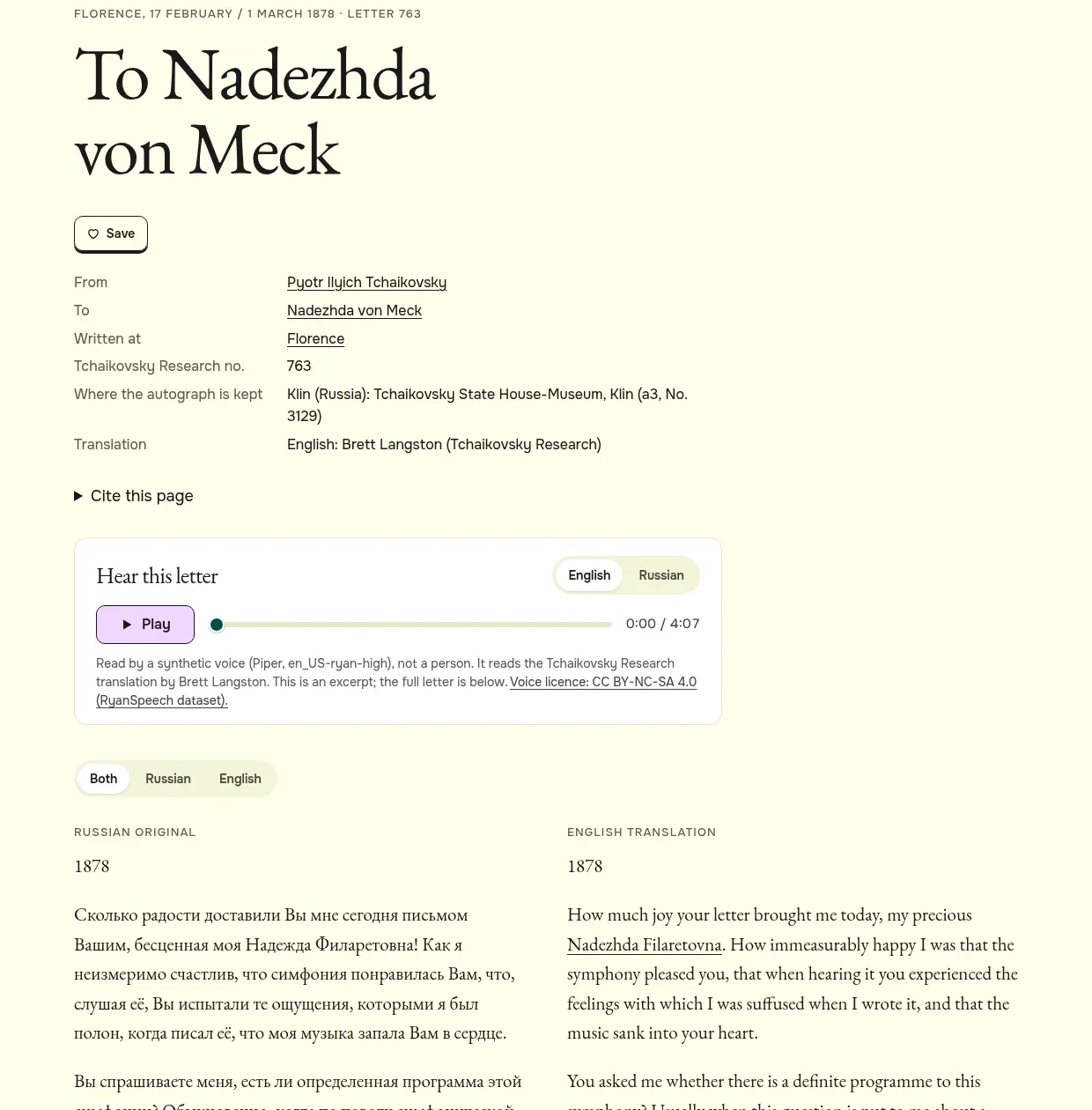
Reading his letters
How a letter page works: the original beside the translation, who translated it, the two calendars, what was happening around the letter, letters read aloud, the letter of the day, word trends, the letter map and the manuscripts.
-
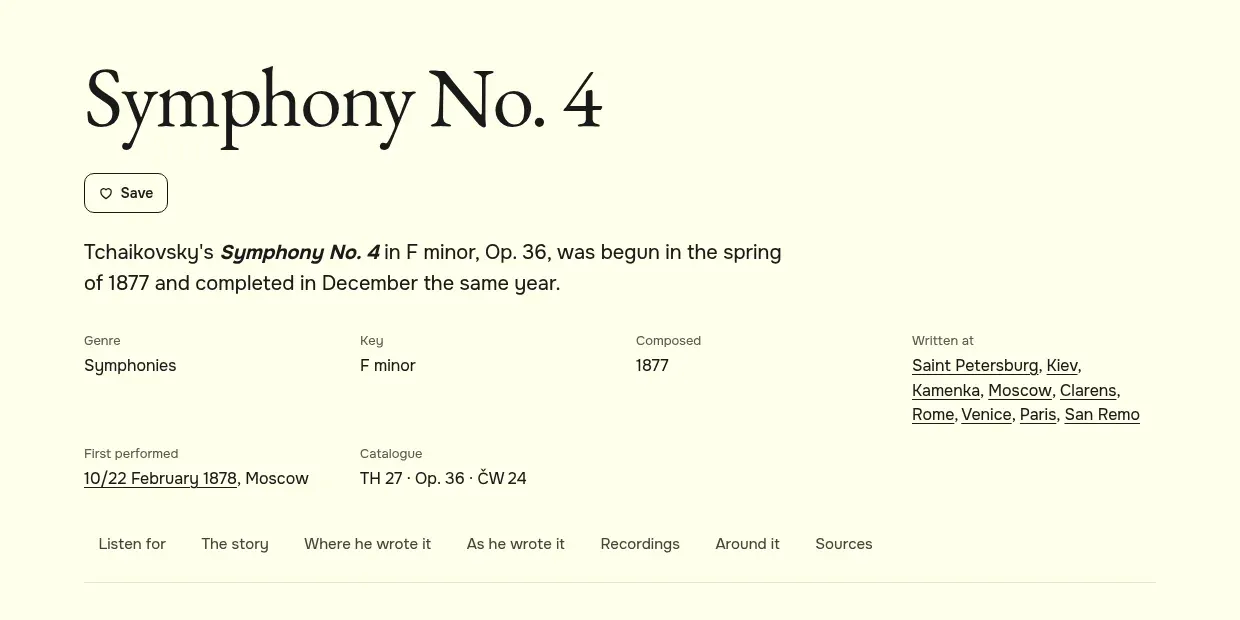
Exploring a work
What a work page holds and how to move around it: the facts, the section bar, where he wrote it, the themes to listen for, the story and its footnotes, recordings and comparisons, premieres, keys, forms and the ballet and opera stories.
-
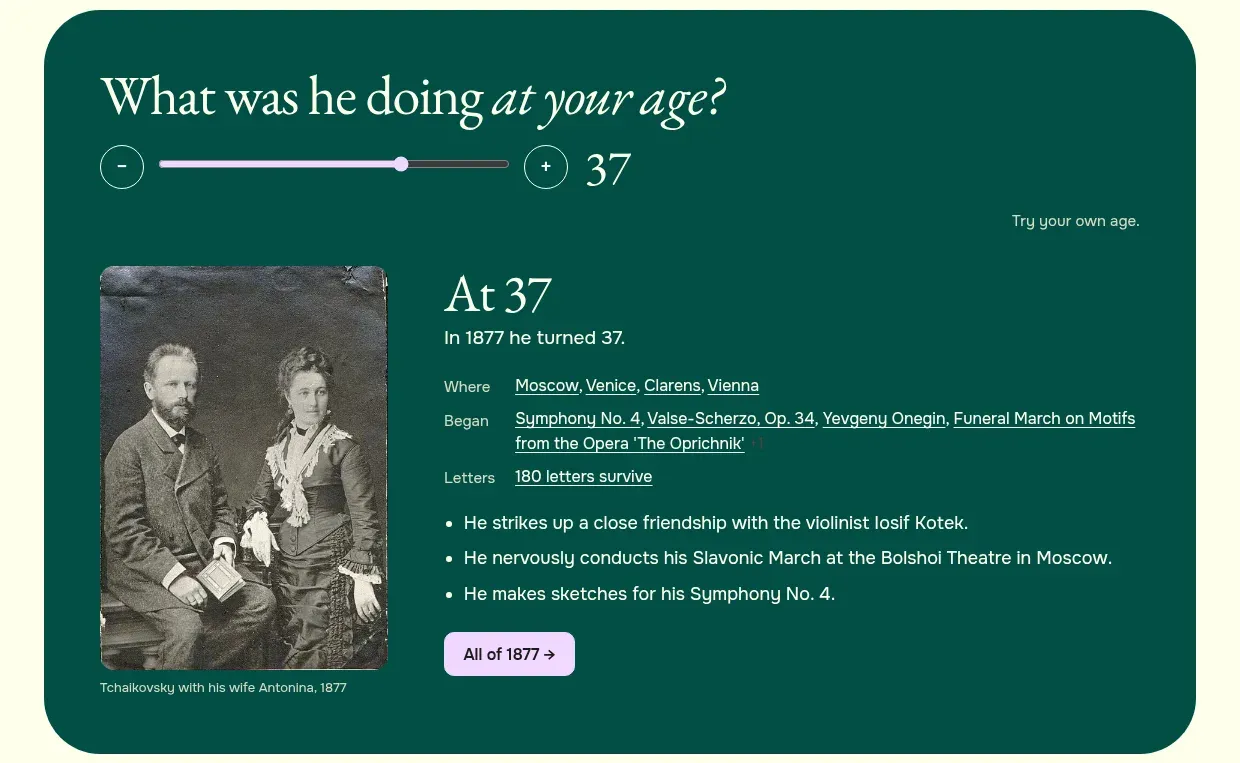
His life, year by year
How to follow Tchaikovsky's life on the site: the Life page with its age slider, ribbon and eight chapters, the year and day pages, his life in five minutes, a day at Klin and the world around him.
-
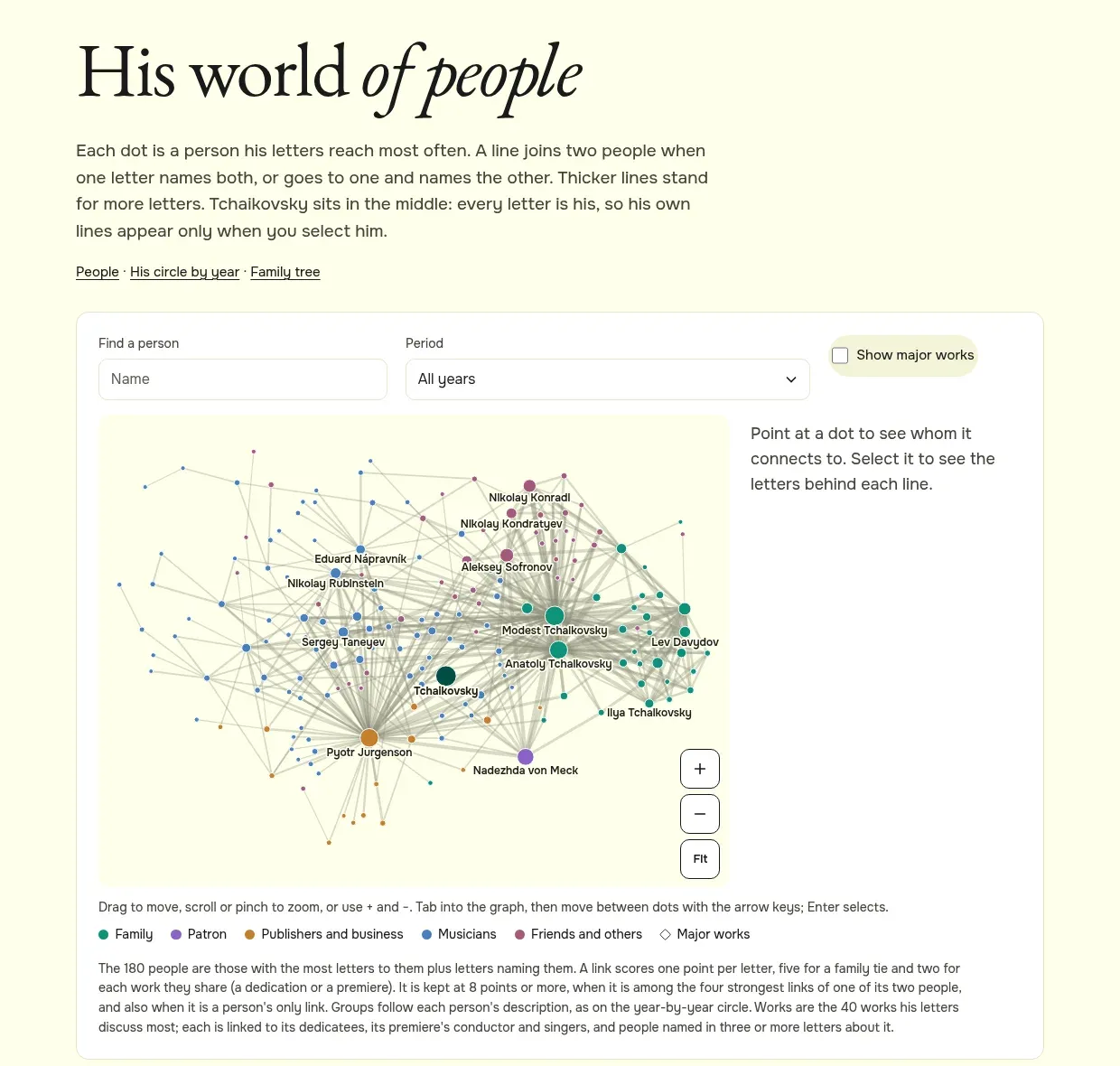
People and places
How to use the person and place pages, his circle by year, the family tree, the graph of connections, the composers he knew, the cities of his time, then and now, In his footsteps with its audio guides, and the map of his journeys.
-
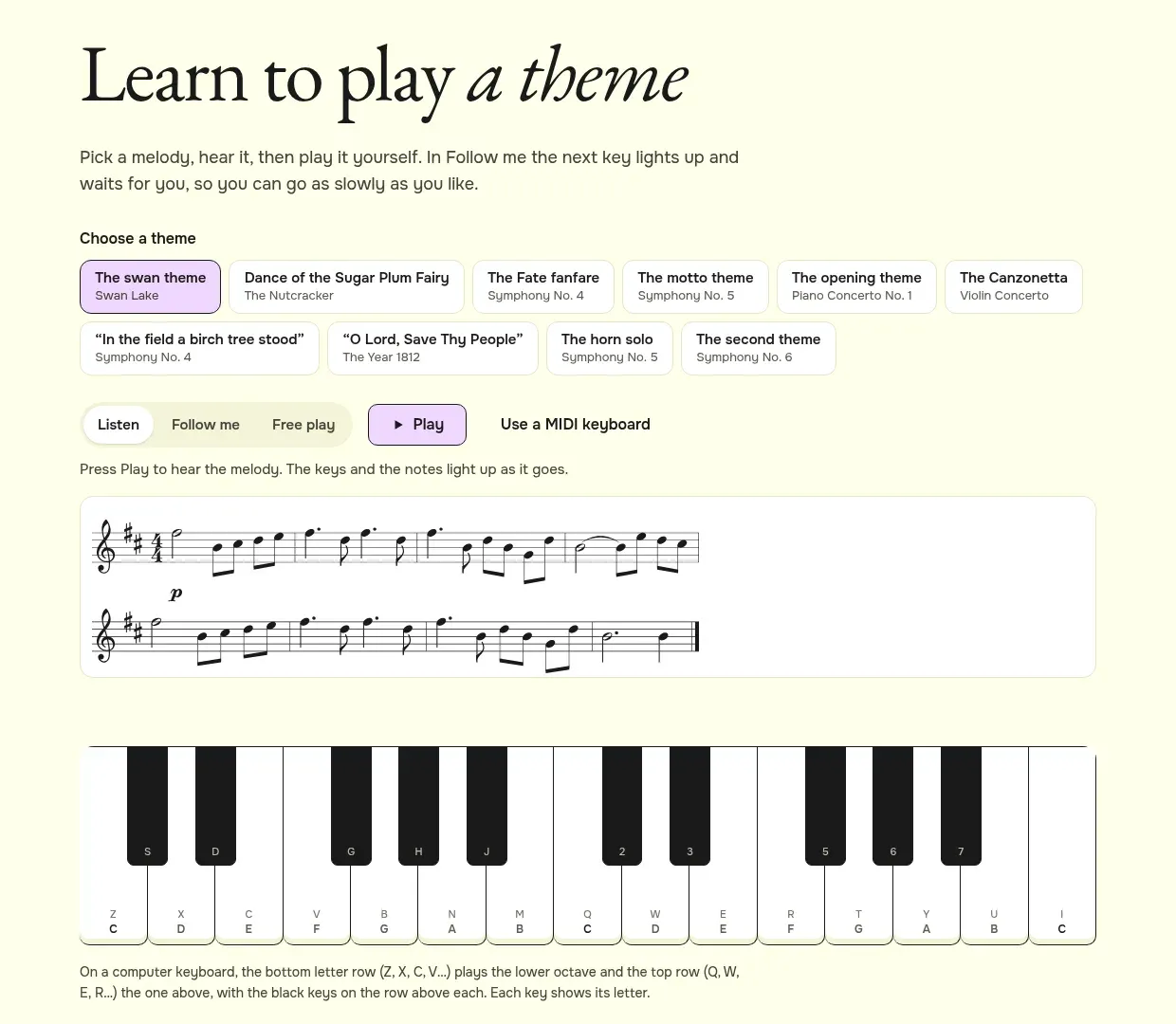
Play and learn
Hands-on ways into his music: play a theme on the on-screen piano with Follow me, conduct by tapping the beat, meet the instruments, pull a passage apart voice by voice, and learn the words with the glossary, the forms and the listening paths.
-
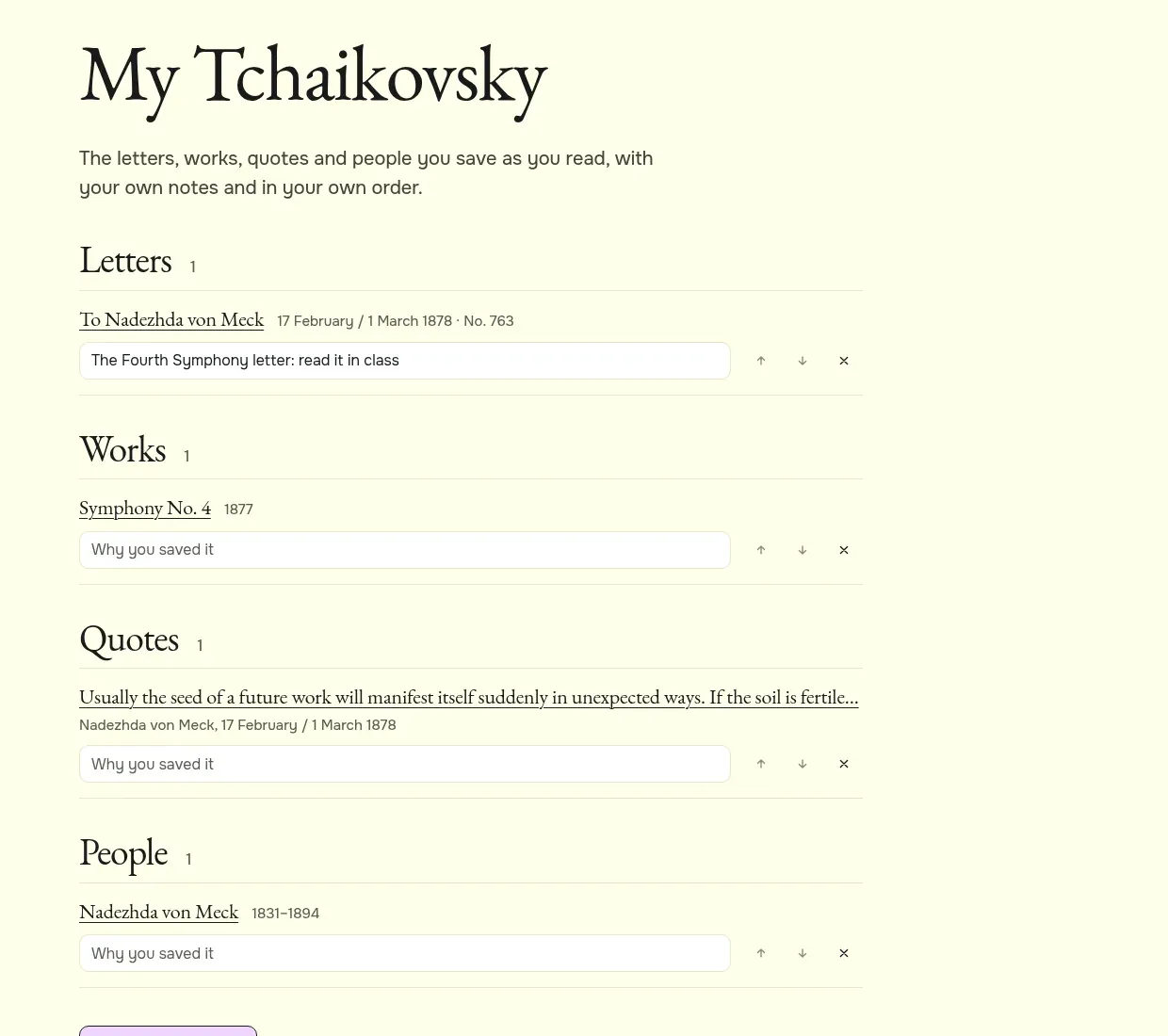
Make it yours: save, share, cite and download
How to keep your own collection of letters, works, quotes and people with notes, share it as a link, send a quote card, cite a page correctly and download the site's data.
-
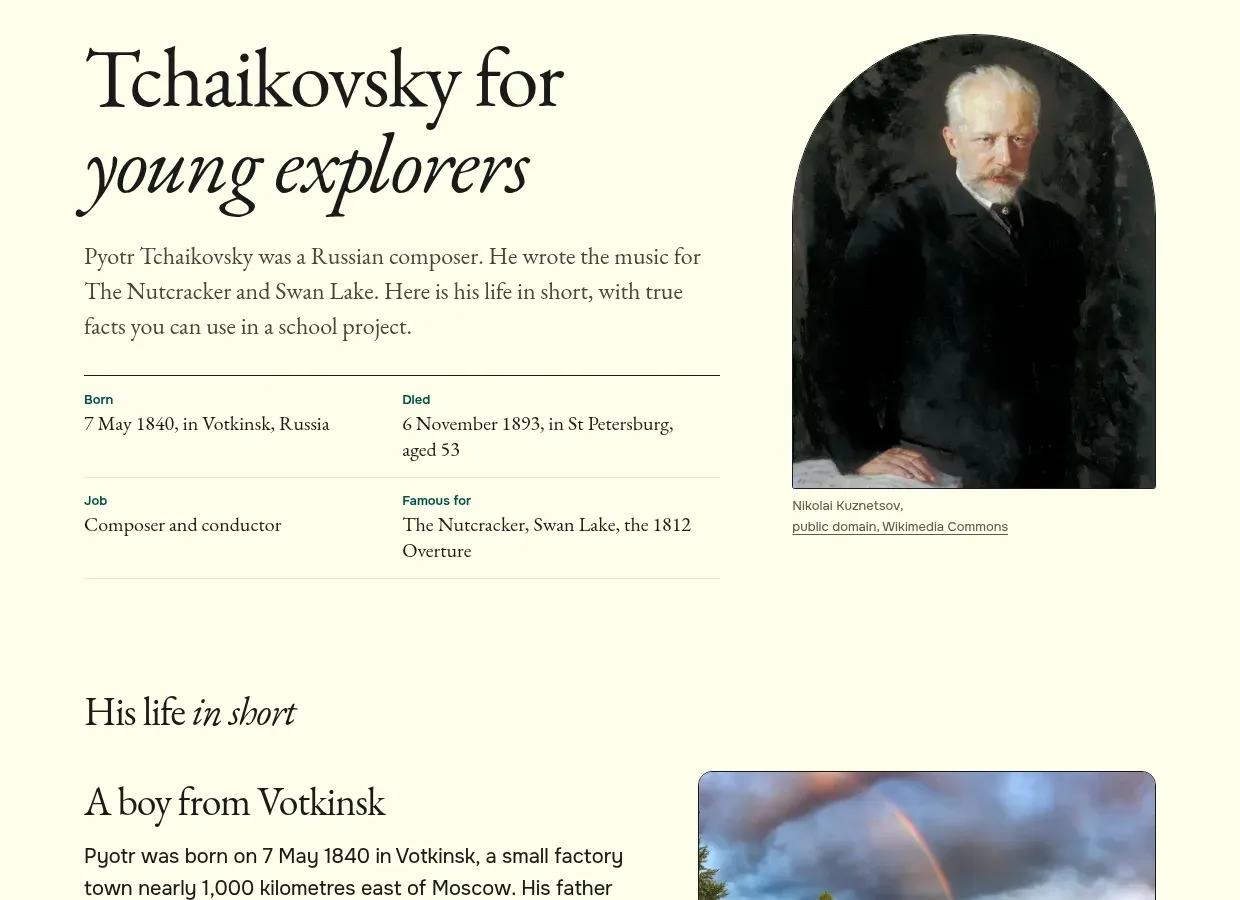
For teachers and young readers
The page for young explorers aged 9 to 12, the teacher's kit with three printable 45-minute lessons, other pages that work well in class, and how pupils should cite the site in school work.
-
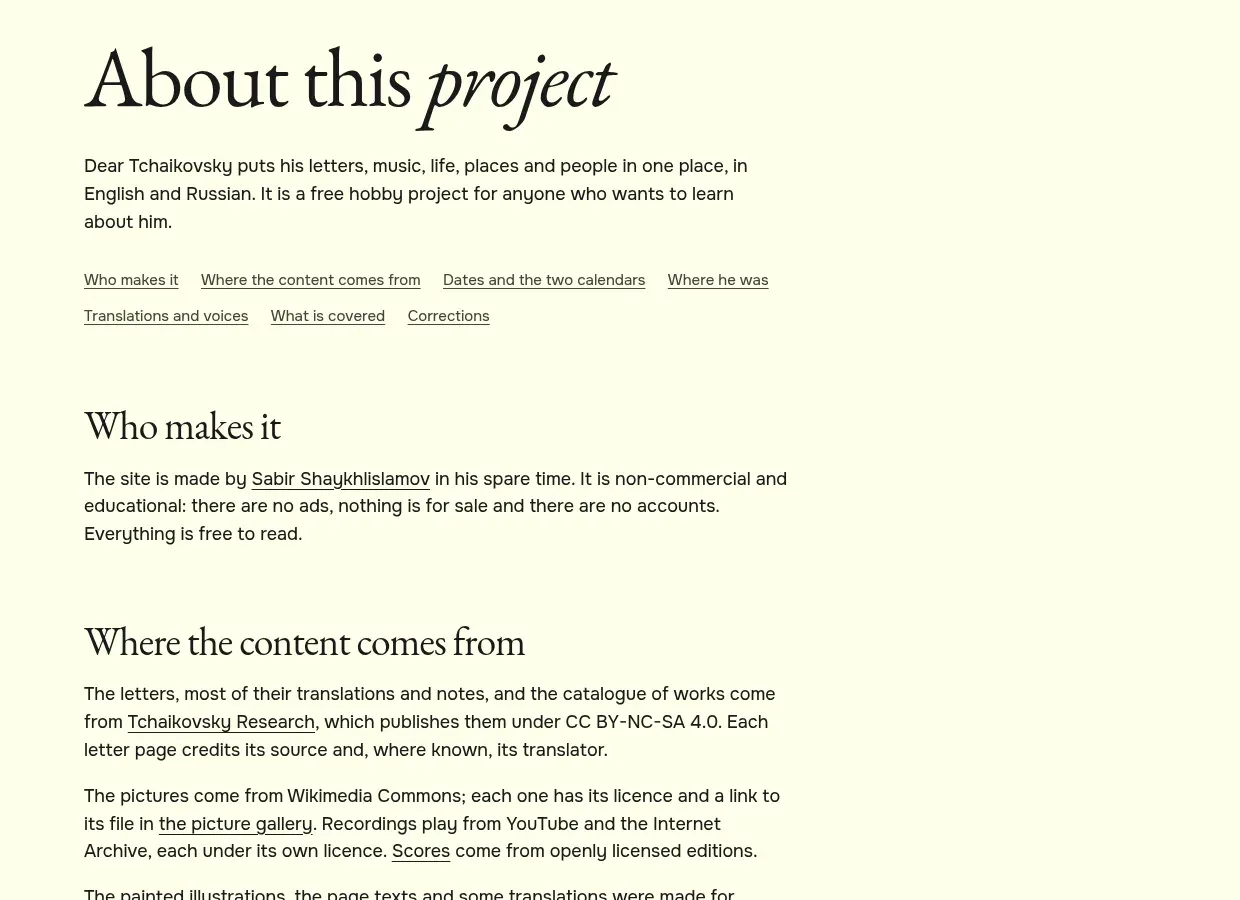
How the site is made
Where the letters, pictures, recordings and scores come from, how they are imported and checked, how translations are stored, what is made with AI or by machine and how it is labelled, and how corrections work.
-
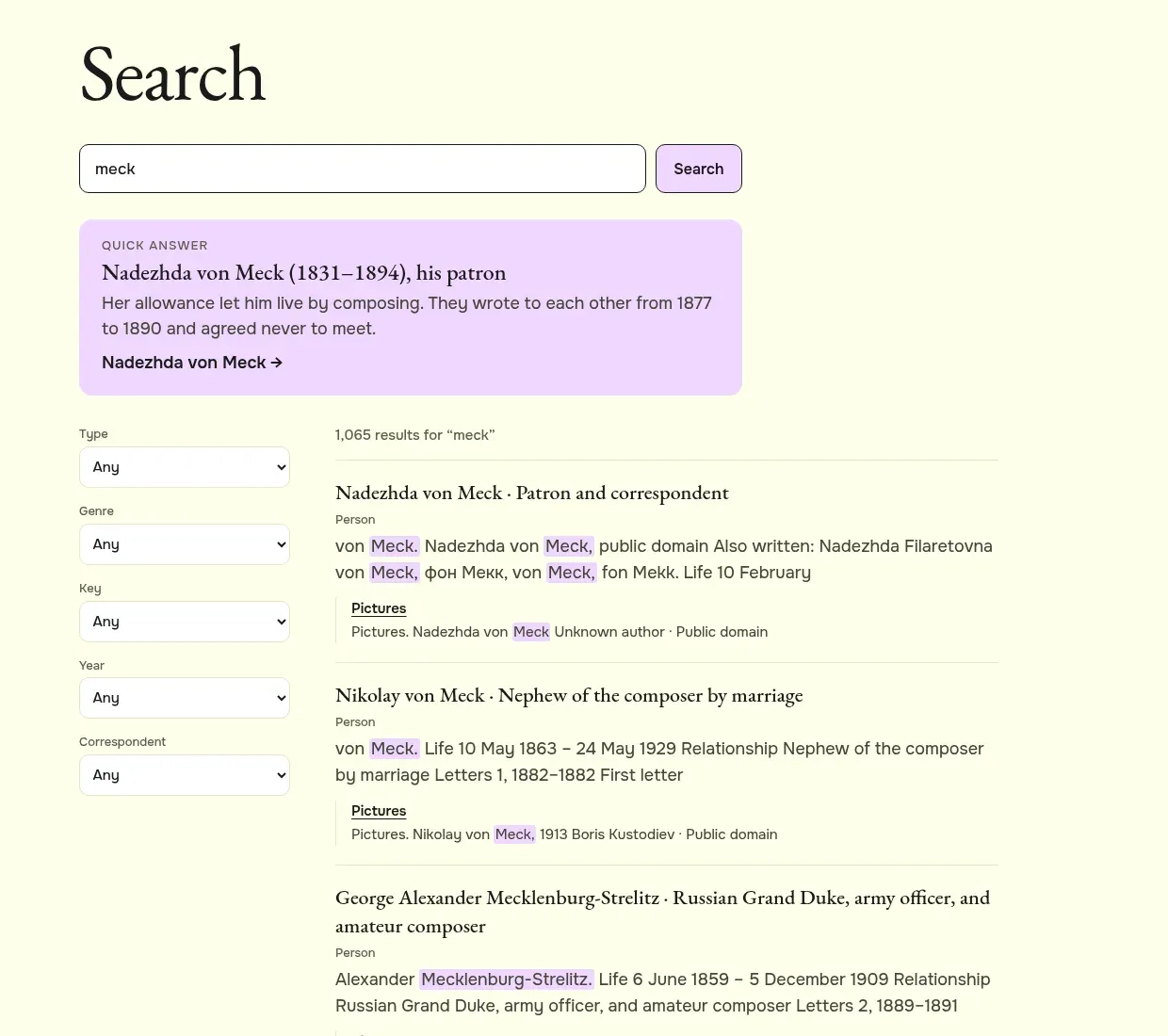
Searching well
How to get the most from search: the quick search in the header, quick answers, filters by type, genre, key, year and correspondent, spelling variants, keys in three languages, and searching in Russian.