
A day at Klin, hour by hour

For the last eight years of his life Tchaikovsky lived near Klin: at Maydanovo, then Frolovskoye, then a house in the town itself. In all three he kept much the same day. Here it is hour by hour, from his letters and from the account of his brother Modest.

Only the hours he or Modest named are given. The other edges on the clock are approximate.

midnight6 amnoon6 pm

  1. Rising, tea and reading

    7–8 am

    His brother and first biographer Modest wrote that he got up between seven and eight and began the day with tea and reading. His letters are full of reading: newspapers and magazines, novels, and the English he was studying at Maydanovo.

    I'm reading a lot: I'm enjoying studying English, work is going splendidly, I eat, walk, sleep whenever I want and as much as I want.

    Sources: Wikipedia: Tchaikovsky State House-Museum, letter of 15 July 1885

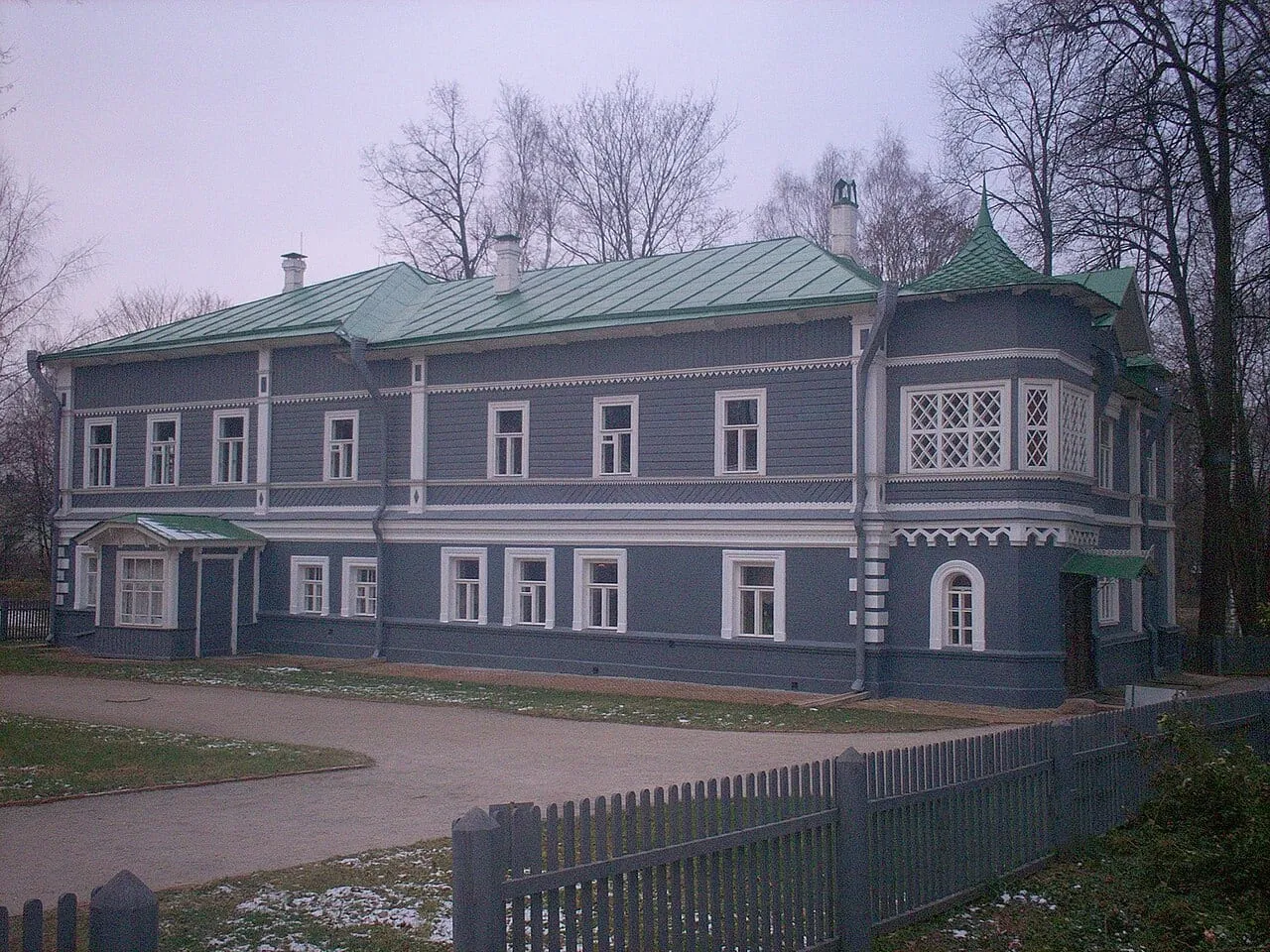
    Exterior of the Tchaikovsky State House-Museum in Klin
    Tchaikovsky State House-Museum, Klin Stoljaroff, public domain, via Wikimedia Commons
  2. A walk before work

    about an hour

    After tea came a walk, usually about an hour, Modest says. At Frolovskoye, with woods all round the house, he told Modest that a planned half hour could stretch to two.

    in the morning I'll go for a walk for half an hour, become carried away, and sometimes walk for a couple of hours.

    Sources: Wikipedia: Tchaikovsky State House-Museum

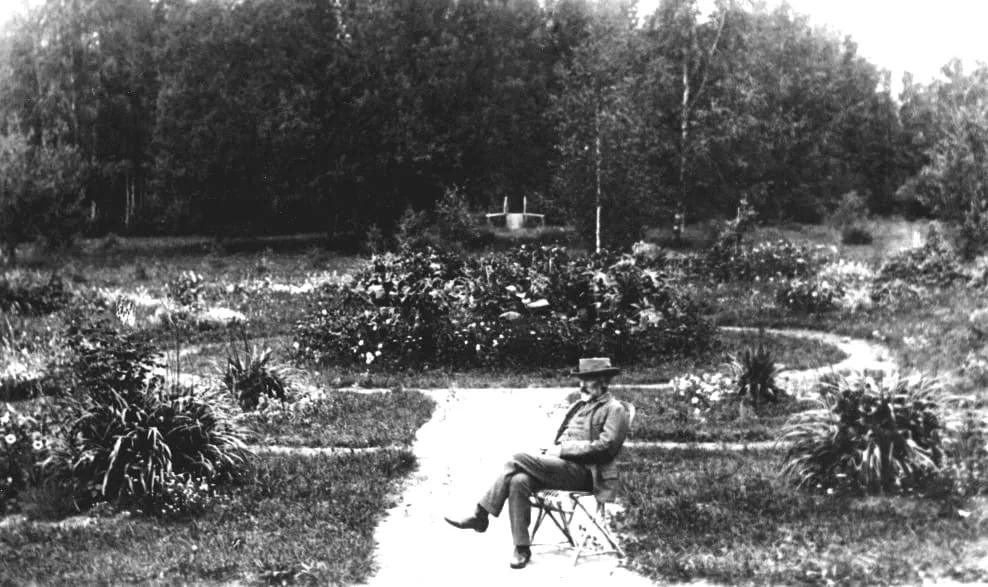
    A man in a hat sits on a folding chair on a garden path between flower beds, with a line of trees behind
    Tchaikovsky in his garden at Frolovskoye, July 1890 "Tchaikovsky in the garden at Frolovskoye" by Władysław Pachulski, public domain, via Wikimedia Commons
  3. The morning's work

    until lunch

    Then work until lunch. Modest noted one rule: if he had talked with someone over breakfast, or walked in company, he would not compose that day, and spent it on orchestration, corrections or letters instead. In August 1893 he orchestrated the Sixth Symphony at the Klin house.

    My life is lacking in colour or variety; in the evenings I'm sometimes bored, but I mustn't complain because the main thing now is the symphony, and I can only work on it at home.

    Sources: Wikipedia: Tchaikovsky State House-Museum, Tchaikovsky Research: Klin, letter of 13 July 1886

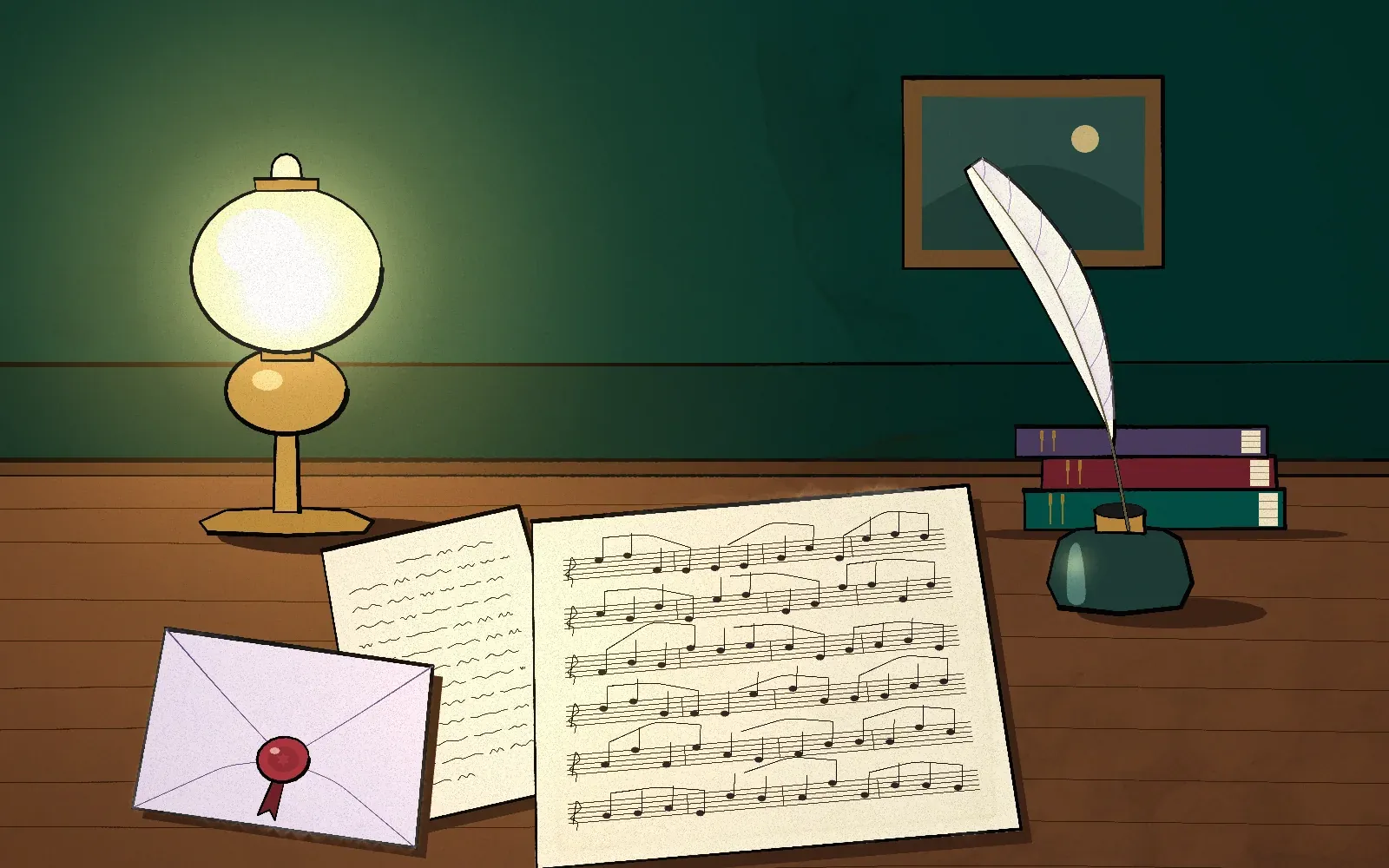
    Painted illustration: a writing desk in lamplight with an oil lamp, a sealed letter with a red wax seal, a handwritten page, a sheet of music, an inkwell with a quill and a stack of books.

    Illustration painted for this site

  4. Lunch at one

    1 pm

    Lunch was at one in the afternoon. In July 1886 he fitted his whole day at Maydanovo into one sentence for Kolya Konradi, from the morning swim to the evening with his neighbours.

    Our way of life is still the same. In the morning, I bathe in my own new lovely bathhouse; then work, I have lunch at 1 o'clock in the afternoon, walk for 2 hours, drink tea, work, and after supper I always spend the evening with the Kondratyevs.

    A single-storey country house among trees, with a small figure in front
    Tchaikovsky’s house at Frolovskoye, near Klin, 1890. The composer stands in front of it Władysław Pachulski, public domain, via Wikimedia Commons
  5. The long walk

    2 hours

    After lunch he walked for two hours, every day. Modest wrote that he went out in any weather and alone: he needed solitude on these walks as much as at work, and thought over the themes and plans of new pieces as he went. When the weather kept him in, in February 1886, he walked about the rooms instead.

    Yet today is such a wonderful day that after a magnificent stroll I am completely reconciled to my sweet cosy corner again.

    Sources: letter of 13 July 1886, letter of 23 October 1885, Wikipedia: Tchaikovsky State House-Museum

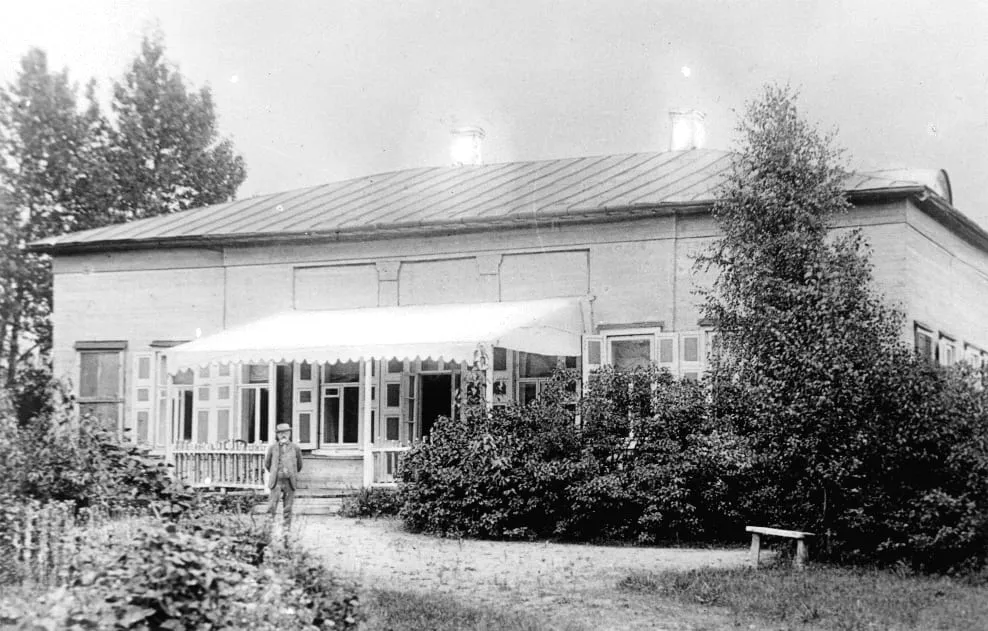
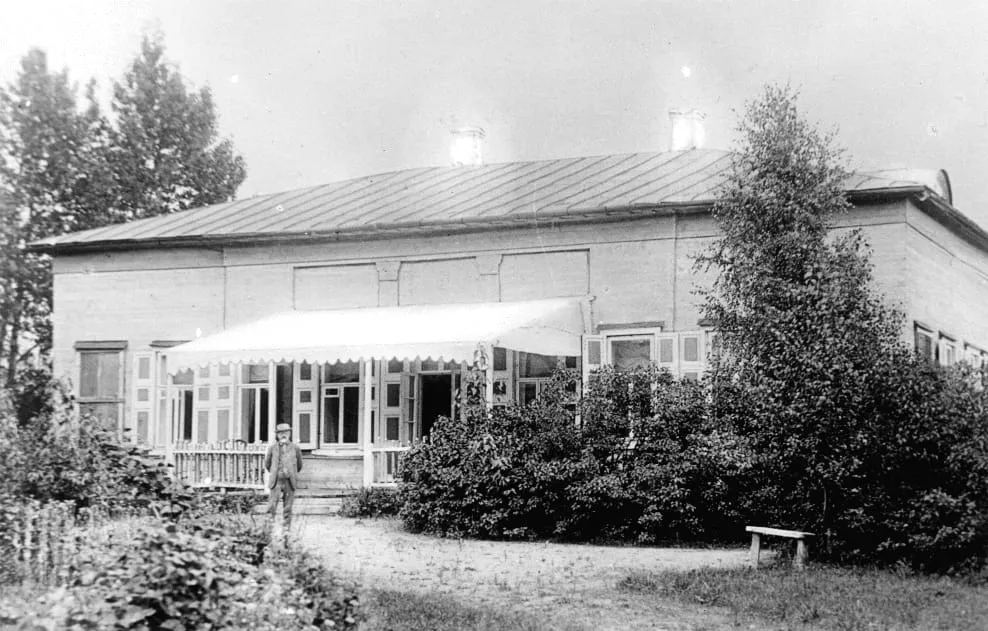
    A long one-storey wooden house with an awning over the porch, birches and bushes in front, and a bearded man in a hat standing by the steps
    Tchaikovsky in front of his rented house at Frolovskoye, July 1890 "Tchaikovsky at Frolovskoye" by Władysław Pachulski, public domain, via Wikimedia Commons
  6. Tea at four, then work and letters

    4 pm

    Tea at four, then work again until supper: “drink tea, work”, as he put it in 1886. In February 1885, just after moving to Maydanovo, he spent this part of the day on letters and told Modest how the evening would go.

    After dinner I walked along the river to Klin (a wonderful stroll); drank tea a 4 o'clock; wrote a long letter to Bülow, I'm writing to you, I'll write some more to Tolya; I shall have supper, read, play, and go to bed.

    Sources: letter of 13 July 1886

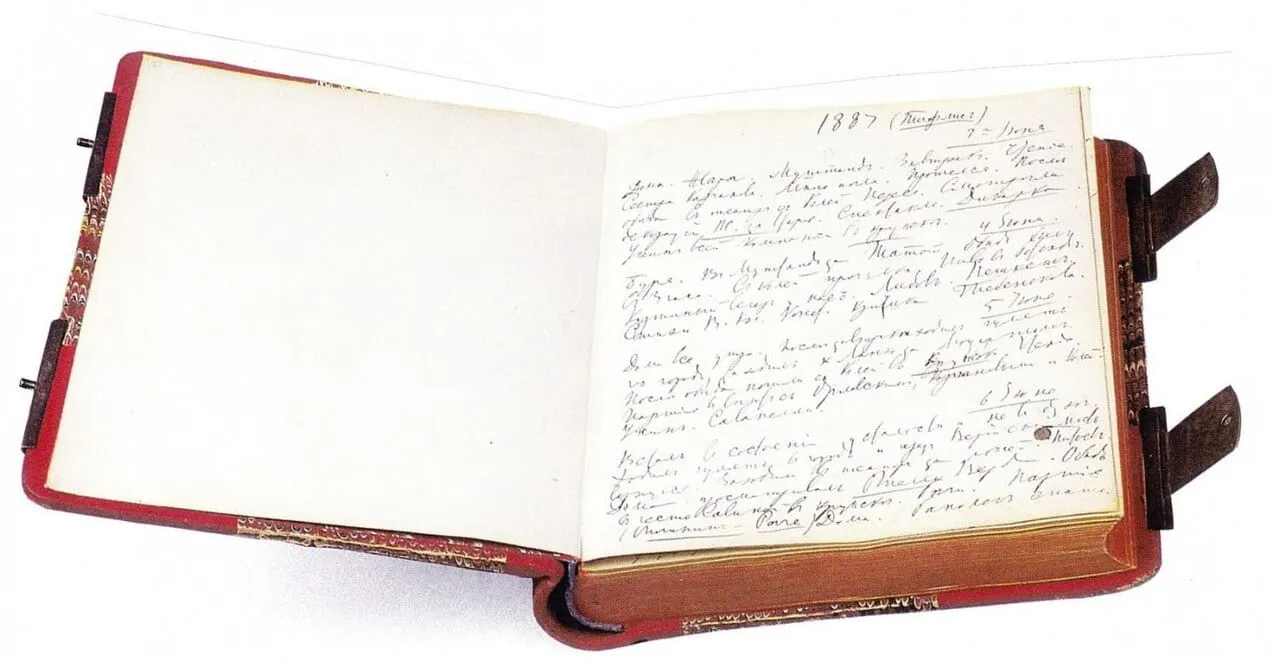
    Open notebook with handwritten diary entries in Russian
    Tchaikovsky’s diary No. 6, opened at its first page, June 1887. Archive of the Tchaikovsky House-Museum, Klin “Il diario di Tchaikovsky "No. 6", giugno 1887” by Brett Langston, CC BY-SA 4.0, via Wikimedia Commons
  7. Supper, then cards

    after supper

    After supper, company if there was any. In the summer of 1886 he spent every evening with his neighbours the Kondratyevs, usually over a game of vint, his favourite card game. In the country there was often no one to make up a table, and he said he missed it.

    Just imagine, dear Yuliya Petrovna, that I am the most desperate lover of vint, and that I prefer this entertainment to any other.

    Sources: letter of 13 July 1886, letter of 20 July 1886, letter of 6 August 1888

    Painted illustration: a two-storey wooden house in the snow at dusk, its windows lit, with a glazed veranda, birch trees and a fence in front and fir trees behind.

    Illustration painted for this site

  8. Music and reading aloud

    the evening

    Other evenings were for music and books. At Frolovskoye in June 1888 Herman Laroche read Gogol’s Dead Souls aloud, and in the summer of 1889 he, Modest and Laroche read the best of Russian literature together. In the winter of 1892 at Maydanovo he played piano duets with Volodya Nápravník, who was living with him.

    his musicality is a great pleasure for me, because in the evenings I enjoy playing 4 hands with him, and sometimes I just make him play a variety of my favourite things for me.

    Sources: letter of 18 June 1888, letter of 12 August 1889, Wikipedia: Tchaikovsky State House-Museum

    Exterior of the Tchaikovsky State House-Museum in Klin
    Tchaikovsky State House-Museum, Klin Stoljaroff, public domain, via Wikimedia Commons
  9. Night

    Then bed, earlier when work had worn him out. In July 1892, in his first summer at the Klin house, he was correcting the proofs of The Nutcracker and Iolanta and went to bed so early that there was no time to be bored.

    The days are flying by quickly, but in the evenings as a result of fatigue from this terrible work I have to go to bed early, so there's no time to be bored and miserable.

    Sources: letter of 26 February 1885, Tchaikovsky Research: Klin

    Painted illustration: a two-storey wooden house in the snow at dusk, its windows lit, with a glazed veranda, birch trees and a fence in front and fir trees behind.

    Illustration painted for this site

Three houses

The routine held in all three houses, but each changed it a little. Concerts and business in Moscow, Saint Petersburg and abroad broke it often: the clock above is a day at home.

Maydanovo

1885–1888, 1891–1892

A house rented from Nadezhda Novikova from February 1885 to April 1888 and again from June 1891 to April 1892. In summer he bathed before work and spent the evenings with the Kondratyevs over vint, but he found the walks poor: the forest was far away and the park filled with summer visitors. Back in 1891, he played vint with Novikova partly for his health, because it tired his eyes and head less than a whole evening of reading.

My walks at Maydanovo aren't very good.

Sources: Tchaikovsky Research: Maydanovo, letter of 13 July 1886, letter of 4 July 1891

Frolovskoye

1888–1891

A house rented from L. A. Lanina from May 1888 to March 1891; it no longer stands. There were woods all round, and the walks became the best of the day, in the morning and again at sunset. The evenings were harder: he wrote to Nadezhda von Meck that he was too tired to read or play and missed a game of vint. In 1889 Modest and Laroche lived with him, and alone in winter he began to get headaches, which made him think of living in a city.

All three of us work, coming together to eat, and in the evening we read or, if we happen to have a guest, we play vint.

Sources: Tchaikovsky Research: Frolovskoye, letter of 27 May 1888, letter of 6 August 1888, letter of 21 July 1889, letter of 12 August 1889

Klin

1892–1893

A two-storey house rented from V. S. Sakharov on the Moscow road just outside the town, from May 1892 until his death; it is now the museum. Concerts and business took him away so often that Tchaikovsky Research lists thirteen stays there between May 1892 and October 1893, most of them shorter than three weeks. In those weeks he wrote the Sixth Symphony, the Eighteen Pieces, Op. 72 and the Six Romances, Op. 73.

I feel it's essential for me to have a house in the country, or Klin, which amounts to the same thing, in order to know that my desires can be met, and that there's always a quiet, peaceful corner for work ready for me.

Sources: Tchaikovsky Research: Klin, letter of 21 February 1892