In his footsteps

22 places tied to Tchaikovsky that you can still visit: the houses he lived in, the theatres and halls where his music was first played, and his grave. For each one: what happened there, and what you will find today.

Dates are New Style. We give addresses but not opening hours or prices, which change; check the museum's own site before you go. For what is there today we used only the museum's or venue's own site, Wikipedia and Tchaikovsky Research, and left out anything we could not check. Sources are under each place.

Tchaikovsky State House-Museum, Klin · Maydanovo · Frolovskoye · Demyanovo, the Taneyevs' estate · Moscow Conservatory · Tchaikovsky Museum in Moscow, Kudrinskaya Square · Bolshoi Theatre 1–7 Mariinsky Theatre · Saint Petersburg Conservatory · His grave: Tikhvin Cemetery, Alexander Nevsky Lavra · Imperial School of Jurisprudence · 13 Malaya Morskaya Street, where he died · Kazan Cathedral, where his funeral was held 8–13 Tchaikovsky Museum-Estate, Votkinsk 14 Tchaikovsky House-Museum, Alapayevsk 15 Kamenka: Pushkin and Tchaikovsky Museum · Brailov: Tchaikovsky and von Meck Museum 16–17 Tiflis: his brother Anatoly's house 18 Clarens, Lake Geneva 19 Florence 20 Carnegie Hall, New York 21 New York Cambridge 22
Numbered pins on a map of Europe and western Russia. Pins that share a city carry several numbers. New York is off the map to the west.
Saint Petersburg
Mariinsky Theatre 8 Saint Petersburg Conservatory 9 His grave: Tikhvin Cemetery, Alexander Nevsky Lavra 10 Imperial School of Jurisprudence 11 13 Malaya Morskaya Street, where he died 12 Kazan Cathedral, where his funeral was held 13
  1. Mariinsky Theatre
  2. Saint Petersburg Conservatory
  3. His grave: Tikhvin Cemetery, Alexander Nevsky Lavra
  4. Imperial School of Jurisprudence
  5. 13 Malaya Morskaya Street, where he died
  6. Kazan Cathedral, where his funeral was held
Klin and its estates
Tchaikovsky State House-Museum, Klin 1 Maydanovo 2 Frolovskoye 3 Demyanovo, the Taneyevs' estate 4
  1. Tchaikovsky State House-Museum, Klin
  2. Maydanovo
  3. Frolovskoye
  4. Demyanovo, the Taneyevs' estate

Klin is about 85 km north-west of Moscow.

Central Moscow
Moscow Conservatory 5 Tchaikovsky Museum in Moscow, Kudrinskaya Square 6 Bolshoi Theatre 7
  1. Moscow Conservatory
  2. Tchaikovsky Museum in Moscow, Kudrinskaya Square
  3. Bolshoi Theatre

Schematic: the pins are placed by their coordinates, without streets. Tap a pin to read about the place; the address under each opens a street map.

Klin and around Moscow

Tchaikovsky State House-Museum, Klin

1892–1893

Audio guideSynthetic voice

Read the guide

You are standing in front of the Tchaikovsky House-Museum in Klin, his last home. He rented this two-storey house from V. S. Sakharov in May 1892, and lived here between his tours until his death.

Here he wrote his Sixth Symphony. The first sketches date from February 1893, and he finished the orchestration on 24 August. Ten days before that, on 14 August, he wrote from Klin to his nephew Vladimir Davydov, to whom the symphony is dedicated: “But I absolutely consider it to be the best, and in particular, the most sincere of all my creations. I love it as I have never loved any of my other musical offspring.”

He also wrote the eighteen piano pieces of Opus 72 here. On the evening of 19 October 1893 he left this house for the last time.

The house took its first visitors on 21 December 1894, a year after his death. His brother Modest set up the museum, and it is the oldest memorial museum of a musician in Russia. The rooms keep the furniture of his last years, his belongings, his library and his archive. The concert hall and the exhibition halls are on the grounds around you. The museum also looks after the nearby estates of Maydanovo and Frolovskoye, where he lived before he came here, and Demyanovo, where he was often a guest.

Quoted from letter 4998 (translated by Brett Langston). Read by a synthetic voice (Piper, en_US-ryan-high), not a person. Voice licence: CC BY-NC-SA 4.0 (RyanSpeech dataset).

What happened here

His last home. He rented the two-storey house from V. S. Sakharov in May 1892 and lived here between tours until his death. He wrote the Symphony No. 6 here, from the first sketches in February 1893 to the finished orchestration on 24 August, and the piano pieces Op. 72. He left the house for the last time on the evening of 19 October 1893.

What is there today

The house took its first visitors on 21 December 1894, a year after his death. His brother Modest set it up, and it is the oldest memorial museum of a musician in Russia. The rooms keep the furniture of his last years, his belongings, library and archive. A concert hall and exhibition halls stand on the grounds, and the museum also looks after the nearby Maydanovo, Frolovskoye and Demyanovo estates.

Address
48 Tchaikovsky Street, Klin, Moscow oblast, Russia (OpenStreetMap)
Getting there
Klin is about 85 km north-west of Moscow. Suburban trains run from Leningradsky station in Moscow to Klin; from Klin station, about 2 km away, buses 30, 37 and 40 stop at "Muzey Chaykovskogo".
Official site
tchaikovsky.house
Written here
Symphony No. 6, Eighteen Pieces, Op. 72, Six Romances, Op. 73, Piano Concerto No. 3

Klin in our archive: 4 works written there · 234 letters sent from there

Sources: Tchaikovsky Research: Klin · Wikipedia (ru): Государственный мемориальный музыкальный музей-заповедник П. И. Чайковского · Wikipedia: Tchaikovsky State House-Museum · Museum site: tchaikovsky.house
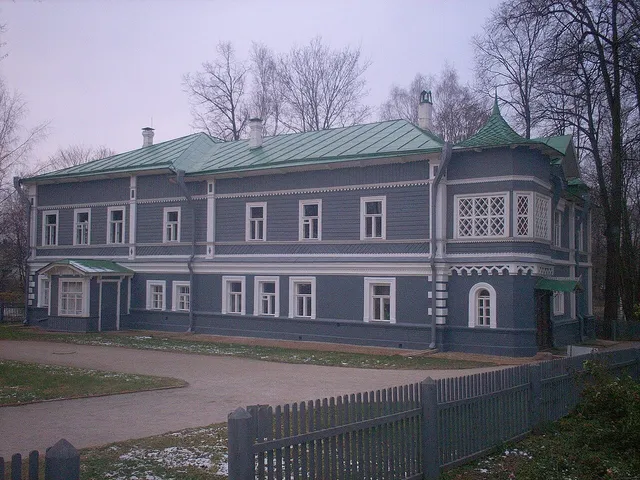
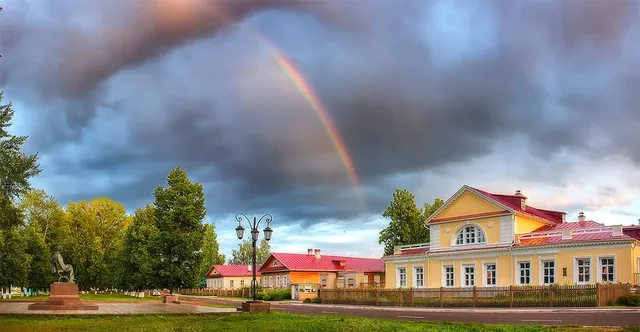
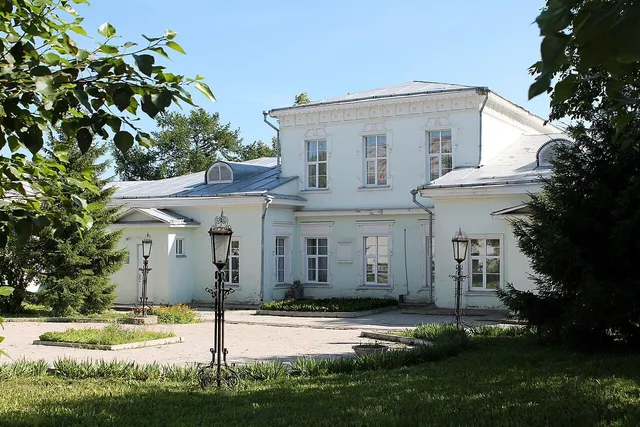
Exterior of the Tchaikovsky State House-Museum in Klin
Tchaikovsky State House-Museum, Klin Stoljaroff · Public domain

Maydanovo

1885–1888, 1891–1892

Audio guideSynthetic voice

Read the guide

You are in Maydanovo, on the edge of Klin. From 26 February 1885 he rented a house here from Nadezhda Novikova, and lived in it until April 1888. He came back to the same house from 10 June 1891 to 9 April 1892.

At Maydanovo he finished the Manfred symphony, the operas Cherevichki, The Enchantress and Iolanta, and the ballet The Nutcracker. Of Manfred he wrote to Mily Balakirev: “But very soon I became terribly infatuated with Manfred, and cannot remember ever having felt such pleasure in working, which stayed with me until the end.”

Coming back here in January 1886, he wrote to his brother Anatoly: “How happy I am to be chez moi again. I love my little corner more and more.”

Today the estate belongs to the Tchaikovsky museum-reserve, based at the house-museum in Klin. The museum gives no opening hours or tours for it, and we found no source saying that the house can be visited, so ask the museum before you come.

Quoted from letter 2768 (translated by Luis Sundkvist); letter 2853 (translated by Brett Langston). Read by a synthetic voice (Piper, en_US-ryan-high), not a person. Voice licence: CC BY-NC-SA 4.0 (RyanSpeech dataset).

What happened here

He rented a house here from Nadezhda Novikova from 26 February 1885 to April 1888, and came back to the same house from 10 June 1891 to 9 April 1892. At Maydanovo he finished the Manfred symphony, the operas Cherevichki, The Enchantress and Iolanta, and the ballet The Nutcracker.

What is there today

The estate is part of the Tchaikovsky museum-reserve based at the house-museum in Klin. The museum's page on the estate gives no opening hours or tours, and we found no source saying the house can be visited: ask the museum before you go.

Address
Maydanovo, Klin, Moscow oblast, Russia (OpenStreetMap)
Getting there
Now a district in the north-west of Klin, about 2 km north of Klin station and 3 km from the house-museum.
Official site
tchaikovsky.house
Written here
Manfred, Cherevichki, The Enchantress, Iolanta, The Nutcracker

Maydanovo in our archive: 13 works written there · 691 letters sent from there

Sources: Tchaikovsky Research: Maydanovo · Wikipedia (ru): Государственный мемориальный музыкальный музей-заповедник П. И. Чайковского · Tchaikovsky State House-Museum: Maydanovo

Frolovskoye

1888–1891

Audio guideSynthetic voice

Read the guide

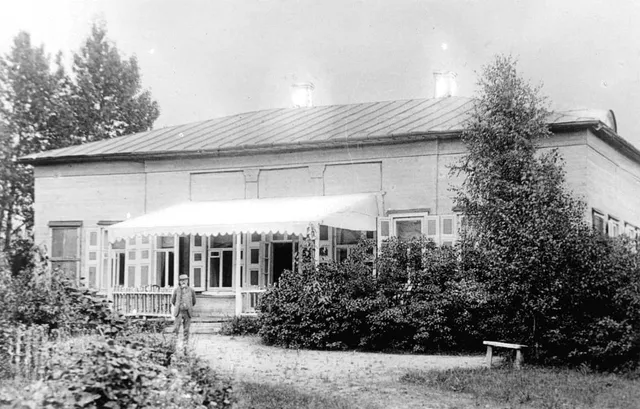
You are in the village of Frolovskoye, near Klin. On 5 May 1888 he moved into a house here that he rented from L. A. Lanina, and he stayed nearly three years, until 13 March 1891.

Two days after he arrived, he wrote to his brother Anatoly: “The garden is most agreeable, but the most precious thing is that you can go straight from the garden into the woods, and walk in the woods the whole day.”

Here he wrote the Fifth Symphony and the overture-fantasia Hamlet in 1888, then the ballet The Sleeping Beauty over 1888 and 1889, and in 1890 he worked on The Queen of Spades.

At first he doubted the symphony. In January 1889 he told Nadezhda von Meck: “Each time I become more and more convinced that my last symphony is an unsuccessful work, and this awareness of an unexpected failure (and perhaps a decline in my abilities) is very upsetting to me.”

The house he rented has not survived. The village is part of the Tchaikovsky museum-reserve in Klin.

Quoted from letter 3555 (translated by Brett Langston); letter 3748 (translated by Brett Langston). Read by a synthetic voice (Piper, en_US-ryan-high), not a person. Voice licence: CC BY-NC-SA 4.0 (RyanSpeech dataset).

What happened here

He rented a house here from L. A. Lanina from 5 May 1888 to 13 March 1891. He wrote the Symphony No. 5 and the overture-fantasia Hamlet here in 1888 and The Sleeping Beauty in 1888–89, and worked on The Queen of Spades in 1890.

What is there today

The house he rented has not survived. The village is part of the Tchaikovsky museum-reserve in Klin.

Address
Frolovskoye, near Klin, Moscow oblast, Russia (OpenStreetMap)
Getting there
About 6 km south-east of the house-museum in Klin, by road.
Written here
Symphony No. 5, Hamlet, The Sleeping Beauty, The Queen of Spades

Frolovskoye in our archive: 9 works written there · 413 letters sent from there

Sources: Tchaikovsky Research: Frolovskoye · Wikipedia (ru): Государственный мемориальный музыкальный музей-заповедник П. И. Чайковского

A single-storey country house among trees, with a small figure in front
Tchaikovsky’s house at Frolovskoye, near Klin, 1890. The composer stands in front of it Władysław Pachulski · Public domain

Demyanovo, the Taneyevs' estate

1885–1892

Audio guideSynthetic voice

Read the guide

You are at Demyanovo, on the Sestra River, at the southern edge of Klin. This estate belonged to the lawyer Vladimir Taneyev, elder brother of Sergey Taneyev, who had been Tchaikovsky's pupil. Vladimir Taneyev bought it in 1883.

While Tchaikovsky lived at Maydanovo and then at Frolovskoye, he and his brother Modest were frequent guests here, and Demyanovo comes up in his letters from 1885 to 1892. In May 1888, looking for a summer house for his friend Aleksandra Hubert, he wrote to her: “The best of them all was Taneyev's Demyanovo. The good thing about it is that it's completely detached, and you'll have at your disposal a charming grove with captivating views of Klin in the distance.” His family stayed tied to the place. Modest, his nephew Vladimir Davydov and his brother Ippolit are buried in the Demyanovo Cemetery.

Since 1991 the estate has been a branch of the Tchaikovsky museum-reserve in Klin. Parts of the two-storey main house survive, with the stone outbuildings, the Church of the Dormition, a cascade of ponds and the park, and restoration is under way. The museum runs a themed tour, “Famous owners and guests of Demyanovo”. You book it through the museum.

Quoted from letter 3559 (translated by Brett Langston). Read by a synthetic voice (Piper, en_US-ryan-high), not a person. Voice licence: CC BY-NC-SA 4.0 (RyanSpeech dataset).

What happened here

The estate of the lawyer Vladimir Taneyev, elder brother of his pupil Sergey Taneyev, who bought it in 1883. It lies on the Sestra River on the southern edge of Klin. While he lived at Maydanovo and Frolovskoye, he and his brother Modest were frequent guests, and Demyanovo comes up in his letters from 1885 to 1892. Modest, his nephew Vladimir Davydov and his brother Ippolit are buried in the Demyanovo Cemetery.

What is there today

Since 1991 the estate has been a branch of the Tchaikovsky museum-reserve in Klin. The two-storey main house, stone outbuildings, the Church of the Dormition, a cascade of ponds and the park survive in part, and restoration is under way. The museum runs a themed tour, "Famous owners and guests of Demyanovo"; book it through the museum.

Address
Demyanovo, Klin, Moscow oblast, Russia (OpenStreetMap)
Getting there
On the southern edge of Klin, about 1 km south of the house-museum and 2.5 km from Klin station.
Official site
tchaikovsky.house

Sources: Tchaikovsky State House-Museum: Demyanovo · Wikipedia (ru): Демьяново (усадьба) · Tchaikovsky Research: Modest Tchaikovsky

Moscow Conservatory

1866–1878

Audio guideSynthetic voice

Read the guide

You are on Bolshaya Nikitskaya Street, in front of the Moscow Conservatory. In September 1866, aged twenty-six, he joined the newly opened conservatory as professor of theory and harmony, under its director, Nikolay Rubinstein. He taught here for twelve years, and left in October 1878.

Teaching wore him down. In May 1870 he wrote to Ivan Klimenko: “I'm fed up with the Conservatory to the point of nausea; I'm becoming more and more convinced that I'm incapable of teaching composition theory.” Once he was free, in November 1878, he told Nadezhda von Meck: “My God! How happy I am to be free and not to have to correct 60 exercises in harmony and instrumentation each day!”

The conservatory has carried his name since 1940. The statue of him in front of the Great Hall is by Vera Mukhina, and was unveiled in 1954. The Tchaikovsky Concert Hall, also named after him and opened on 12 October 1940, is a separate building, at 4 Triumfalnaya Square.

Quoted from letter 190 (translated by Brett Langston); letter 959 (translated by Brett Langston). Read by a synthetic voice (Piper, en_US-ryan-high), not a person. Voice licence: CC BY-NC-SA 4.0 (RyanSpeech dataset).

What happened here

He joined the newly opened Moscow Conservatory in September 1866 as professor of theory and harmony, under its director Nikolay Rubinstein. He taught here for twelve years and left in October 1878.

What is there today

The conservatory has carried his name since 1940. A statue of him by Vera Mukhina was unveiled in front of the Great Hall in 1954. The Tchaikovsky Concert Hall, opened on 12 October 1940 and also named after him, is a separate building at 4 Triumfalnaya Square.

Address
13 Bolshaya Nikitskaya Street, Moscow, Russia (OpenStreetMap)
Getting there
About 600 m from Okhotny Ryad and Biblioteka imeni Lenina metro stations.
Official site
mosconsv.ru

Moscow in our archive: 69 works written there · 986 letters sent from there

Sources: Wikipedia: Moscow Conservatory · Moscow Conservatory: The Architectural Ensemble · Moscow Philharmonic: Tchaikovsky Concert Hall · Tchaikovsky Research: Moscow

Tchaikovsky Museum in Moscow, Kudrinskaya Square

1872–1873

Audio guideSynthetic voice

Read the guide

You are on Kudrinskaya Square, in front of the Kazakov House. He lived here from September 1872 to November 1873, while he was teaching at the conservatory. In his twelve Moscow years he changed address eight times, and this is the only one of those houses that survives.

Here he worked on the Second Symphony, on the music for Ostrovsky's play The Snow Maiden, and on the symphonic fantasia The Tempest.

In December 1872, living here, he wrote to his father: “My nerves are generally bad, but worrying about it does no good, so that's that. Who at our time of life doesn't suffer with their nerves, especially among artists!” A fortnight later he gave a friend his address: “on Kudrinskaya Square, opposite the fountain, in the Kazakov House”, and invited him to hear the new symphony.

The Tchaikovsky Museum in Moscow opened in this house on 18 May 2007, as a branch of the Russian National Museum of Music. Its exhibition, “Tchaikovsky and the World”, shows more than five hundred items: documents, his belongings, photographs, prints and manuscripts.

Quoted from letter 277 (translated by Brett Langston); letter 278 (translated by Brett Langston). Read by a synthetic voice (Piper, en_US-ryan-high), not a person. Voice licence: CC BY-NC-SA 4.0 (RyanSpeech dataset).

What happened here

He lived in the Kazakov House on Kudrinskaya Square from September 1872 to November 1873, while teaching at the conservatory. Here he worked on the Symphony No. 2, the music for Ostrovsky's play The Snow Maiden and the symphonic fantasia The Tempest. He changed address eight times in his twelve Moscow years; this is the only one of those houses that survives.

What is there today

The Tchaikovsky Museum in Moscow opened here on 18 May 2007, as a branch of the Russian National Museum of Music. Its exhibition, "Tchaikovsky and the World", shows more than 500 items: documents, his belongings, photographs, prints and manuscripts.

Address
46/54 Kudrinskaya Square, Moscow, Russia (OpenStreetMap)
Getting there
About 500 m from Barrikadnaya and Krasnopresnenskaya metro stations.
Official site
music-museum.ru
Written here
Symphony No. 2, The Snow Maiden, The Tempest

Sources: Russian National Museum of Music: Tchaikovsky Museum in Moscow · Tchaikovsky Research: Moscow

Bolshoi Theatre

1869–1887

Audio guideSynthetic voice

Read the guide

You are on Teatralnaya Square, in front of the Bolshoi Theatre. Three of his stage works were first performed here. His first opera, The Voyevoda, had its premiere on 11 February 1869, conducted by Eduard Merten. His first ballet, Swan Lake, followed on 4 March 1877, at a benefit for the ballerina Pelageya Karpakova, choreographed by Julius Reisinger and conducted by Stepan Ryabov.

He wrote the ballet while he was still teaching at the conservatory. In November 1875 he told Nikolay Rimsky-Korsakov: “I am drowning in the influx of work. Besides the ballet, which I am rushing to finish as soon as possible so that I can start working on an opera, I have a mass of proofreading”.

On 31 January 1887 he conducted the premiere of his opera Cherevichki here himself. He had dreaded conducting, and more than once he made up his mind to give it up. After the first orchestral rehearsal, in December 1886, he wrote to his brother Modest: “Now I already know that I can conduct, and will hardly even be afraid at the performance.”

The theatre was closed for restoration from July 2005 to October 2011.

Quoted from letter 417 (translated by Anna-Maria Leonard); letter 3115 (translated by Brett Langston). Read by a synthetic voice (Piper, en_US-ryan-high), not a person. Voice licence: CC BY-NC-SA 4.0 (RyanSpeech dataset).

What happened here

His first opera, The Voyevoda, had its premiere here on 11 February 1869. His first ballet, Swan Lake, followed on 4 March 1877, choreographed by Julius Reisinger. On 31 January 1887 he conducted the premiere of his opera Cherevichki here.

What is there today

The theatre stands on Teatralnaya Square. It was closed for restoration from July 2005 to October 2011.

Address
1 Teatralnaya Square, Moscow, Russia (OpenStreetMap)
Getting there
On Teatralnaya Square, beside Teatralnaya metro station.
First performed here
The Voyevoda, Swan Lake, Cherevichki

Sources: Wikipedia: Bolshoi Theatre · Tchaikovsky Research: Swan Lake

Saint Petersburg

Mariinsky Theatre

1874–1892

Audio guideSynthetic voice

Read the guide

You are on Theatre Square in Saint Petersburg, in front of the Mariinsky Theatre. The building opened in 1860, and eight of his stage works had their first performances here.

The Oprichnik came first, in 1874. Then came Vakula the Smith in 1876, The Maid of Orleans in 1881, and The Enchantress in 1887, which he conducted himself. The Sleeping Beauty followed on 15 January 1890, choreographed by Marius Petipa and conducted by Riccardo Drigo. The Queen of Spades came on 19 December the same year, conducted by Eduard Nápravník. The last two were given together, on one evening: the opera Iolanta, conducted by Nápravník, and the ballet The Nutcracker, produced by Lev Ivanov and conducted by Drigo, on 18 December 1892.

The building opposite, at 3 Theatre Square, is the conservatory, though in his student days it met somewhere else. A second stage, Mariinsky Two, was completed in 2013.

Read by a synthetic voice (Piper, en_US-ryan-high), not a person. Voice licence: CC BY-NC-SA 4.0 (RyanSpeech dataset).

What happened here

Eight of his stage works had their premieres here: The Oprichnik in 1874, Vakula the Smith in 1876, The Maid of Orleans in 1881 and The Enchantress in 1887, the last conducted by him. The Sleeping Beauty followed on 15 January 1890 and The Queen of Spades on 19 December 1890. Iolanta and The Nutcracker were first given together, on one evening, on 18 December 1892.

What is there today

The theatre building, opened in 1860, still stands on Theatre Square. A second stage, Mariinsky II, was completed in 2013.

Address
1 Theatre Square, Saint Petersburg, Russia (OpenStreetMap)
Getting there
About 1.4 km west of Sennaya Ploshchad metro station; there is no station closer.
Official site
mariinsky.ru
First performed here
The Oprichnik, Vakula the Smith, The Maid of Orleans, The Enchantress, The Sleeping Beauty, The Queen of Spades, Iolanta, The Nutcracker

Saint Petersburg in our archive: 66 works written there · 483 letters sent from there

Sources: Wikipedia: Mariinsky Theatre · Tchaikovsky Research: Chronology

Saint Petersburg Conservatory

1862–1865

Audio guideSynthetic voice

Read the guide

You are at 3 Theatre Square, opposite the Mariinsky Theatre, in front of the Saint Petersburg Conservatory. He was in its first intake when it opened in September 1862, at the age of twenty-two, and studied with Nikolay Zaremba and Anton Rubinstein. At the end of 1865 he graduated, the first graduate of its composition class. His graduation piece was the cantata Ode to Joy.

He did not study in this building. In his time the conservatory met in Demidov's House, on the corner of Demidov Lane and the Moyka. That house has not survived, and its site is now 1 Grivtsova Lane.

The conservatory moved here on 12 November 1896, three years after his death, into a building rebuilt from the old Bolshoi Kamenny Theatre. It now carries the name of Rimsky-Korsakov. The building has been under restoration for several years and was still closed to visitors in 2025; teaching goes on at 2 Glinka Street.

Read by a synthetic voice (Piper, en_US-ryan-high), not a person. Voice licence: CC BY-NC-SA 4.0 (RyanSpeech dataset).

What happened here

He was in the first intake when the conservatory opened in September 1862, studying with Nikolay Zaremba and Anton Rubinstein, and graduated at the end of 1865 as the first graduate of its composition class. His graduation piece was the cantata Ode to Joy. In his time the conservatory met in Demidov's House, on the corner of Demidov Lane and the Moyka, which has not survived.

What is there today

Since 12 November 1896 the conservatory, which now carries Rimsky-Korsakov's name, has had its home at 3 Theatre Square, opposite the Mariinsky, in a building rebuilt from the old Bolshoi Kamenny Theatre. That building has been under restoration for several years and was still closed to visitors in 2025; teaching goes on at 2 Glinka Street. The site of Demidov's House is now 1 Grivtsova Lane.

Address
3 Theatre Square, Saint Petersburg, Russia (OpenStreetMap)
Getting there
Across Theatre Square from the Mariinsky, about 1.3 km west of Sennaya Ploshchad metro station.
Official site
conservatory.ru
Written for it
Ode to Joy

Sources: Wikipedia (ru): Санкт-Петербургская консерватория · Wikipedia: Saint Petersburg Conservatory · Tchaikovsky Research: Saint Petersburg

His grave: Tikhvin Cemetery, Alexander Nevsky Lavra

1893

Audio guideSynthetic voice

Read the guide

You are in the Tikhvin Cemetery of the Alexander Nevsky Lavra. The way in is from Alexander Nevsky Square, through the arch of the gate church, across the square from the metro station.

He died on 6 November 1893, aged fifty-three, nine days after he had conducted the premiere of his Sixth Symphony. After the funeral service in the Kazan Cathedral on 9 November, he was buried here. His grave lies near those of Glinka, Borodin and Mussorgsky. His brother Modest is buried not here but near Klin, at Demyanovo.

Years earlier, in December 1877, he had written to Nadezhda von Meck: “Truly one should go mad were it not for music. This is, as a matter of fact, the best gift from heaven to a humanity wandering around in the darkness. Only it alone can provide enlightenment, calm and reconciliation.”

The cemetery belongs to the Lavra complex. Since 1932 it has been part of the State Museum of Urban Sculpture, which runs it as the Necropolis of Masters of Arts.

Quoted from letter 659 (translated by Brett Langston). Read by a synthetic voice (Piper, en_US-ryan-high), not a person. Voice licence: CC BY-NC-SA 4.0 (RyanSpeech dataset).

What happened here

He died on 6 November 1893. After the funeral service in the Kazan Cathedral on 9 November, he was buried in the Tikhvin Cemetery of the Alexander Nevsky Monastery.

What is there today

His grave lies near those of Glinka, Borodin and Mussorgsky. The cemetery belongs to the Lavra complex and since 1932 has been part of the State Museum of Urban Sculpture, which runs it as the Necropolis of Masters of Arts. The entrance is off Alexander Nevsky Square, through the arch of the gate church.

Address
Alexander Nevsky Lavra, Alexander Nevsky Square, Saint Petersburg, Russia (OpenStreetMap)
Getting there
Across the square from Ploshchad Aleksandra Nevskogo metro station.
Official site
gmgs.ru

Sources: Wikipedia: Tikhvin Cemetery · Wikipedia: Death of Pyotr Ilyich Tchaikovsky · State Museum of Urban Sculpture: Necropolis of Masters of Arts · Tchaikovsky Research: Chronology

Imperial School of Jurisprudence

1850–1859

Audio guideSynthetic voice

Read the guide

You are on the Fontanka Embankment, at the corner of the street that now carries his name, in front of the old Imperial School of Jurisprudence. In August 1850, aged ten, he entered its preparatory classes. From 1853 he boarded here, until he graduated in May 1859 and became a clerk at the Ministry of Justice.

His family was far away, in the Urals. In January 1851, his first winter at the school, he wrote to his parents in Alapayevsk, in French: “You cannot understand with what ecstasy I await your coming here, my angel Papa.” His marks were on their way to them too: “If they are poor, then be so kind as to treat me as if I weren't your son and scold me in your letter.”

In 1885 he wrote the Jurisprudence March for the school's fiftieth anniversary.

The building you see was rebuilt in the 1890s, and again in 1909 and 1910. Since 2009 it has housed the Leningrad Regional Court.

Quoted from letter 14 (translated by Luis Sundkvist). Read by a synthetic voice (Piper, en_US-ryan-high), not a person. Voice licence: CC BY-NC-SA 4.0 (RyanSpeech dataset).

What happened here

He entered the school's preparatory classes in August 1850, aged ten, and boarded here from 1853 until he graduated in May 1859, when he became a clerk at the Ministry of Justice. In 1885 he wrote the Jurisprudence March for the school's fiftieth anniversary.

What is there today

The building was rebuilt in the 1890s and again in 1909–10. Since 2009 it has housed the Leningrad Regional Court. It stands at the corner of the street now named after him.

Address
6 Fontanka Embankment, corner of Tchaikovsky Street, Saint Petersburg, Russia (OpenStreetMap)
Getting there
On the Fontanka across from the Summer Garden, about 1.4 km from Chernyshevskaya metro station.
Written for it
Jurisprudence March

Sources: Tchaikovsky Research: Saint Petersburg · Tchaikovsky Research: Jurisprudence March · Wikipedia (ru): Здание Училища правоведения

13 Malaya Morskaya Street, where he died

1893

Audio guideSynthetic voice

Read the guide

You are at the corner of Malaya Morskaya and Gorokhovaya Streets, in front of number 13. His brother Modest had a fifth-floor apartment in this house. Tchaikovsky arrived in Saint Petersburg on 22 October 1893 and stayed here with him.

On 28 October he conducted the premiere of his Sixth Symphony. Two days later he wrote from here to his publisher, Pyotr Jurgenson, asking for the dedication to Vladimir Davydov to go on the title page, and added: “Something strange is happening with this symphony! It's not that it displeased, but it has caused some bewilderment. So far as I myself am concerned, I'm more proud of it than any of my other works”. In the same letter he gave the symphony its title: Symphonie Pathétique.

He died in this apartment, of cholera, on 6 November 1893.

The memorial plaque on the house was designed by the architect Leonty Benois and put up in 1911. It was one of the first memorial plaques in Russia.

Quoted from letter 5062 (translated by Brett Langston). Read by a synthetic voice (Piper, en_US-ryan-high), not a person. Voice licence: CC BY-NC-SA 4.0 (RyanSpeech dataset).

What happened here

He arrived in Saint Petersburg on 22 October 1893 and stayed in his brother Modest's fifth-floor apartment here. On 28 October he conducted the premiere of the Symphony No. 6. He died in this apartment, of cholera, on 6 November 1893.

What is there today

The house, on the corner of Gorokhovaya Street, still stands. A memorial plaque designed by the architect Leonty Benois was put up in 1911, one of the first memorial plaques in Russia.

Address
13 Malaya Morskaya Street / 8 Gorokhovaya Street, Saint Petersburg, Russia (OpenStreetMap)
Getting there
Beside Admiralteyskaya metro station, a short walk from Nevsky Prospekt.

Sources: Tchaikovsky Research: Saint Petersburg · Wikipedia (ru): Гороховая улица (Санкт-Петербург) · Wikipedia (ru): Смерть Петра Чайковского

Kazan Cathedral, where his funeral was held

1893

Audio guideSynthetic voice

Read the guide

You are on Nevsky Prospekt, in front of the Kazan Cathedral. He died on 6 November 1893, of cholera, in his brother Modest's apartment on Malaya Morskaya Street, not far from here. Nine days before, he had conducted the premiere of his Sixth Symphony in this city.

His funeral service was held here on 9 November. Alexander the Third gave special permission for it to take place in the cathedral, and paid for the funeral himself.

The cathedral holds six thousand people. Sixty thousand applied for tickets, and about eight thousand were crowded in. After the service he was taken to the Tikhvin Cemetery of the Alexander Nevsky Lavra and buried there, near Glinka, Borodin and Mussorgsky.

Services in the cathedral resumed in 1992, and in 1996 it was returned to the Russian Orthodox Church. It is the main cathedral of the Saint Petersburg metropolis.

A year after the funeral, his brother Modest opened his last home, the house in Klin, as a museum.

Read by a synthetic voice (Piper, en_US-ryan-high), not a person. Voice licence: CC BY-NC-SA 4.0 (RyanSpeech dataset).

What happened here

His funeral service was held here on 9 November 1893. Alexander III gave special permission for it to take place in the cathedral and paid for the funeral himself. The cathedral holds 6,000 people; 60,000 applied for tickets, and about 8,000 were crowded in. He was then buried in the Tikhvin Cemetery.

What is there today

The cathedral stands on Nevsky Prospekt. Services resumed in 1992, and in 1996 it was returned to the Russian Orthodox Church; it is the main cathedral of the Saint Petersburg metropolis.

Address
2 Kazanskaya Square (25 Nevsky Prospekt), Saint Petersburg, Russia (OpenStreetMap)
Getting there
Beside Nevsky Prospekt metro station.
Official site
kazansky-spb.ru

Sources: Wikipedia: Death of Pyotr Ilyich Tchaikovsky · Wikipedia: Kazan Cathedral, Saint Petersburg

The Urals

Tchaikovsky Museum-Estate, Votkinsk

1840–1848

Audio guideSynthetic voice

Read the guide

You are on Tchaikovsky Street in Votkinsk, once called Gospodskaya, in front of the house where he was born, on 7 May 1840. He was the second son of Ilya Tchaikovsky, who managed the Votkinsk ironworks, and the family lived here, in the manager's house.

From November 1844 his governess was Fanny Dürbach. In October 1848 the family left for Moscow and Saint Petersburg.

He saw Fanny again almost half a century later. In January 1893, just after visiting her, he wrote to his brother Anatoly: “To meet up after 44 years of separation with a person I had been close to and loved, who remembers the past like it was all yesterday — this is quite unprecedented.”

The house was restored and opened as a museum in April 1940, on the eve of his centenary. The museum now takes in several houses on the street: his birthplace, with the exhibition “The World of Tchaikovsky's Childhood”, a music salon, and an exhibition hall in the former police chief's house. The rooms recreate the 1840s.

Quoted from letter 4843 (translated by Yuliya White). Read by a synthetic voice (Piper, en_US-ryan-high), not a person. Voice licence: CC BY-NC-SA 4.0 (RyanSpeech dataset).

What happened here

He was born here on 7 May 1840, the second son of Ilya Tchaikovsky, manager of the Votkinsk ironworks. From November 1844 his governess was Fanny Dürbach. The family lived in the manager's house until October 1848, when they left for Moscow and Saint Petersburg.

What is there today

The house was restored and opened as a museum in April 1940, on the eve of his centenary. The museum now takes in several houses on the street: his birthplace, with the exhibition "The World of Tchaikovsky's Childhood", a music salon, and an exhibition hall in the former police chief's house. The rooms recreate the 1840s.

Address
Tchaikovsky Street (formerly Gospodskaya), Votkinsk, Udmurtia, Russia (OpenStreetMap)
Getting there
Votkinsk is about 50 km north-east of Izhevsk, the capital of Udmurtia; buses run between the two.

Votkinsk in our archive: 3 letters sent from there

Sources: Tchaikovsky Research: Votkinsk · Wikipedia (ru): Музей-усадьба П. И. Чайковского

Exterior of the Tchaikovsky Museum in Votkinsk
Tchaikovsky Museum, Votkinsk Wacher98 · CC BY-SA 4.0

Tchaikovsky House-Museum, Alapayevsk

1849–1850

Audio guideSynthetic voice

Read the guide

You are in Alapayevsk, in the Urals, in front of the ironworks manager's house. His father managed the Alapayevsk ironworks from May 1849 to September 1852, and the family lived in this house.

His twin brothers, Anatoly and Modest, were born here on 13 May 1850. The next day, aged ten, he wrote in French to his former governess, Fanny Dürbach: “I have already seen them several times, but each time that I see them it seems to me that they are Angels who have descended on earth.”

In the same letter he listed his lessons for her: French, Russian and German grammar, geography, history and arithmetic. In August 1850 he left for school in Saint Petersburg.

The museum is in the manager's house. A memorial room opened here on 7 May 1965, his hundred and twenty-fifth birthday, and it became a full museum in 1990. One part shows the family's rooms, with documents, belongings and a Wirth grand piano. The other is a collection of musical instruments from around the world, and many of them are played.

Quoted from letter 8 (translated by Luis Sundkvist). Read by a synthetic voice (Piper, en_US-ryan-high), not a person. Voice licence: CC BY-NC-SA 4.0 (RyanSpeech dataset).

What happened here

His father managed the Alapayevsk ironworks from May 1849 to September 1852, and the family lived in the manager's house. His twin brothers Anatoly and Modest were born here on 13 May 1850. Pyotr left in August 1850, aged ten, for school in Saint Petersburg.

What is there today

The museum is in the manager's house. A memorial room opened here on 7 May 1965, his 125th birthday, and became a full museum in 1990. One part shows the family's rooms, with documents, belongings and a Wirth grand piano; the other is a collection of musical instruments from around the world, many of which are played.

Address
Alapayevsk, Sverdlovsk oblast, Russia (OpenStreetMap)
Getting there
Alapayevsk is about 130 km north-east of Yekaterinburg, by road or rail.

Alapayevsk in our archive: 5 letters sent from there

Sources: Tchaikovsky Research: Alapayevsk · Wikipedia (ru): Дом-музей Чайковского (Алапаевск)

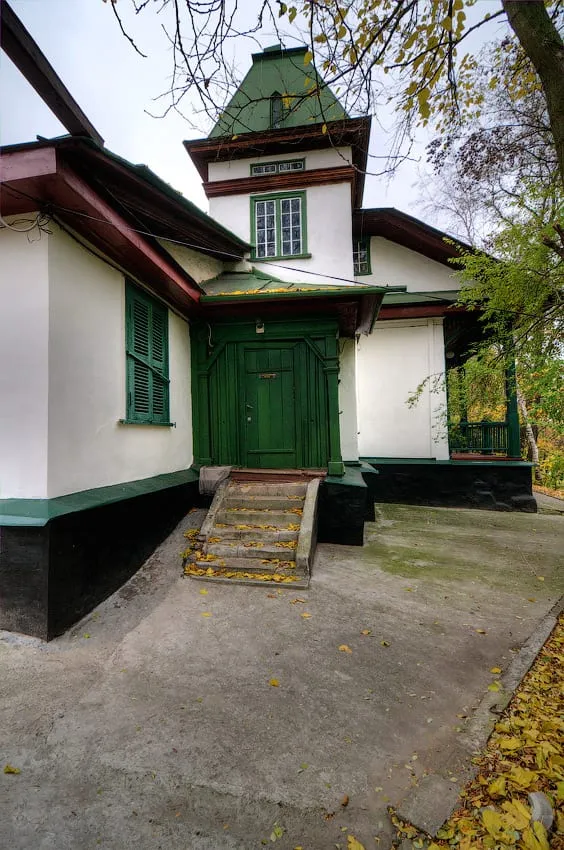
A low wooden house on a street in Alapayevsk
The house in Alapayevsk where the Tchaikovsky family lived in 1849–50, now a museum Toshishiro · CC BY-SA 4.0

Ukraine

Kamenka: Pushkin and Tchaikovsky Museum

1865–1893

Audio guideSynthetic voice

Read the guide

You are in Kamianka, in the Cherkasy region of Ukraine. He knew it as Kamenka. His sister Aleksandra lived here with her husband, Lev Davydov, and from 1865 to 1893 he came regularly, often for months at a time.

A great deal of his music was finished here. In 1877 he orchestrated the Fourth Symphony and Yevgeny Onegin. In 1878 he began the Children's Album. In 1880 he finished the Second Piano Concerto and the Italian Capriccio, and in 1884 he drafted the Third Suite.

In July 1878, writing from Kamenka to Nadezhda von Meck about how he composed, he said: “Inspiration is a guest who does not like to visit the idle. It appears to those who summon it.”

The museum in his honour was set up in 1940, for his centenary. Since the 1960s it has been run together with a museum of Pushkin, who also stayed at Kamenka. It is in the Green House of the Davydov estate, which carries memorial plaques to both. Its rooms on Tchaikovsky cover his life here and in Ukraine, and concerts are held every May, for his birthday.

Quoted from letter 862 (translated by Brett Langston). Read by a synthetic voice (Piper, en_US-ryan-high), not a person. Voice licence: CC BY-NC-SA 4.0 (RyanSpeech dataset).

What happened here

His sister Aleksandra lived here with her husband Lev Davydov, and he came regularly from 1865 to 1893, often for months. At Kamenka he orchestrated the Symphony No. 4 and Yevgeny Onegin in 1877, began the Children's Album in 1878, finished the Piano Concerto No. 2 and the Italian Capriccio in 1880, and drafted the Suite No. 3 in 1884.

What is there today

A museum in his honour was set up in 1940, for his centenary, and since the 1960s it has been run together with a museum of Pushkin, who also stayed at Kamenka. It is in the Green House of the Davydov estate, which carries memorial plaques to both. Its rooms on Tchaikovsky cover his life at Kamenka and in Ukraine, and concerts are held each May for his birthday.

Address
Kamianka, Cherkasy oblast, Ukraine (OpenStreetMap)
Getting there
Kamianka is about 195 km south-east of Kyiv, in Cherkasy oblast. Ukraine is at war: check current travel advice before you plan a trip.
Written here
Symphony No. 4, Yevgeny Onegin, Children's Album, Piano Concerto No. 2, Italian Capriccio, Suite No. 3

Kamenka in our archive: 28 works written there · 642 letters sent from there

Sources: Tchaikovsky Research: Kamenka · Wikipedia (ru): Каменский литературно-мемориальный музей А. С. Пушкина и П. И. Чайковского

Exterior of the Green house in Kamenka
Green house, Kamenka Сергій Криниця (Haidamac) · CC BY-SA 3.0

Brailov: Tchaikovsky and von Meck Museum

1878–1880

Audio guideSynthetic voice

Read the guide

You are in Brailiv, in the Vinnytsia region of Ukraine. He knew it as Brailov. This was Nadezhda von Meck's country estate. She let him stay here while she was away, four times between May 1878 and July 1880. On his first visit he wrote Souvenir d'un lieu cher, three pieces for violin and piano dedicated to Brailov.

On that visit, in June 1878, he wrote to her: “After tea, sitting on the grass, I took it into my head to count how many different representatives of the vegetable kingdom surrounded me. […] Do you know how many I gathered? About 45, and this in a space of two arshins!” An arshin is a little over seventy centimetres.

In 1879 and 1880 he also stayed at her cottage at Simaki, four kilometres away, where he finished the orchestration of The Maid of Orleans.

The Museum of Pyotr Tchaikovsky and Nadezhda von Meck, founded in 1979, is in the former von Meck estate, with a memorial plaque on the front of the palace. Since 2021 it has been part of the Vinnytsia Regional Museum of Local Lore.

Quoted from letter 846 (our translation). Read by a synthetic voice (Piper, en_US-ryan-high), not a person. Voice licence: CC BY-NC-SA 4.0 (RyanSpeech dataset).

What happened here

This was Nadezhda von Meck's country estate. She let him stay here while she was away, four times between May 1878 and July 1880; on the first visit he wrote Souvenir d'un lieu cher, three pieces for violin and piano dedicated to Brailov. In 1879 and 1880 he also stayed at her cottage at Simaki, 4 km away, where he finished the orchestration of The Maid of Orleans.

What is there today

The Museum of Pyotr Tchaikovsky and Nadezhda von Meck, founded in 1979, is in the former von Meck estate, with a memorial plaque on the front of the palace. Since 2021 it has been part of the Vinnytsia Regional Museum of Local Lore.

Address
13 Tchaikovsky Street, Brailiv, Vinnytsia oblast, Ukraine (OpenStreetMap)
Getting there
Brailiv is about 8 km north-east of Zhmerynka, a main railway junction. Ukraine is at war: check current travel advice before you plan a trip.
Written here
Souvenir d'un lieu cher, Liturgy of Saint John Chrysostom, The Maid of Orleans

Brailov in our archive: 6 works written there · 45 letters sent from there

Sources: Tchaikovsky Research: Brailov · Tchaikovsky Research: Simaki · Wikipedia (uk): Музей Чайковського і фон Мекк

Georgia

Tiflis: his brother Anatoly's house

1886–1890

Audio guideSynthetic voice

Read the guide

You are on Tchaikovsky Street in Tbilisi. In his day the city was called Tiflis, and this street was Konsulskaya. The memorial plaque on number 12 marks the house of his brother Anatoly, where he stayed.

Anatoly worked in Tiflis as state prosecutor and later as deputy governor, and Tchaikovsky visited every year from 1886 to 1890. In June 1887 he came down the Volga and across the Caspian, and wrote to Pyotr Jurgenson that the journey was a pleasure, “because the broad mother Volga is intrinsically most appealing to the Russian soul, which is inclined to everything in nature that is broad, magnificently flat and calm.” On 1 May 1886 he heard the premiere of the final version of Romeo and Juliet here. In 1890 he finished the symphonic ballad The Voyevoda in Tiflis, and on 1 November that year he conducted a concert of his own works.

In April 1888, from Tiflis, he wrote to Yuliya Shpazhinskaya: “Every artist, writer, musician, is at the same time a craftsman, and only amateurs, or spineless and lazy people wait for inspiration. It does not come if you are not strict with yourself.”

Quoted from letter 3267 (translated by Brett Langston); letter 3542 (translated by Brett Langston). Read by a synthetic voice (Piper, en_US-ryan-high), not a person. Voice licence: CC BY-NC-SA 4.0 (RyanSpeech dataset).

What happened here

His brother Anatoly worked in Tiflis as state prosecutor and later deputy governor, and Tchaikovsky visited every year from 1886 to 1890. On 1 May 1886 he heard the premiere of the final version of Romeo and Juliet here. In 1890 he finished the symphonic ballad The Voyevoda in Tiflis, and on 1 November he conducted a concert of his own works.

What is there today

The street, formerly Konsulskaya, now bears his name. A memorial plaque on No. 12 marks the house of Anatoly's where he stayed.

Address
12 Tchaikovsky Street, Tbilisi, Georgia (OpenStreetMap)
Getting there
In the Sololaki district of central Tbilisi, about 500 m from Freedom Square.
Works tied to this place
Romeo and Juliet, The Voyevoda

Tiflis in our archive: 4 works written there · 83 letters sent from there

Sources: Tchaikovsky Research: Tiflis · Wikipedia (ru): Улица Петра Чайковского (Тбилиси)

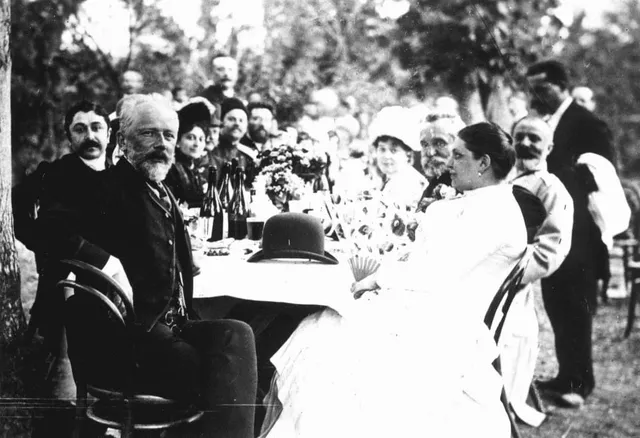
Group photograph in a garden with Tchaikovsky among friends
Tchaikovsky with friends in the Ortachala gardens, Tiflis, 1889 Iosif Z. Andronikashvili · Public domain

Europe

Clarens, Lake Geneva

1877–1879

Audio guideSynthetic voice

Read the guide

You are in Clarens, on Lake Geneva, now part of Montreux. He first came to the Villa Richelieu here in October 1877, with his brother Anatoly, days after his marriage broke down. In November he wrote to Nadezhda von Meck: “At last I can work. Without work, life has no meaning for me.”

By March 1878 he was back, and the violinist Iosif Kotek joined him. On 17 March he began the Violin Concerto, and by 11 April it was finished and orchestrated. On the very day he began it, he wrote to Nadezhda von Meck: “One must endure and have faith, and inspiration shall inevitably appear to those who have managed to overcome their indisposition.”

He played each movement through to Kotek and to his brother Modest as it was finished. On 4 April he noted for Anatoly: “The finale of my concerto caused a furore amongst us, but the Andante was condemned, and tomorrow I'll have to write a new one.”

He returned in the winter of 1879 to work on The Maid of Orleans.

We found no reliable source for a building or a plaque that survives from his stays, so we cannot point you to one.

Quoted from letter 622 (translated by Alexander Poznansky); letter 778 (translated by Brett Langston); letter 797 (translated by Brett Langston). Read by a synthetic voice (Piper, en_US-ryan-high), not a person. Voice licence: CC BY-NC-SA 4.0 (RyanSpeech dataset).

What happened here

He first came to the Villa Richelieu in October 1877 with his brother Anatoly, days after his marriage broke down. On his second stay, after the violinist Iosif Kotek joined him, he began the Violin Concerto on 17 March 1878 and had it finished and orchestrated by 11 April. He came back in the winter of 1879 to work on The Maid of Orleans.

What is there today

Clarens is now part of the municipality of Montreux. We found no reliable source for a surviving building or plaque from his stays, so we name none.

Address
Clarens, Montreux, canton of Vaud, Switzerland (OpenStreetMap)
Getting there
Clarens has its own station on the line along Lake Geneva, one stop before Montreux.
Written here
Violin Concerto, Yevgeny Onegin, The Maid of Orleans

Clarens in our archive: 7 works written there · 112 letters sent from there

Sources: Tchaikovsky Research: Clarens · Wikipedia: Clarens, Switzerland

Florence

1878, 1890

Audio guideSynthetic voice

Read the guide

You are on Via San Leonardo in Florence, at Villa Bonciani, number 64. The city's official tourism site gives this address for the villa where he stayed in December 1878. He was near Nadezhda von Meck's Villa Oppenheim, worked on his First Suite, and settled on The Maid of Orleans as his next opera. Once he began it, he wrote to Modest: “I was overcome by some sort of madness: for three whole days I suffered in torment because there was so much material, yet so little human strength and time!”

He came back on 30 January 1890 and stayed until 7 April. The day after he arrived he began The Queen of Spades, and by 15 March the draft was finished. That day he wrote to his brother Modest: “I was composing the very end of the opera yesterday before dinner, and when I reached Herman's death and the final chorus, I felt so sorry for Herman, that I suddenly broke down in tears.”

The string sextet Souvenir de Florence, written later that year, is named after the city.

Quoted from letter 1013 (translated by Brett Langston); letter 4058 (translated by Brett Langston). Read by a synthetic voice (Piper, en_US-ryan-high), not a person. Voice licence: CC BY-NC-SA 4.0 (RyanSpeech dataset).

What happened here

In December 1878 he stayed on the Viale dei Colli, near Nadezhda von Meck's Villa Oppenheim, and worked on the Suite No. 1 while settling on The Maid of Orleans as his next opera. From 30 January to 7 April 1890 he was back: he began The Queen of Spades the day after he arrived and finished the draft by 15 March. The string sextet Souvenir de Florence, written later that year, is named after the city.

What is there today

The city's official tourism site places Villa Bonciani, where he stayed in 1878, at Via San Leonardo 64.

Address
Villa Bonciani, Via San Leonardo 64, Florence, Italy (OpenStreetMap)
Getting there
Via di San Leonardo climbs south from the Forte di Belvedere; No. 64 is about 1.5 km from the Ponte Vecchio, uphill on foot.
Works tied to this place
The Queen of Spades, Suite No. 1, Souvenir de Florence

Florence in our archive: 7 works written there · 158 letters sent from there

Sources: Tchaikovsky Research: Florence · Destination Florence (Comune di Firenze): Russia in Florence

America and Britain

Carnegie Hall, New York

1891

Audio guideSynthetic voice

Read the guide

You are at Seventh Avenue and 57th Street in New York, in front of Carnegie Hall. When it opened, it was Andrew Carnegie's new Music Hall, and his only American tour was built around that opening. On 5 May 1891 he conducted his Coronation March at the opening concert. The march itself was not new: it had first been played in Moscow, in Sokolniki Park, in 1883.

In the same week he conducted his Third Suite, on his fifty-first birthday, and his First Piano Concerto, with Adele aus der Ohe as soloist.

Eight days before the opening, just arrived, he wrote to his brother Anatoly: “New York is a very beautiful and very original city. On the main street single-storey cottages alternate with houses of 9 floors.” And, of the welcome he had found: “Here I'm an important bird.”

The Music Hall is now called Carnegie Hall, and the main hall is the Isaac Stern Auditorium. Zankel Hall and Weill Recital Hall are in the same building.

Quoted from letter 4368 (translated by Brett Langston). Read by a synthetic voice (Piper, en_US-ryan-high), not a person. Voice licence: CC BY-NC-SA 4.0 (RyanSpeech dataset).

What happened here

His only American tour was built around the opening of Andrew Carnegie's new Music Hall. On 5 May 1891 he conducted his Coronation March at the opening concert. In the same week he conducted the Suite No. 3 on his 51st birthday and the Piano Concerto No. 1 with Adele aus der Ohe as soloist.

What is there today

The Music Hall, now called Carnegie Hall, still stands at Seventh Avenue and 57th Street. The main hall is now the Isaac Stern Auditorium; Zankel Hall and Weill Recital Hall are in the same building.

Address
881 Seventh Avenue, New York, NY, USA (OpenStreetMap)
Getting there
At the corner of Seventh Avenue and 57th Street, beside the 57 St–7 Av subway station (N, Q, R, W).
He conducted here
Coronation March, Suite No. 3, Piano Concerto No. 1

New York in our archive: 2 works written there · 19 letters sent from there

Sources: Tchaikovsky Research: New York · Wikipedia: Carnegie Hall

Cambridge

1893

Audio guideSynthetic voice

Read the guide

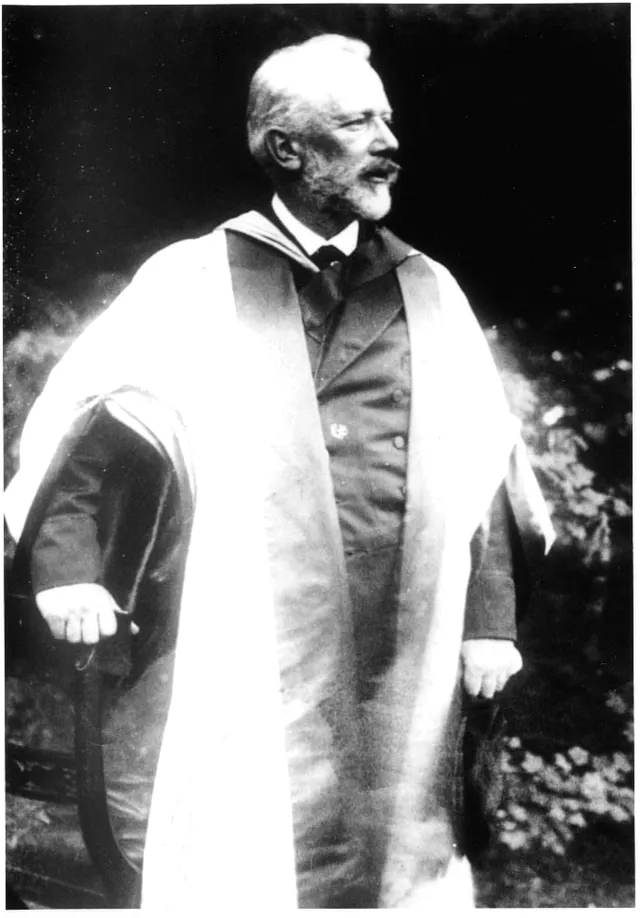
You are at Downing College, on Regent Street in Cambridge. He came to Cambridge on 12 June 1893 to receive an honorary Doctor of Music degree, and stayed here, in the West Lodge, with the legal historian Frederic Maitland and his wife Florence. The college records his visit.

That afternoon he conducted Francesca da Rimini in the Guildhall, its first performance in England. The present Guildhall replaced that building in 1939.

The degree was conferred the next day, together with Saint-Saëns, Bruch and Boito. Grieg, also honoured, was too ill to come.

The same day he wrote home to Klin, to his servant Aleksey Sofronov: “I'm writing to you on the eve of my departure. Thank God I can finally get out of here, I'm terribly exhausted.” And a little further on: “Oh how delightful it will be to return home!” Two days later, from Paris, he described his stay to Anatoly: “Rather than staying at a hotel, I was allocated a place in one of the professors' apartments.” And: “His wife was utterly agreeable and charming to me.”

Quoted from letter 4947 (translated by Brett Langston); letter 4952 (translated by Yuliya White). Read by a synthetic voice (Piper, en_US-ryan-high), not a person. Voice licence: CC BY-NC-SA 4.0 (RyanSpeech dataset).

What happened here

He came to Cambridge on 12 June 1893 to receive an honorary Doctor of Music degree. That afternoon he conducted Francesca da Rimini in the Guildhall, its first performance in England. The degree was conferred the next day, together with Saint-Saëns, Bruch and Boito; Grieg, also honoured, was too ill to come.

What is there today

He stayed with the legal historian Frederic Maitland and his wife Florence in the West Lodge of Downing College, and the college records his visit. The Guildhall where he conducted was replaced by the present building in 1939.

Address
Downing College, Regent Street, Cambridge, UK (OpenStreetMap)
Getting there
Downing College is about 1.2 km from Cambridge station; trains run from London King's Cross and Liverpool Street.
Official site
dow.cam.ac.uk
He conducted here
Francesca da Rimini

Cambridge in our archive: 1 letter sent from there

Sources: Tchaikovsky Research: Cambridge · Downing College: Centenary of the Maitland Historical Society · Wikipedia: Guildhall, Cambridge

Photograph of Tchaikovsky wearing academic robes and cap
Tchaikovsky in doctoral robes at Cambridge, June 1893 Florence Henrietta Darwin · Public domain