Rome

He stayed here 6 times between 1874 and 1890. Among the works he wrote here: Mazepa, Symphony No. 4, and The Queen of Spades.

Coordinates
41.9, 12.5

Rome is the capital city of Italy, and of the Lazio region and province of Rome.

Rome and the places around it in his lifeMap of the area around Rome, with 12 other places from Tchaikovsky's life nearby. Arrows lead to the places he came from and went on to, most often Florence, Naples, Venice. The inset shows where this area lies in Europe.Florence → Rome: 4 timesRome → Naples: 3 timesVenice → Rome: 1 timeRome → Venice: 1 timeRome → Paris: 1 timeRome → Saint Petersburg: 1 timeTurin → Rome: 1 timeNiceSan RemoGenoaPisaHerculaneumMonacoPompeiiPozzuoliSorrentoTivoliFlorenceNaplesRome
Arrived fromWent on toOther places in his lifeThicker lines: more journeys.A name with an arrow is farther away, beyond the edge of the map.

Rome in his time

1874–1890The new capital of Italy, where he spent two long winters, wrote the Italian Capriccio and watched the carnival from a balcony on the Corso.

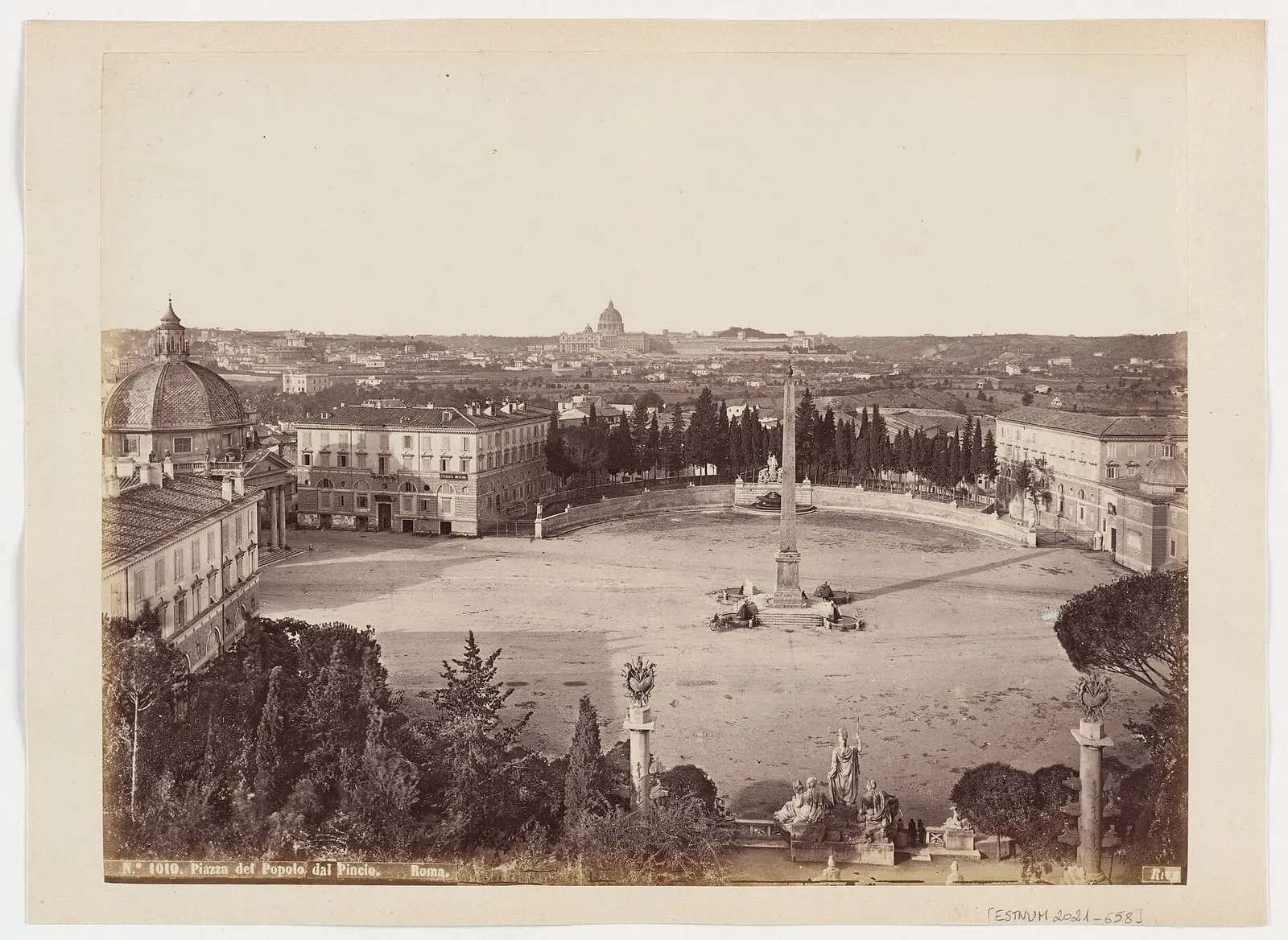
Old photograph looking down from a terrace onto a wide oval square with an obelisk, domed churches and the dome of St Peter's in the distance
Piazza del Popolo from the Pincio, with St Peter's on the skyline; the green Pincio was the hill he saw from his window in 1879 Robert Rive, public domain, Wikimedia Commons

A capital under construction

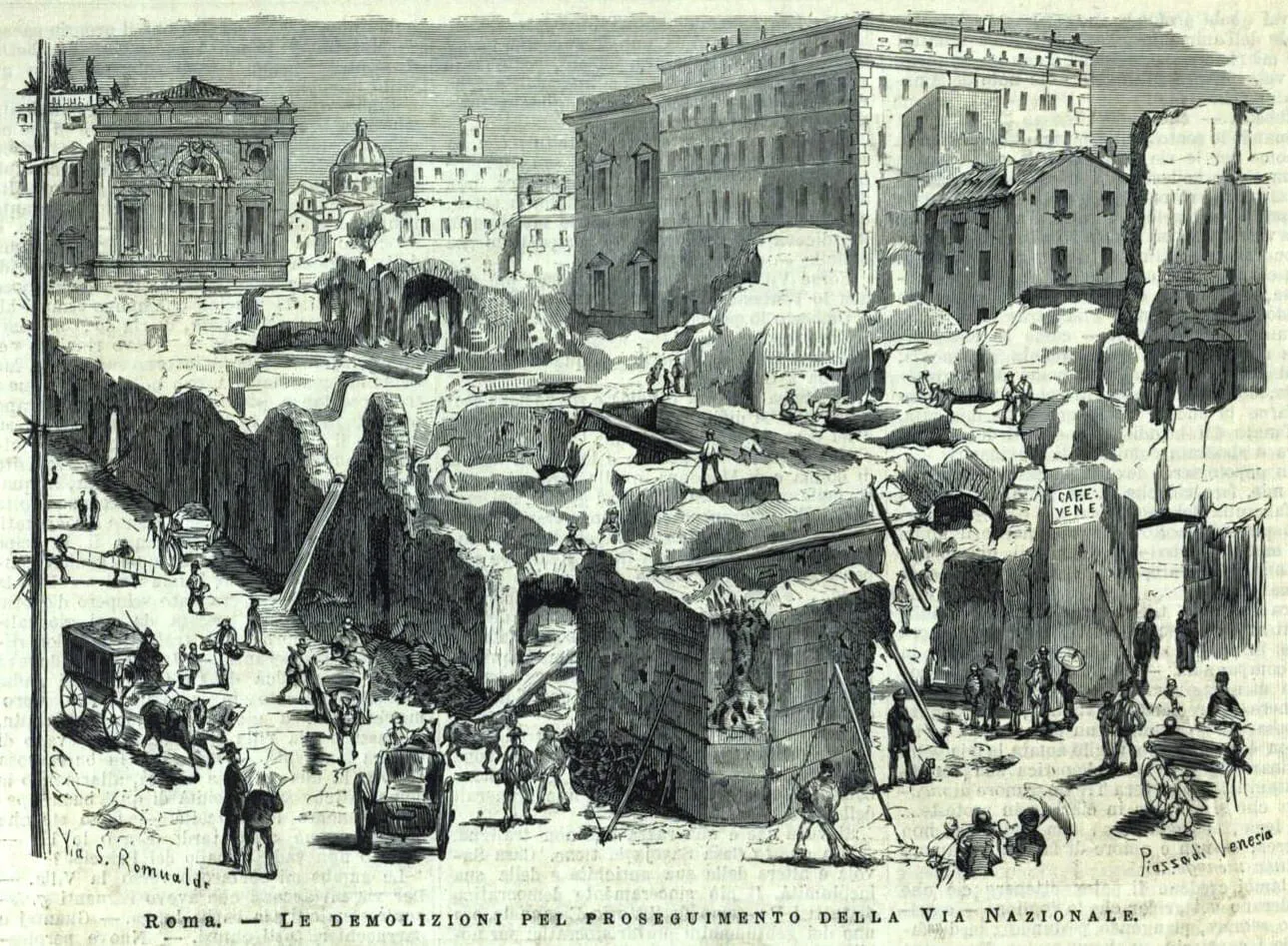
Italian troops entered Rome on 20 September 1870, and the papal city became the capital of the Kingdom of Italy. When Tchaikovsky first saw it, in the spring of 1874, the new state was remaking it as a capital. The permanent Termini station was finished that year. A broad new street, the Via Nazionale, was being cut from the station towards the Corso, demolishing whole blocks on the way. Horse trams arrived in 1877.

The 1881 census counted 300,467 inhabitants. The Brockhaus and Efron encyclopedia described the new quarter on the Esquiline as the home of senators, deputies, officials and many foreigners, and the Corso as the most aristocratic street, with palaces, rich shops and cafés. Coming back in 1890 after eight years, he found some narrow, dirty streets turned wide and luxurious, among them the Via del Tritone, and missed the quiet, modest Rome he had known.
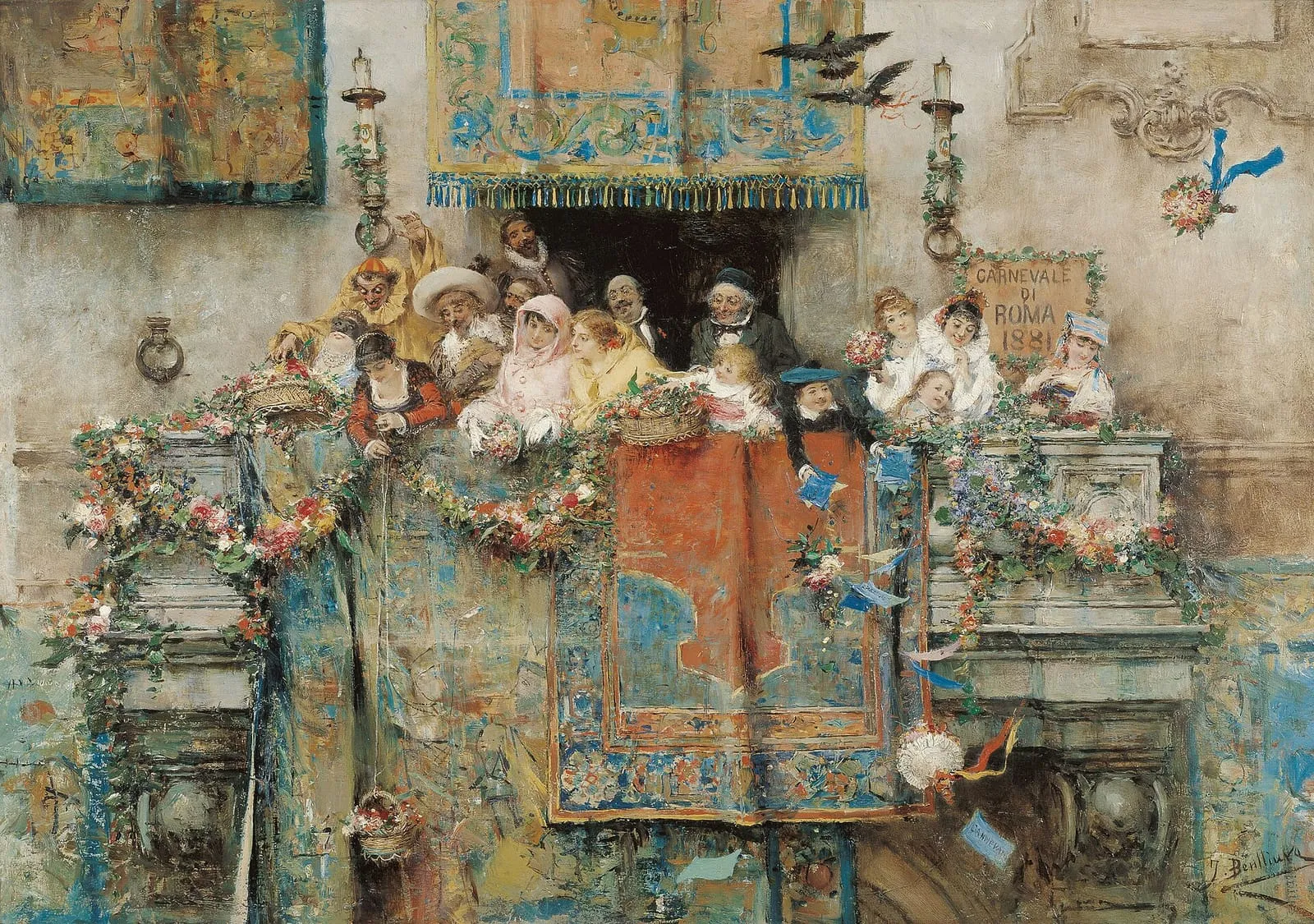
Painting of a crowded balcony decorated with garlands and a red carpet, people in masks and costumes throwing flowers
A balcony hung with carpets and flowers at the Roman carnival of 1881, painted by José Benlliure José Benlliure y Gil, public domain, Wikimedia Commons

Night trains and long walks

In December 1879 he came from Paris through snowdrifts and delays that forced a night in Turin. In March 1881 he took the 10 p.m. train from Florence and reached Rome at six in the morning; in April 1890 he left Florence at 11 at night and slept badly in the cold.

In Rome he walked. One December day in 1881 he went past Santa Maria Maggiore to San Pietro in Vincoli, on to the Colosseum, the Baths of Caracalla and the Lateran, and home through the new streets near the railway. He drove out along the Via Appia. After a morning in the Vatican in 1880 he hired a cab, bought cigarettes and gloves on the Corso and sat down to macaroni at the Falcone.

Engraving of a street being cut through broken walls and rubble, with carriages and onlookers in front
Demolitions to extend the Via Nazionale towards Piazza Venezia, an engraving of 1878 Unknown author, public domain, Wikimedia Commons

Six floors above the city

In 1879–80 he lived at the Hôtel Costanzi on the Via San Nicola da Tolentino with his brother Modest, Modest's pupil Kolya Konradi and his servant Alyosha. His first room looked onto a barracks yard full of drill, firing and bugle calls, so he moved. According to Modest, the opening fanfare of the Italian Capriccio was a cavalry signal he heard there every day; other tunes came from collections or from the streets. During the carnival they hired a balcony on the Corso, where flour balls flew from 2 until 5, when cannon shots announced the horse race.

He came back in March 1881, finding his old friend Nikolay Kondratyev at the hotel. That winter of 1881–82 he worked on Mazepa and the Piano Trio. In 1890 he stayed at the small Hôtel Molaro on the Via Gregoriana and orchestrated The Queen of Spades.

In his words

Both main rooms have windows facing the sun, and since the hotel is on a hill and we live on the 6th floor, the view from the windows is magnificent: the whole of Rome is in the palm of one's hand.

Merely taking a few steps along the Corso is sufficient to be hit from all sides so many times, that all your clothes turn white.

All day and all evening I sit at the open window; violets have appeared for sale in the streets in enormous quantities; even in the evening one cannot go out other than in a light frock-coat.

Before and after

Each row is one stay, from his first to his last surviving letter written here, between where he wrote from just before and just after.

Came fromRomeWent on to
Florence until 7 April 8 – 29 April 1890 Saint Petersburg from 8 May
Florence until 1 December 3 December 1881 – 20 February 1882 Naples from 22 February
Florence until 3 March 4 – 10 March 1881 Naples from 13 March
Turin until 19 December 21 December 1879 – 8 March 1880 Paris from 11 March
Florence until 18 November 19 – 22 November 1877 Venice from 23 November
Venice until 29 April 1 May 1874 Naples from 7 May

Works written here

Letters written here

18741 letter
18775 letters
187914 letters
188049 letters
188128 letters
188244 letters
189020 letters

Mentioned in letters

Letters in which Tchaikovsky names this place.

18744 letters
187721 letters
18785 letters
187927 letters
188049 letters
188151 letters
188247 letters
188311 letters
18842 letters
18852 letters
18869 letters
18871 letter
18881 letter
189031 letters

Events here

Sources

Licence: CC BY-NC-SA 4.0. Tchaikovsky Research (en.tchaikovsky-research.net).

Cite this page

Plain text

Rome. Dear Tchaikovsky, https://deartchaikovsky.com/en/places/rome/. Last updated 18 November 2026.

Chicago

“Rome.” Dear Tchaikovsky. Last updated 18 November 2026. https://deartchaikovsky.com/en/places/rome/.

BibTeX

@misc{deartchaikovsky-places-rome,
  title = {Rome},
  howpublished = {Dear Tchaikovsky},
  url = {https://deartchaikovsky.com/en/places/rome/},
  date = {2026-11-18},
}