Swan Lake: scene by scene
A prince falls in love with a girl who is a swan by day, swears to marry her, and is tricked into breaking his word. This is the story as Tchaikovsky set it in 1877, with notes on how later productions changed it.
Who's who
- Odette
- A princess under a spell: a swan by day, a girl by night
- Prince Siegfried
- Comes of age on the first day of the story
- The Princess
- Siegfried's mother, who wants him married
- Benno
- Siegfried's friend
- Wolfgang
- His old tutor
- Baron von Rothbart
- A guest at the ball who turns out to be a demon; from 1895 the sorcerer who cast the spell
- Odile
- Rothbart's daughter, made to look like Odette
- The stepmother
- Odette's enemy in 1877, a witch who takes the shape of an owl
Act I
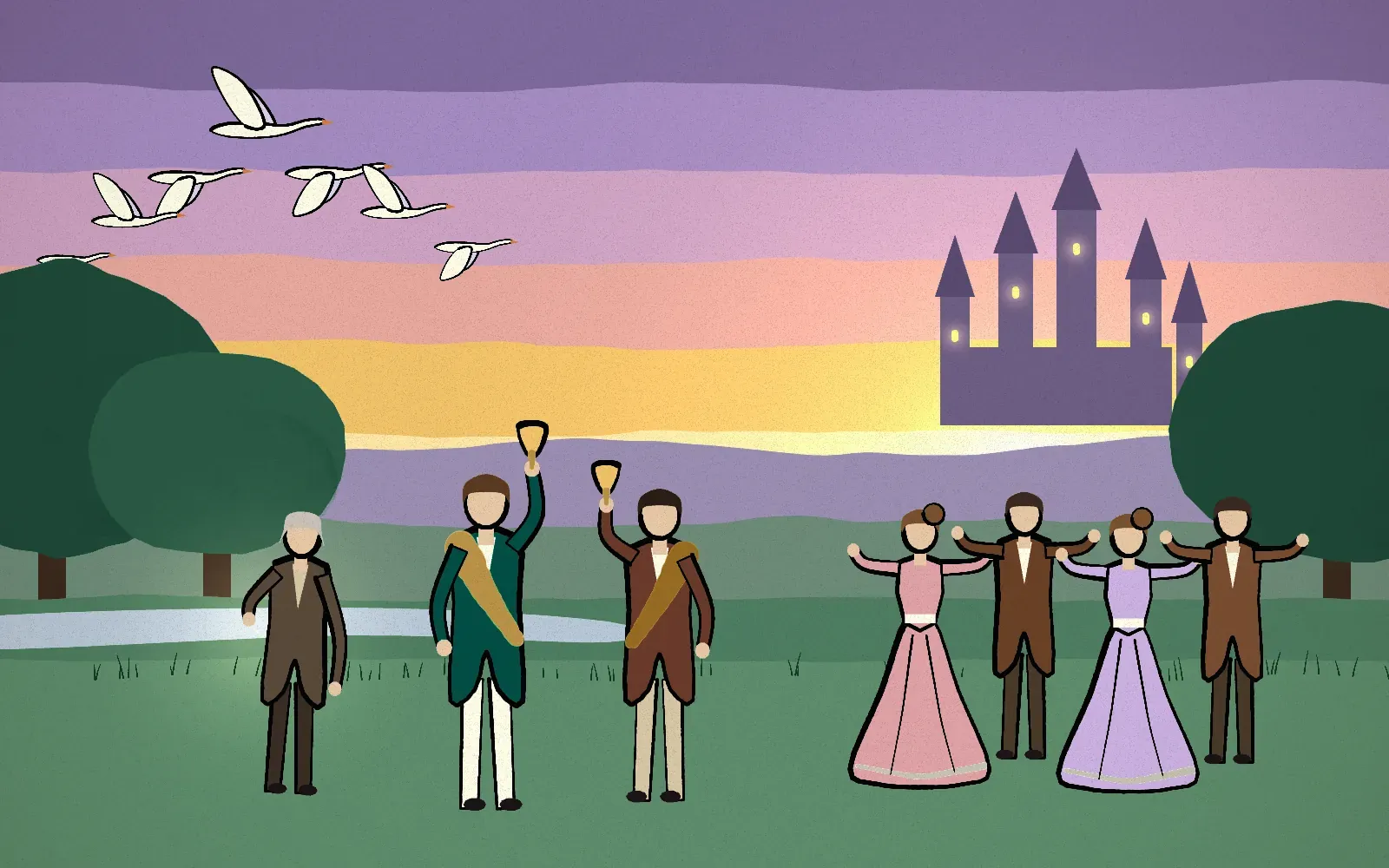
A birthday in the park
Prince Siegfried has come of age, and his friends are celebrating in the park below the castle. Villagers come to wish him well. His old tutor, Wolfgang, has them dance, and the prince pours wine for everyone.
Then his mother arrives. Tomorrow, she says, there will be a ball, and there he must choose a bride. Siegfried agrees, but the fun has gone out of the day. His friend Benno cheers him up and the party goes on. Wolfgang, a little tipsy, joins the dancing and falls over.
As the sun goes down, a flock of swans flies over. Benno wants to go hunting. Siegfried waits until his tutor has gone to bed, then takes his gun and follows the swans.
Act II
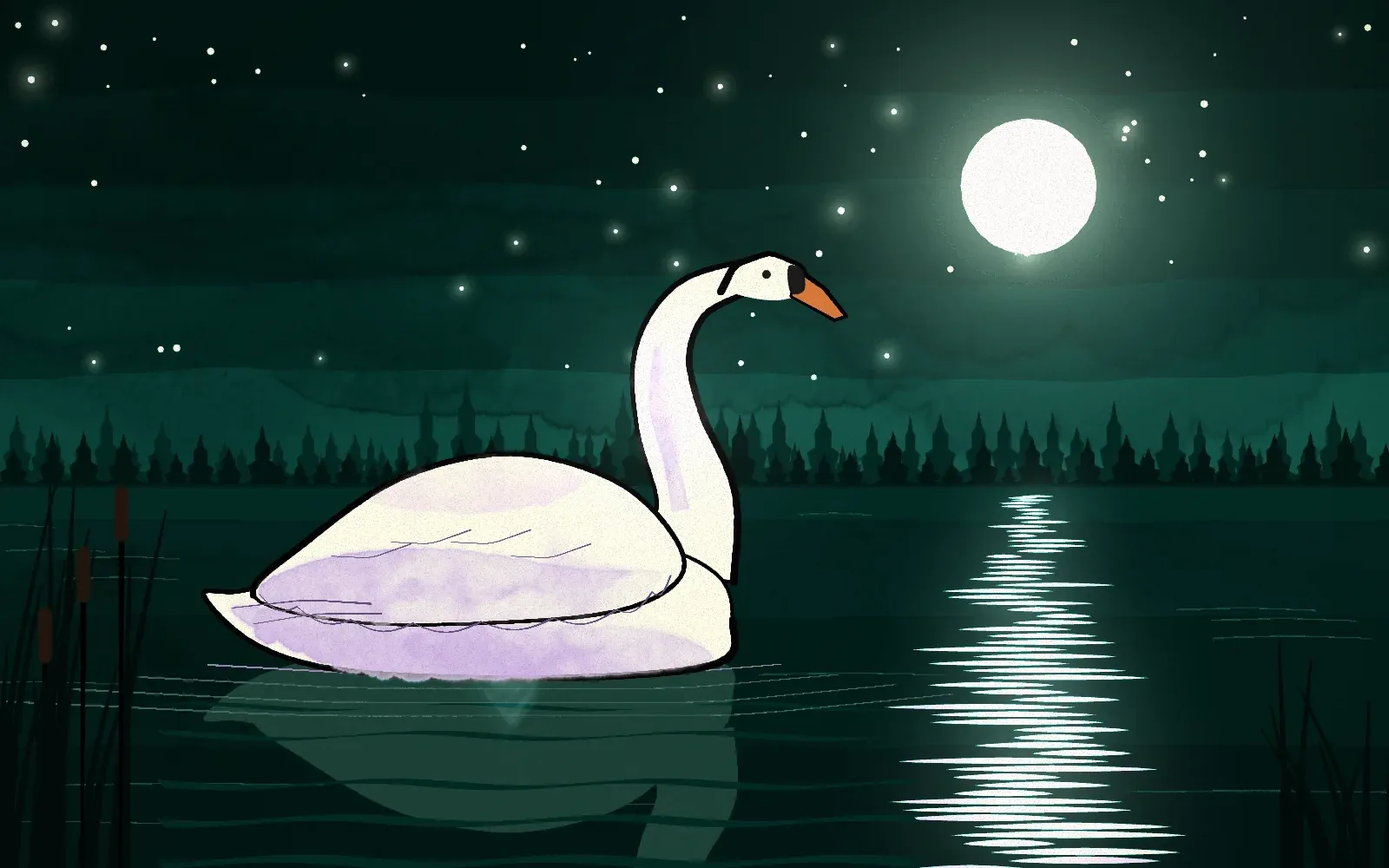
The lake by moonlight
A lake among wooded mountains, silver under the moon, with a ruined chapel on the shore. A swan wearing a crown leads the others across the water. Siegfried raises his gun, but the swans disappear behind the ruins, and a girl in white comes down the steps with the crown on her head.
She is Odette. By day she and her friends are swans; only at night are they girls again. Her stepmother, a witch, wants her dead, and the crown her grandfather gave her is all that keeps her safe. The spell will break only when a man promises to marry her and keeps his word. On the ruins an owl is watching: the stepmother.
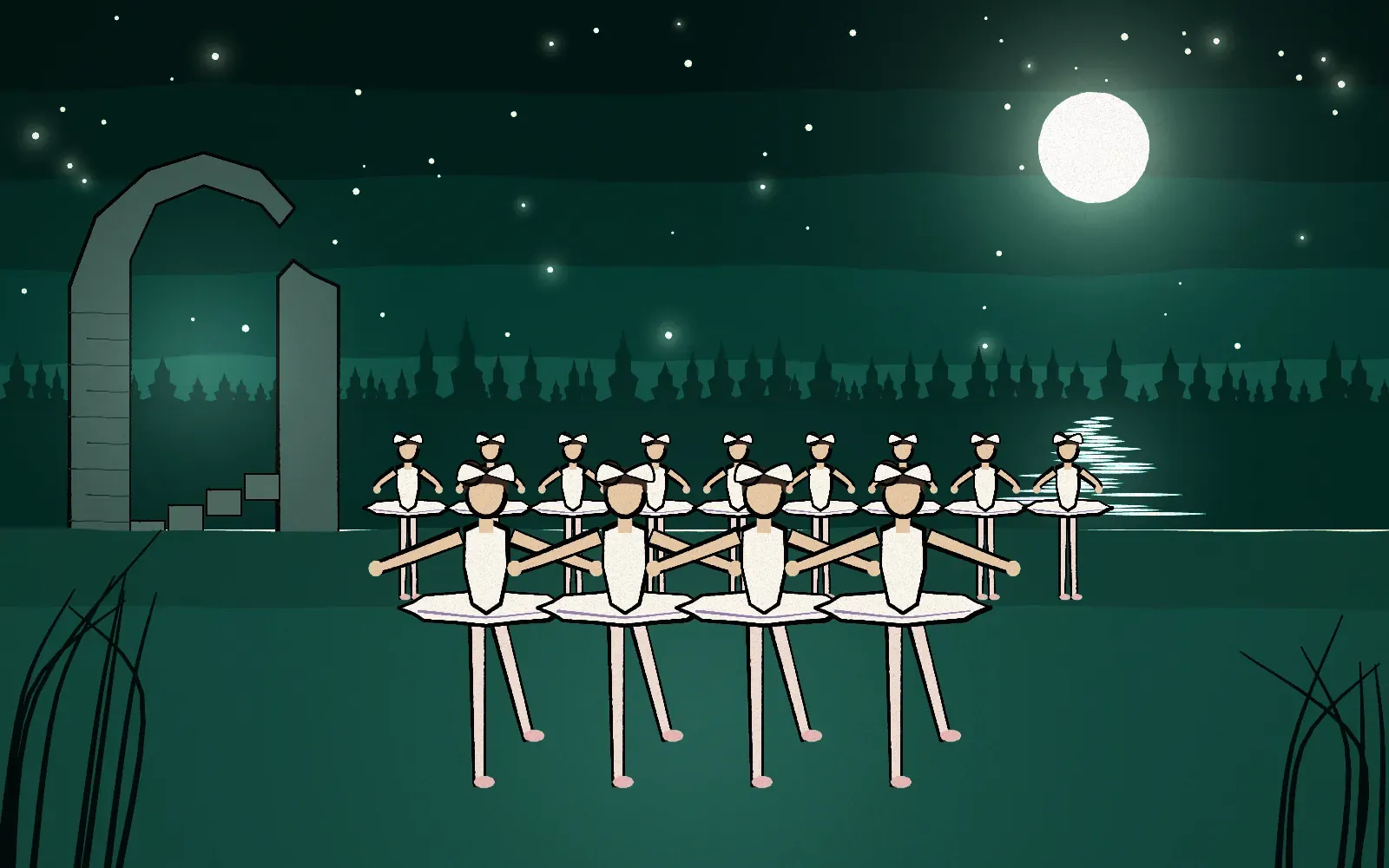
The dances of the swans
The swan girls run out of the trees and crowd round Odette, afraid of the hunter. She tells them he means no harm, and Siegfried throws his gun away.
The swans dance. Four of them link arms and dance in quick, tiny steps, their heads turning together: the Dance of the Little Swans, one of the best-known dances in ballet. Siegfried and Odette dance slowly together, and he tells her he loves her.
She reminds him of tomorrow's ball, where he has to choose a bride. He swears he will choose no one but her, and she promises to come. As day breaks, the girls go back into the ruins and swim out onto the lake as swans.
Act III
The ball at the castle
The castle ballroom fills with guests. Six young princesses have come with their parents, and each one dances for Siegfried, hoping to be chosen. He is polite to all of them and chooses none: he is thinking of Odette. His mother is annoyed and sends Wolfgang to talk sense into him.
Trumpets sound again. A stranger, Baron von Rothbart, comes in with his daughter, Odile, and she looks exactly like Odette. Siegfried asks Benno whether he sees it too. Benno sees no likeness at all. The prince hurries to greet her, and the ball starts again with dances from Hungary, Spain, Naples and Poland.
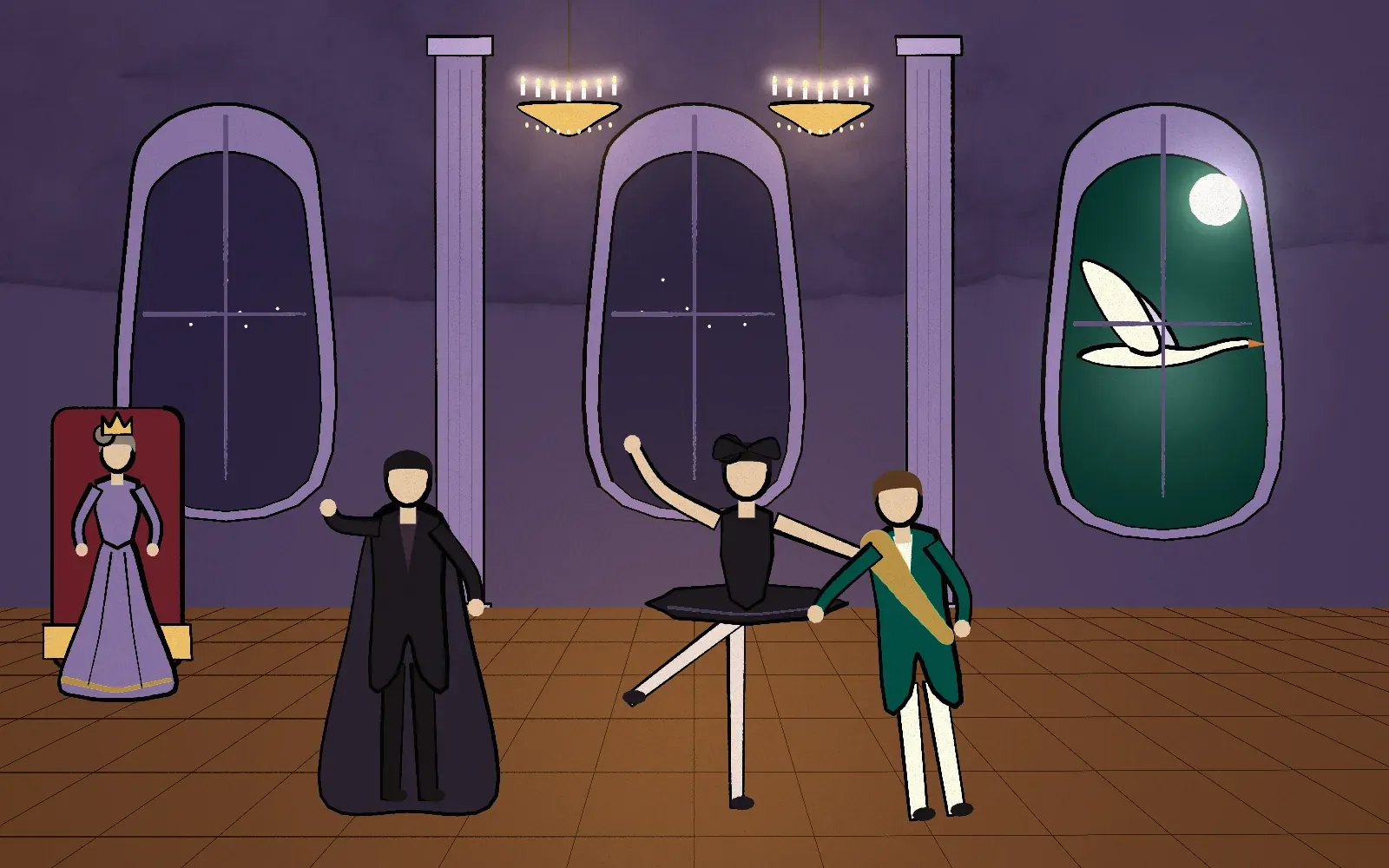
The broken promise
Siegfried dances with Odile and cannot take his eyes off her. His mother is delighted. He announces that he will marry Odile and kisses her hand, and Rothbart joins their hands together.
At once the room goes dark and an owl cries. Rothbart shows what he really is: a demon. At the window a white swan beats her wings: Odette has seen everything. Odile laughs. Siegfried understands that he has been tricked into breaking his promise. He throws her hand away and runs out of the castle.
Act IV
Back at the lake
Night has come again, and by the lake the swan girls are girls once more. They wait for Odette and wonder where she has gone; each hopes she will bring good news from the castle. To pass the time, the young swans dance.
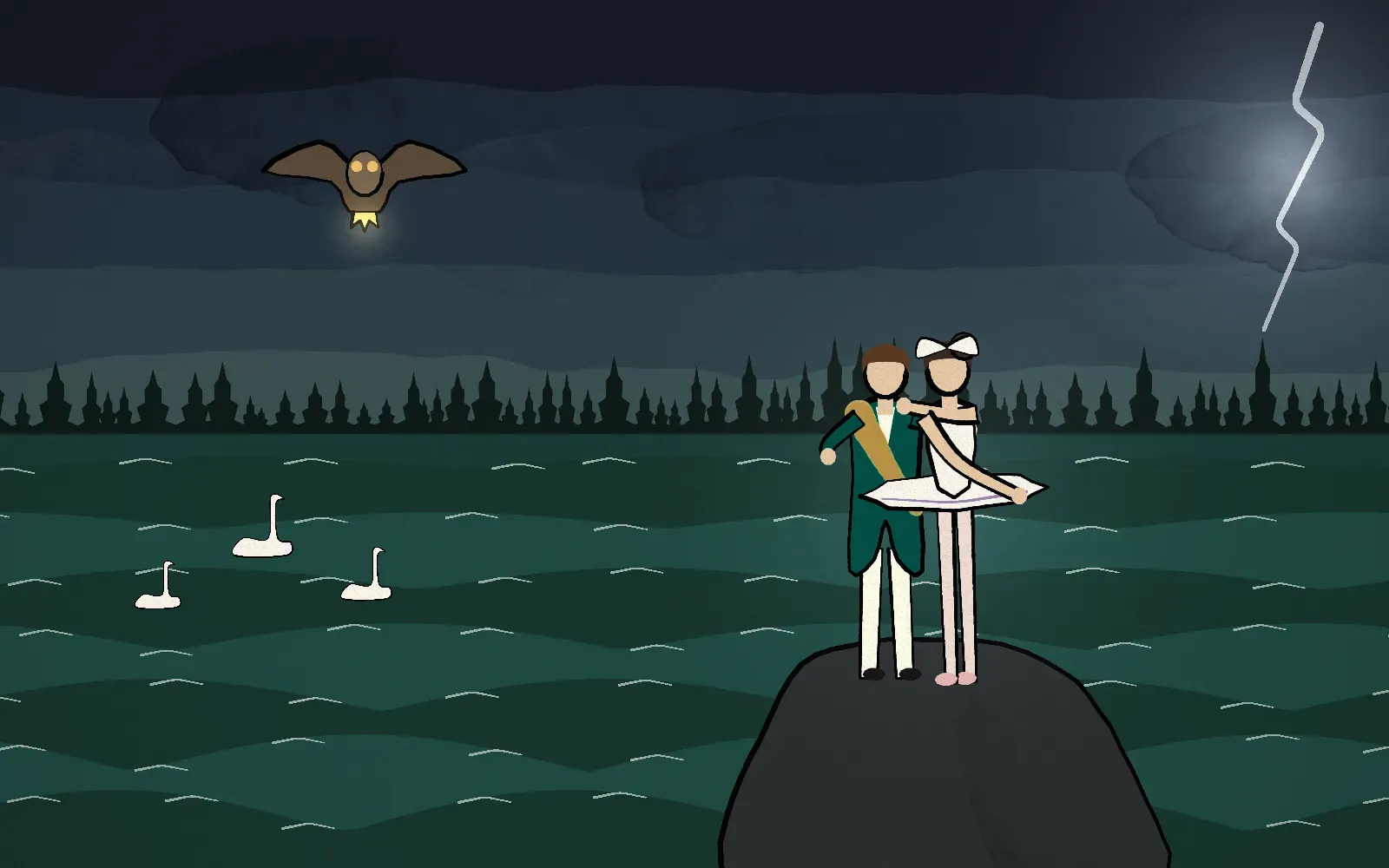
Odette runs in, in tears. The prince has broken his promise, she tells them, and there is no hope left. Her friends beg her to hide in the ruins before he comes, but she wants to see him one last time. Over the mountains a storm is gathering.
The storm
Siegfried runs in through the wind and rain and begs Odette to forgive him. She cannot. She runs toward the ruins, and he catches her. He will not let her go: he pulls the crown from her head and throws it into the lake.
An owl swoops down and carries the crown away in its claws. Without it Odette has no protection, and she dies in Siegfried's arms. The lake rises over its banks and closes over them both. When the water is calm again, swans are gliding across it.
That is how Tchaikovsky's 1877 ballet ends. Most productions since 1895 end differently: see how the versions differ, below.
How the versions differ
- 1877, Moscow, Tchaikovsky's original: Odette's enemy is her stepmother, a witch who takes the shape of an owl. Rothbart and Odile appear only at the ball. The lovers drown when the lake floods.
- 1895, St Petersburg, the Petipa–Ivanov revival, two years after Tchaikovsky's death: Modest Tchaikovsky rewrote the story so that Rothbart is the sorcerer who cast the spell, and Riccardo Drigo cut and reordered the score. Odette throws herself into the lake, Siegfried follows her, and in a last scene the two are seen together. Most companies dance a version of this one.
- Soviet productions gave it a happy ending: in Konstantin Sergeyev's 1950 staging at the Kirov, Siegfried fights Rothbart and wins, and Odette becomes human again. Yury Grigorovich's Bolshoi production also ended happily until he revised it in 2001 and made the ending tragic.
- Since 1895 the same ballerina has usually danced both Odette and Odile.
About this work
Swan Lake was Tchaikovsky's first ballet, written in 1875–76 for the Bolshoi Theatre in Moscow. The first production was not a success, and the ballet became famous only after the 1895 revival in St Petersburg.
Everything about Swan Lake: how it was written, letters, recordings
Sources
Retold for this site from the synopsis on Tchaikovsky Research and from Wikipedia.