Yevgeny Onegin: scene by scene
A shy country girl writes a love letter to a bored young man from the city, and he turns her down. Years later they meet again, and now it is he who is in love. Tchaikovsky told Pushkin's story in seven scenes.
Who's who
- Tatyana Larina
- A quiet girl who loves books
- Olga
- Her younger sister, cheerful and quick
- Madame Larina
- Their mother, a widow who runs the estate
- Filippyevna
- Tatyana's old nurse
- Vladimir Lensky
- A young poet, engaged to Olga
- Yevgeny Onegin
- His friend, a young man from St Petersburg
- Prince Gremin
- A general; Tatyana's husband in Act III
- Monsieur Triquet
- A Frenchman who writes verses for Tatyana
- Zaretsky
- Lensky's second at the duel
Act I
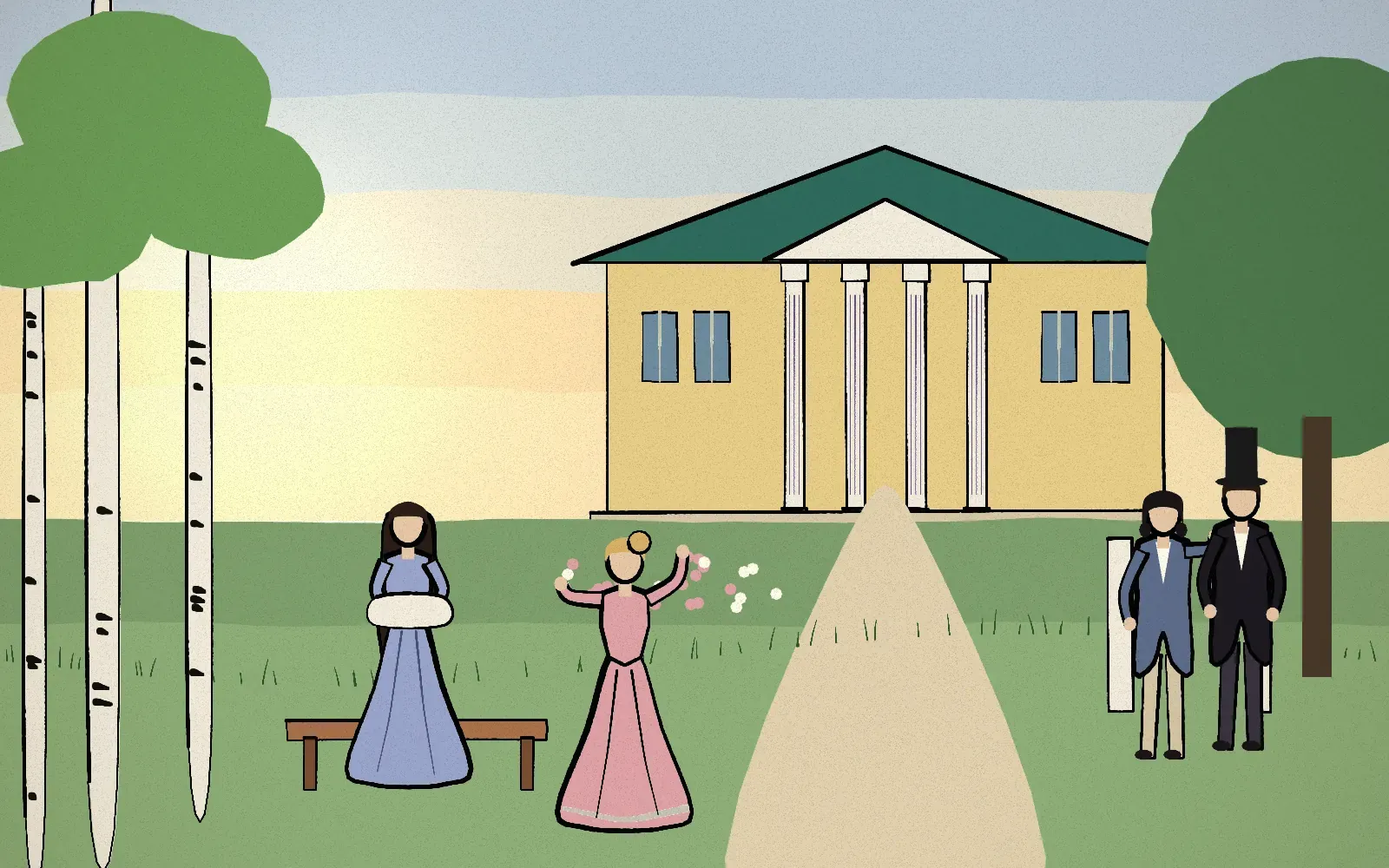
The Larins' garden
A summer evening on a country estate. Madame Larina and the old nurse, Filippyevna, are making jam and remembering when they were young. From the house come the voices of her daughters, singing: Tatyana, who lives in her books, and Olga, who laughs at everything. Farm workers bring in the last sheaf of the harvest, singing and dancing.
A neighbour arrives: the young poet Lensky, who is in love with Olga. He has brought a friend from St Petersburg, Yevgeny Onegin, clever, rich and bored with everything. While Lensky tells Olga how much he loves her, Onegin walks with Tatyana and makes polite conversation. By the end of the walk, Tatyana is in love with him.
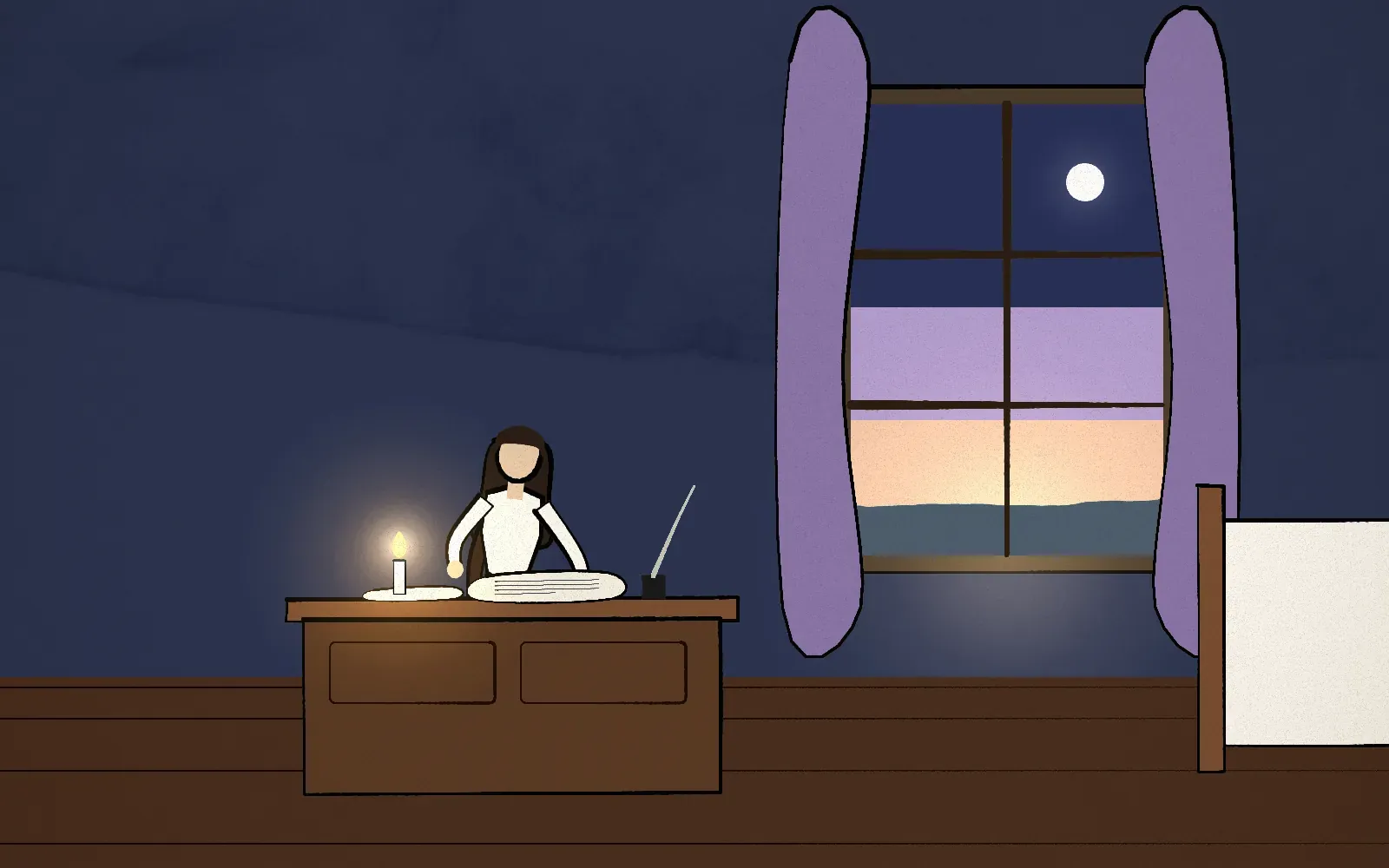
The letter
That night Tatyana cannot sleep. She asks her nurse to tell her about the old days: was Filippyevna ever in love? The nurse was married at thirteen to a boy she hardly knew. Tatyana is not really listening. She says she is in love, and sends the old woman away.
Alone, she writes to Onegin. She tells him everything: that she has waited all her life for him, that she knew him the moment she saw him, that she puts her fate in his hands. She writes all night. At sunrise a shepherd's pipe sounds outside, and she gives the letter to the nurse to send with her grandson.
Onegin's answer
In another part of the garden, girls are picking berries and singing. Tatyana runs in, frightened: Onegin has come.
He is kind and calm. He thanks her for being honest with him, but, he says, he is not made for marriage: he would soon grow tired of her. He can love her only as a brother. And he gives her some advice: she should learn to control her feelings, because not every man would understand her as he does. Tatyana listens and says nothing.
Act II
The name-day ball
In January the Larins give a ball for Tatyana's name day. As they dance the waltz, the neighbours gossip about Onegin: rude, odd, no manners at all. Onegin hears them, and he is cross with Lensky for bringing him. To get his own back, he dances with Olga, again and again, and Olga, flattered, lets him.
A Frenchman, Monsieur Triquet, sings verses he has written for Tatyana. In the mazurka Lensky's jealousy boils over. In front of everyone, he challenges his friend to a duel. The guests are horrified.
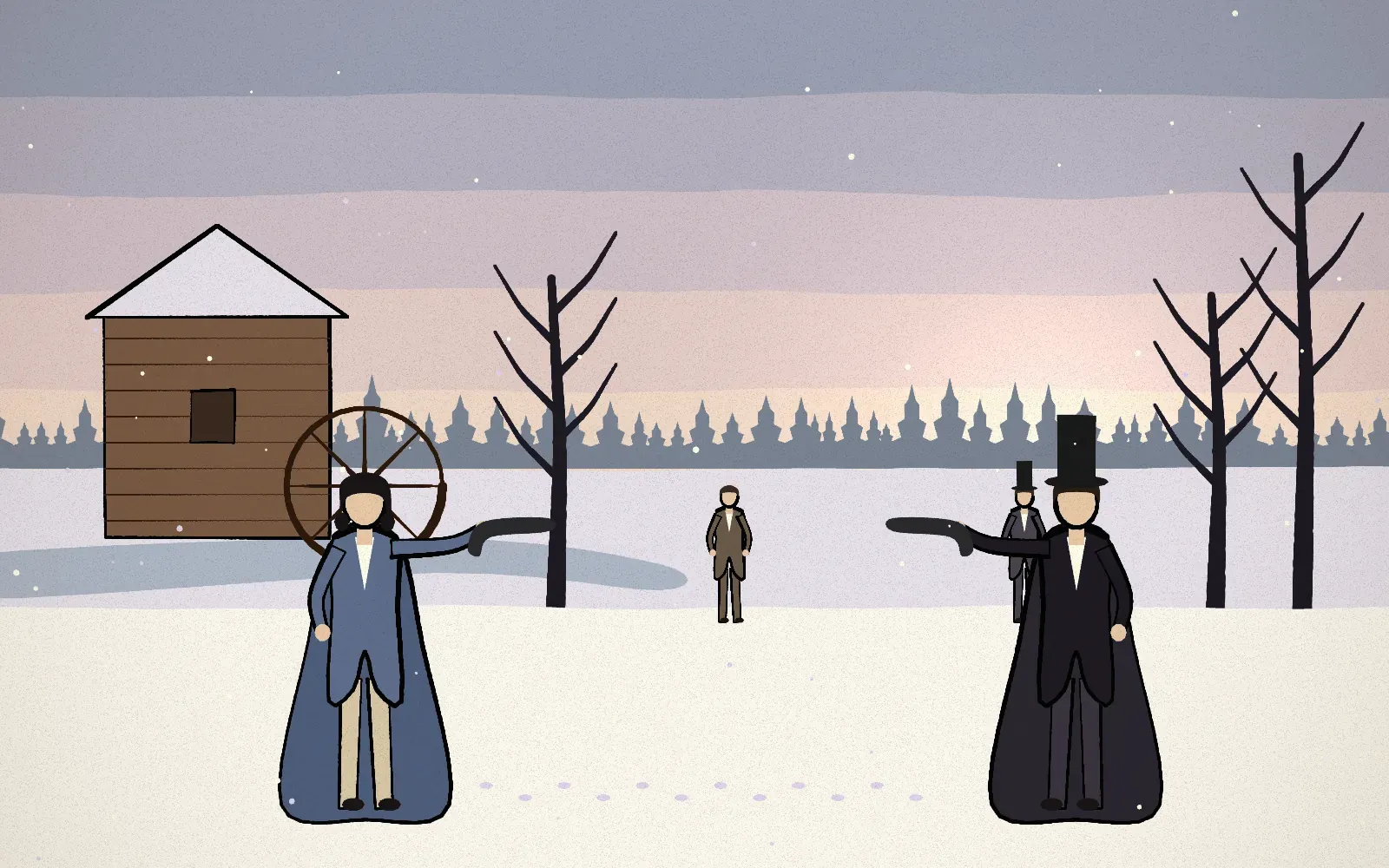
The duel
Early on a winter morning, by a mill on a stream. The trees are bare and the snow is falling. Lensky waits with his second, Zaretsky. Onegin is late, and Lensky thinks about his life and about Olga, and wonders whether he will die today.
Onegin arrives with his servant as his second. Each of the two friends wonders whether they could laugh it off and shake hands, but neither will be the first to say so. They take their places. Onegin fires first, and Lensky falls dead.
Act III
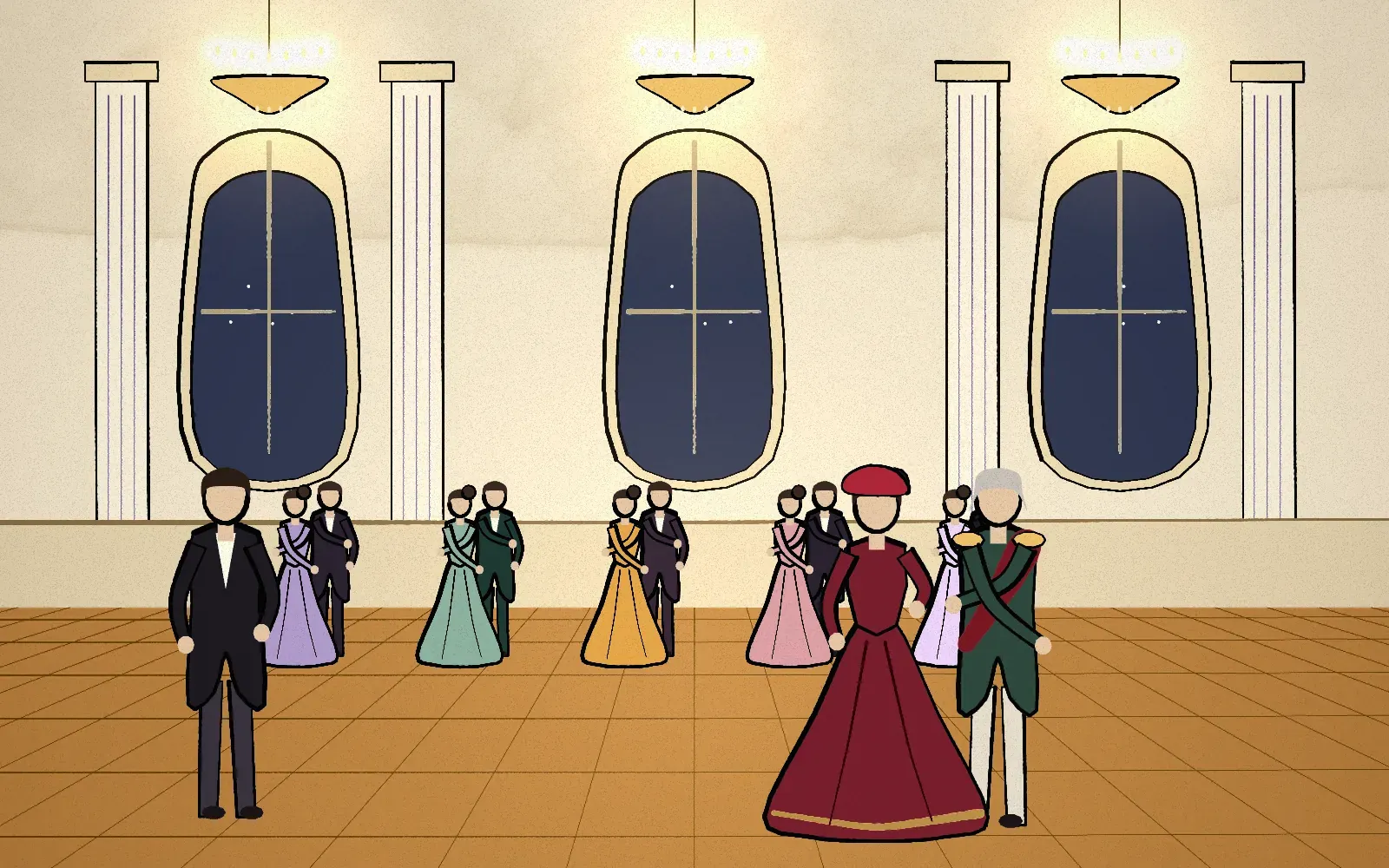
A ball in St Petersburg
Some years later. Onegin has spent them travelling, and he has come back to St Petersburg tired of everything. At a grand ball he notices a lady everyone admires, calm and elegant, in a crimson beret. It is Tatyana.
She is married now to Prince Gremin, an older general who knows Onegin of old. Gremin tells him what she means to him: love comes to people at any age, and she has brought light into his life. He introduces them. Tatyana greets Onegin politely and soon leaves. Onegin realises that he loves her.
The last meeting
Onegin has written to Tatyana, as she once wrote to him, and comes to see her. She is crying over his letter. She reminds him of the garden and of the lecture he gave her then. Why does he want her now?
He begs her. She admits that she still loves him, and for a moment they both think of the life they might have had. But she is married, and she will stay faithful to her husband. She says goodbye and leaves. Onegin is left alone: “Disgrace! Misery! How pitiful my fate!”
How the versions differ
- Tchaikovsky called the work “lyrical scenes”, not an opera. He chose seven moments from Pushkin's novel in verse and left out the narrator, whose voice carries much of the book.
- Pushkin never names Tatyana's husband; the opera calls him Prince Gremin. In the novel Onegin's duel is followed by years of wandering that the opera passes over in a single line.
- Tchaikovsky wanted young singers rather than stars, so the first performance in 1879 was given by students of the Moscow Conservatory. The Bolshoi Theatre staged it in 1881.
About this work
Tchaikovsky wrote Yevgeny Onegin in 1877–78 and drew up the libretto himself from Pushkin's novel in verse, keeping much of Pushkin's own poetry.
Everything about Yevgeny Onegin: how it was written, letters, recordings
Sources
Retold for this site from the synopsis on Tchaikovsky Research and from Wikipedia.