The Nutcracker: scene by scene
On Christmas Eve a girl is given a nutcracker. At midnight the toys come alive, the nutcracker becomes a prince, and he takes her to the Kingdom of Sweets. This is the story as it was danced in 1892, with notes on the names and endings of later productions.
Who's who
- Clara
- A girl; Marie or Masha in some productions
- Fritz
- Her younger brother
- Mr and Mrs Silberhaus
- Their parents; the Stahlbaums in many productions
- Drosselmeyer
- Clara's godfather, a councillor who makes clockwork toys
- The Nutcracker
- A wooden soldier who cracks nuts, and turns into a prince
- The Mouse King
- Leader of the mice
- The Sugar Plum Fairy
- Rules the Kingdom of Sweets
Act I
Christmas Eve
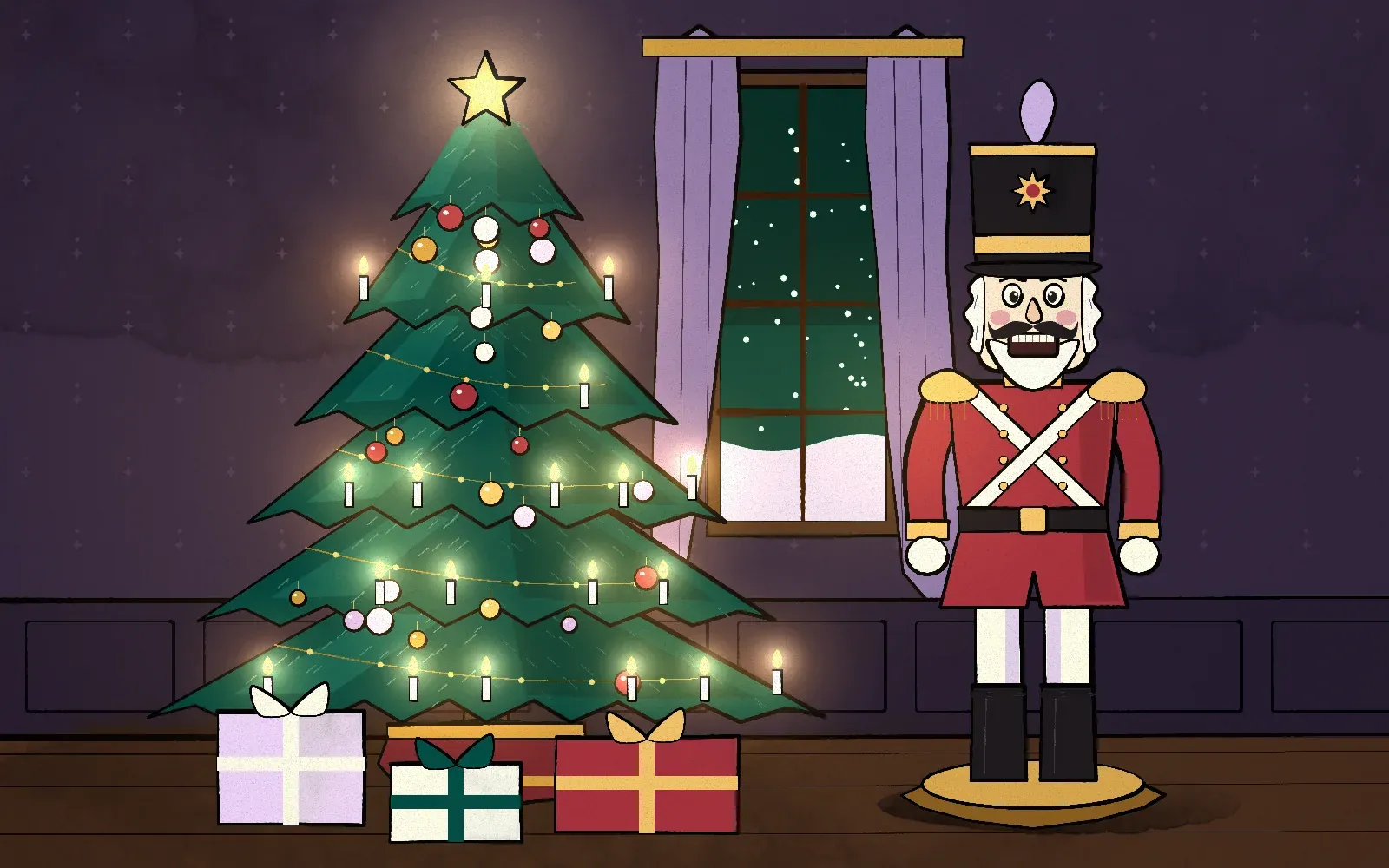
It is Christmas Eve at the Silberhaus house. The parents are decorating the tree while the children wait outside the door. The clock strikes nine, and the owl on top of it flaps its wings at every stroke.
The doors open, and Clara, her brother Fritz and their friends rush in to see the tree, lit with candles. They march round the room and then gallop in a quick dance. The grown-ups arrive in their best clothes, and everyone dances.
Drosselmeyer's presents
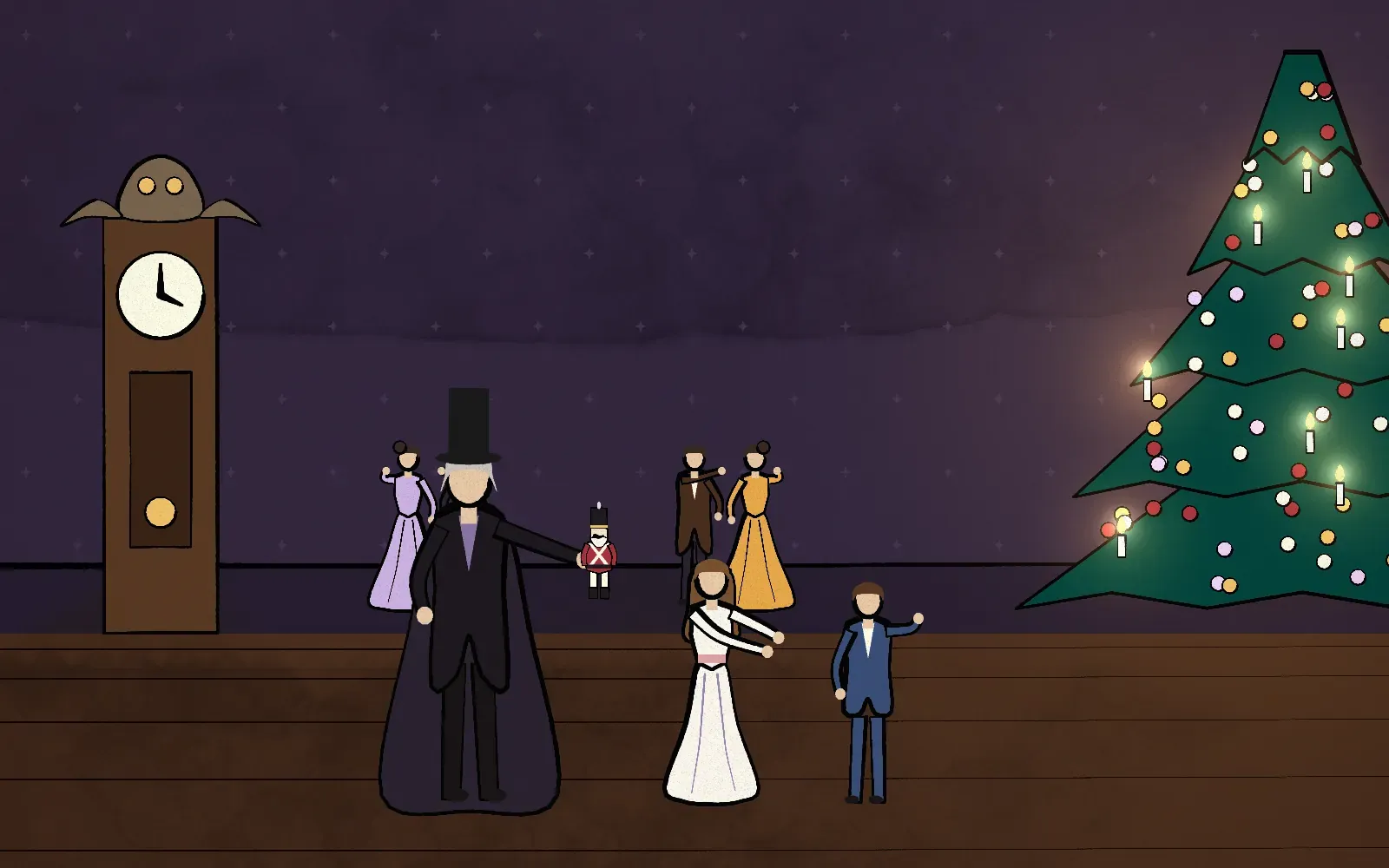
The party stops when Drosselmeyer arrives. He is Clara's godfather, an odd old man the children are a little afraid of, until they see that he has brought presents. Out of a huge cabbage and a pie come clockwork dolls that dance by themselves.
Clara's father has the expensive toys put away, and Clara cries. To cheer her up, Drosselmeyer gives her a nutcracker shaped like a soldier, and she loves it at once. Fritz grabs it and forces the biggest nut he can find into its jaws, and the nutcracker breaks. Clara picks it up, wraps it up and sings it to sleep, while the boys tease her. The party ends with the old Grandfather Dance.
Midnight and the battle
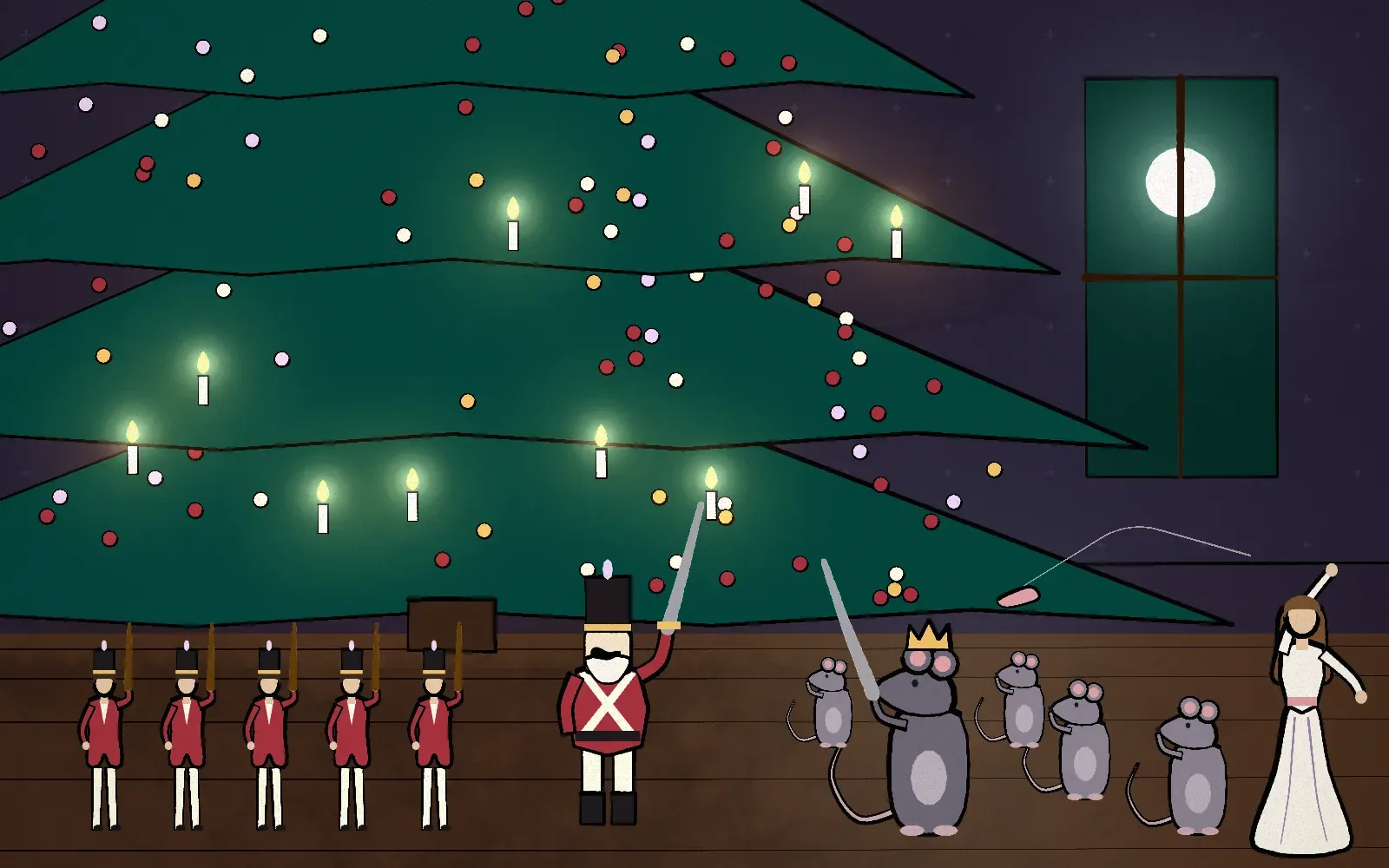
When the house is asleep, Clara creeps downstairs to see her nutcracker. It seems to glow. The clock strikes midnight, and mice come out of every corner. Clara wants to run, but her legs will not move. Then the Christmas tree begins to grow, up and up, until it towers over the room.
The toys come alive and the gingerbread soldiers line up. The battle begins, and the mice are winning. The Nutcracker calls up his old guard and fights the Mouse King himself. Just when he seems lost, Clara pulls off her slipper and throws it at the Mouse King. He falls, and the mice run away. The Nutcracker turns into a young prince.
The snowy forest
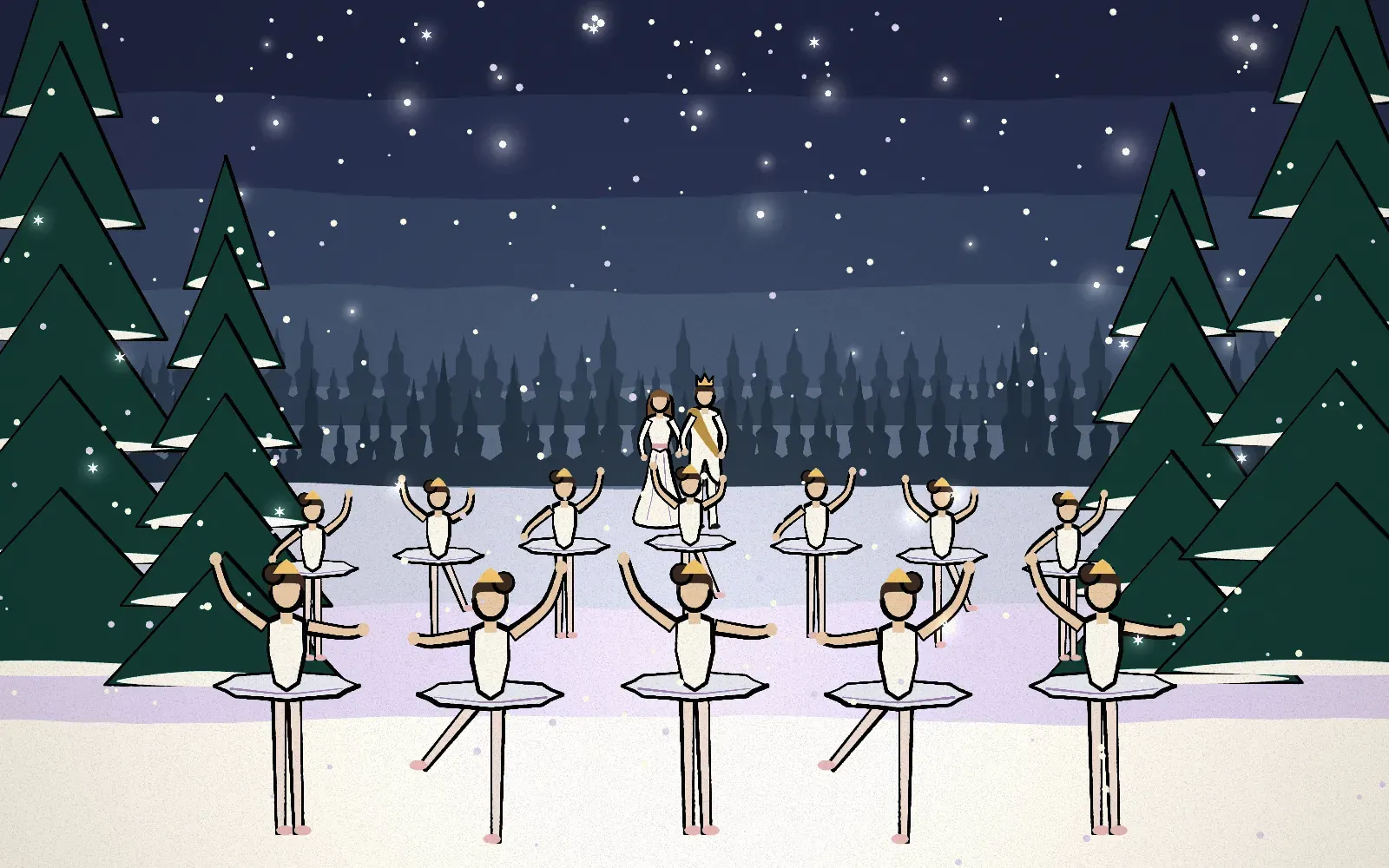
The prince invites Clara to his kingdom. The room turns into a pine forest in winter; the clouds clear, and the sky fills with stars. After the noise of the battle everything is white and still. Gnomes with torches light the way between the trees.
Snow begins to fall, and the snowflakes dance, whirling faster and faster around Clara and the prince. Somewhere behind the orchestra a choir of children sings without words. Then the two go on through the snow toward the Kingdom of Sweets.
Act II
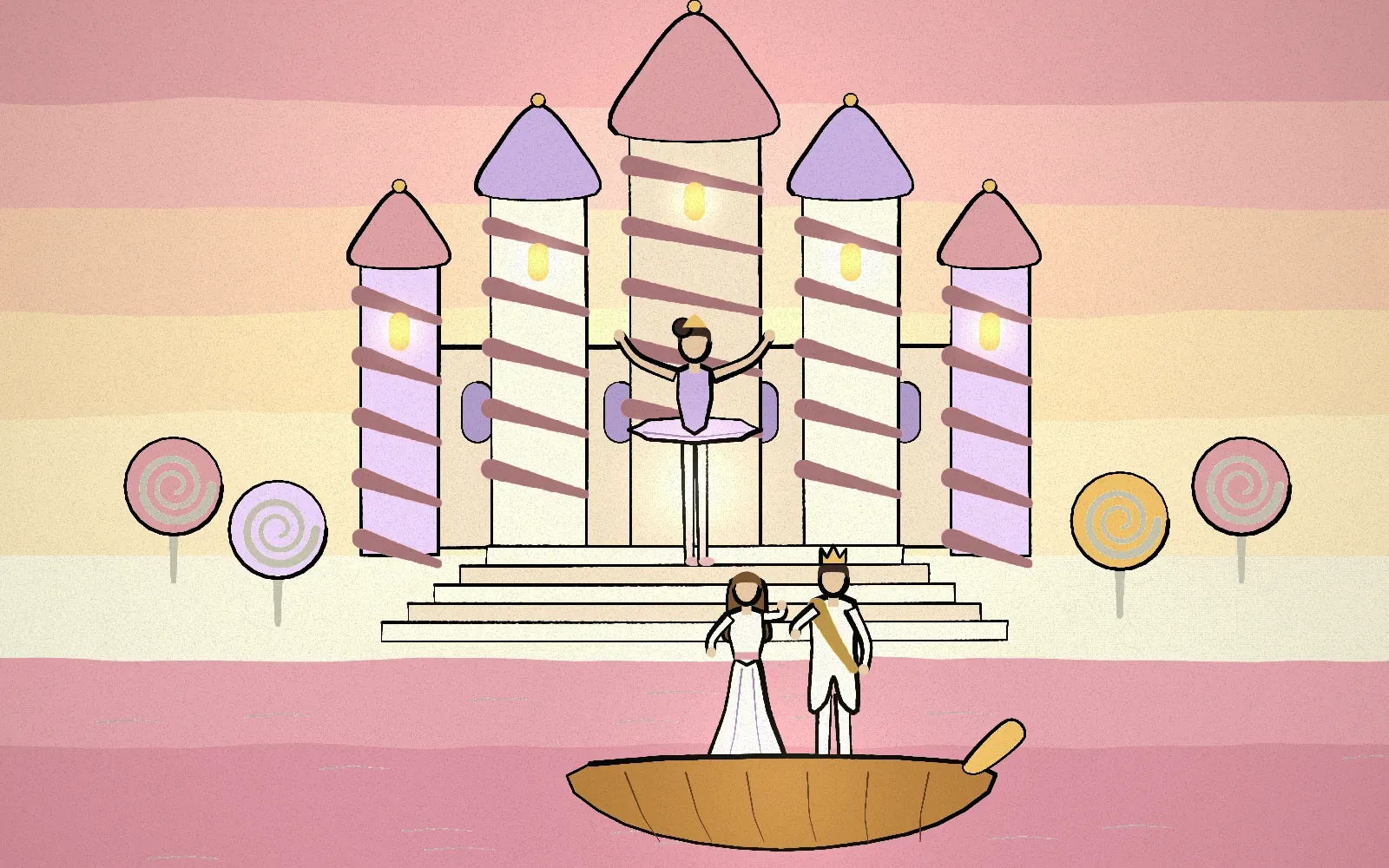
The Kingdom of Sweets
The palace of the Kingdom of Sweets looks as if it were made of sugar, marzipan and cream. Inside, the Sugar Plum Fairy and her court wait for their guests. Clara and the prince arrive by boat along a river of rose water.
The prince's sisters run to greet him, and he tells everyone how Clara saved his life with her slipper. The whole court thanks her. A feast is laid out in the great hall, and the dancing begins.
A dance for every sweet
Clara and the prince take the places of honour at the feast, and the court puts on a show for them. Each sweet has its own dance. Chocolate is a Spanish dance with castanets. Coffee is a slow, swaying Arabian dance. Tea is a quick Chinese dance, with a piccolo darting high above. Then comes the trepak, a Russian dance played at full speed.
Shepherds play on little reed pipes, three flutes together. Last comes Mother Gigogne, an old woman with a skirt so wide that a crowd of children and clowns tumble out from under it.
The Waltz of the Flowers and the Sugar Plum Fairy
The Sugar Plum Fairy's attendants dance the Waltz of the Flowers, with a harp at the start and the horns leading the tune. Then the Sugar Plum Fairy dances with her cavalier. Her solo is played on the celesta, a small keyboard that sounds like bells, which Tchaikovsky had heard in Paris and asked his publisher to keep quiet about, so that no other Russian composer would use it first.
The whole court joins in a last waltz, and the curtain comes down on a tribute to Clara. In 1892 the final picture was a great beehive with bees flying round it. Many later productions add one more scene: Clara wakes up under the Christmas tree with her nutcracker in her arms.
How the versions differ
- The heroine's name changes from version to version. In E. T. A. Hoffmann's tale (1816) she is Marie Stahlbaum, and Clara is the name of her doll. Alexandre Dumas's French retelling calls her Marie Silberhaus. The 1892 ballet calls her Clara. Many Western productions use Marie or Clara Stahlbaum; George Balanchine's uses Marie. In Russian productions she is often Masha.
- In 1892 Clara was danced by a girl from the ballet school, and the grand duet in Act II belonged to the Sugar Plum Fairy and her cavalier. Many later productions give it to a grown-up heroine and her prince.
- The 1892 ballet ends in the Kingdom of Sweets. The ending where Clara wakes up and it was all a dream was added in later productions.
About this work
The Nutcracker was Tchaikovsky's last ballet, written in 1891–92 to a scenario by Marius Petipa after Dumas's version of Hoffmann's tale. It was first performed at the Mariinsky Theatre in St Petersburg in December 1892, on the same evening as his opera Iolanta.
Everything about The Nutcracker: how it was written, letters, recordings
Sources
Retold for this site from the synopsis on Tchaikovsky Research and from Wikipedia.