The Queen of Spades: scene by scene
A poor young officer hears that an old countess knows three cards that always win. He wants the secret more than anything, even more than the girl he loves. This is the story of the opera, from Pushkin's tale.
Who's who
- Herman
- A young officer, poor and proud
- Liza
- The Countess's granddaughter
- The Countess
- An old lady with a secret, once a famous beauty in Paris
- Prince Yeletsky
- Liza's fiancé
- Count Tomsky
- Herman's friend, who tells the story of the three cards
- Polina
- Liza's friend
- Chekalinsky and Surin
- Officers who gamble
Act I
The Summer Garden
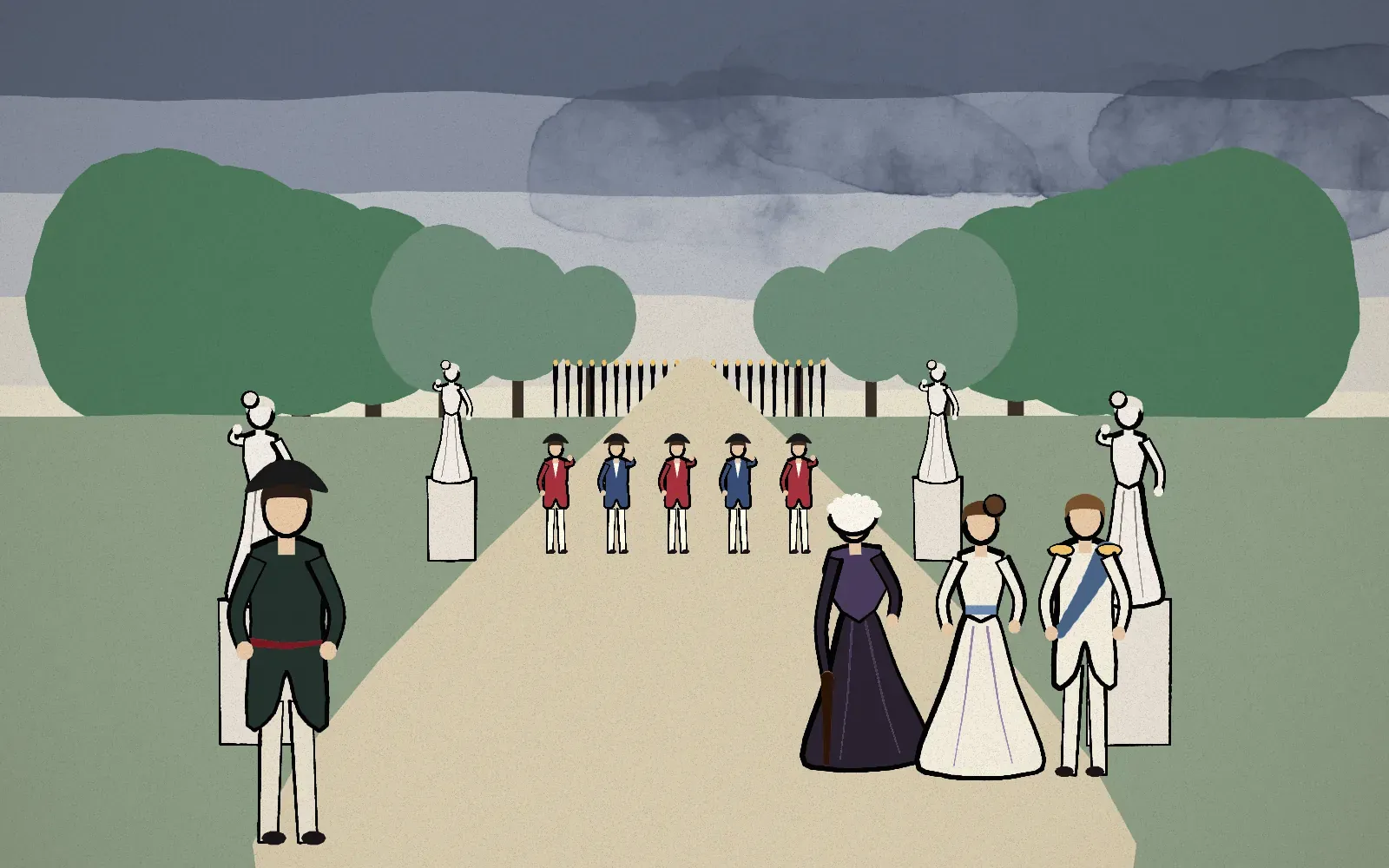
Spring in St Petersburg, near the end of the 18th century. In the Summer Garden children play at soldiers while their nurses watch. Two officers talk about their friend Herman: he sits up all night watching the card games, but never plays.
Herman tells his friend Tomsky why he is so gloomy: he is in love with a girl whose name he does not know. Prince Yeletsky passes by, happy, because he has just become engaged. His fiancée walks past with her grandmother, an old Countess, and Herman sees that she is the girl he loves: Liza. The Countess stares at Herman, and he stares back.
The story of the three cards
When they have gone, Tomsky tells the Countess's story. Sixty years ago she was a famous beauty in Paris. One night at Versailles she lost everything at cards. A count offered her the secret of three cards that always win, in return for one meeting alone with her. She learned the secret and won everything back.
She told it to two men: her husband, and a handsome young man. But a ghost warned her that she would die at the hands of a third, who would come to force the secret out of her. The officers laugh. A storm breaks over the garden. Herman stays alone in the rain and swears that Liza will be his.
Liza's room
That evening Liza's friends sing to her. Her friend Polina sings a sad song about a girl who died young, then tries to cheer everyone up with a dance. When they have gone, Liza is alone. She does not know why she is crying: Yeletsky is good and kind, and she ought to be happy.
She opens the balcony doors to the night, and Herman is standing there. He says he will kill himself if she sends him away. Footsteps: the Countess, woken by the noise, comes in, and Herman hides. When the old woman has gone, Liza cannot hold out any longer. She tells Herman she loves him.
Act II
The masked ball
A masked ball in a grand house. Yeletsky sees that Liza is unhappy, and he tells her that he loves her and will ask for nothing she does not want to give. Two of Herman's friends, in masks, tease him: “Are you the third man?”
The guests watch a little play with music in the style of Mozart's time: a shepherdess who must choose between a rich suitor and the poor shepherd she loves. Liza slips Herman a key. Her room, she says, is through her grandmother's bedroom; he should come tonight. Herman takes it as a sign: tonight he will learn the three cards.
The Countess's bedroom
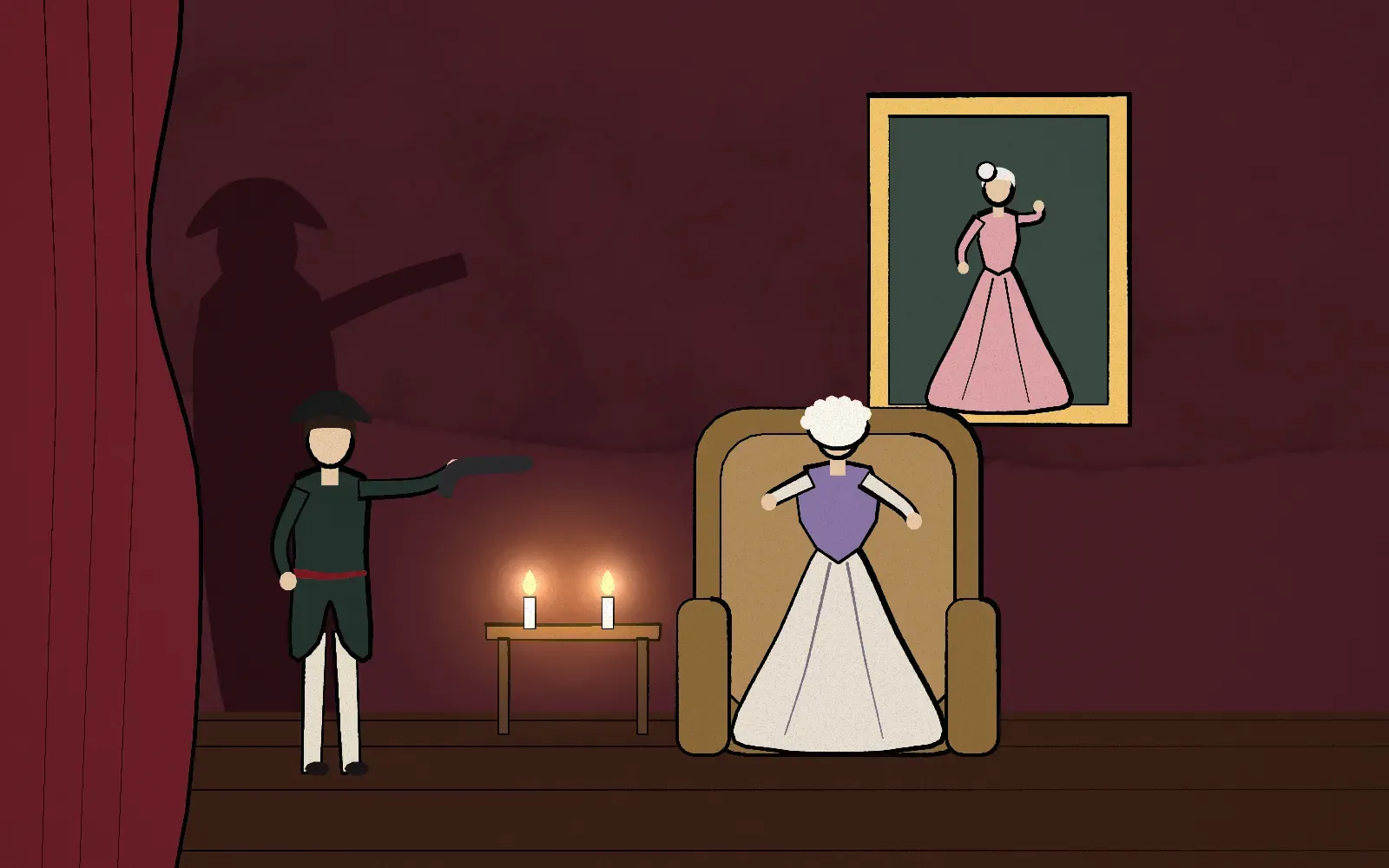
Herman slips into the Countess's bedroom and hides. The old woman comes home from the ball, grumbling that nobody knows how to behave any more, not like in her day in Paris. In her armchair she sings an old French song from those years, softer and softer, until she dozes off.
Herman steps out. He begs her to tell him the three cards. She stares at him and says nothing. He takes out a pistol to frighten her, and she falls back dead. Liza runs in and sees what has happened. So he came for the secret, not for her. She sends him away.
Act III
The ghost
Herman's room in the barracks, at night, the wind howling. He reads a letter from Liza: she forgives him and asks him to meet her at midnight by the Winter Canal. He keeps hearing the singing from the Countess's funeral.
There is a knock at the window. The door opens, and the Countess's ghost comes in, all in white. She has come against her will, she says, to tell him the cards: three, seven, ace. He must marry Liza and save her. Then she is gone. Herman repeats the words to himself: three, seven, ace.
The Winter Canal
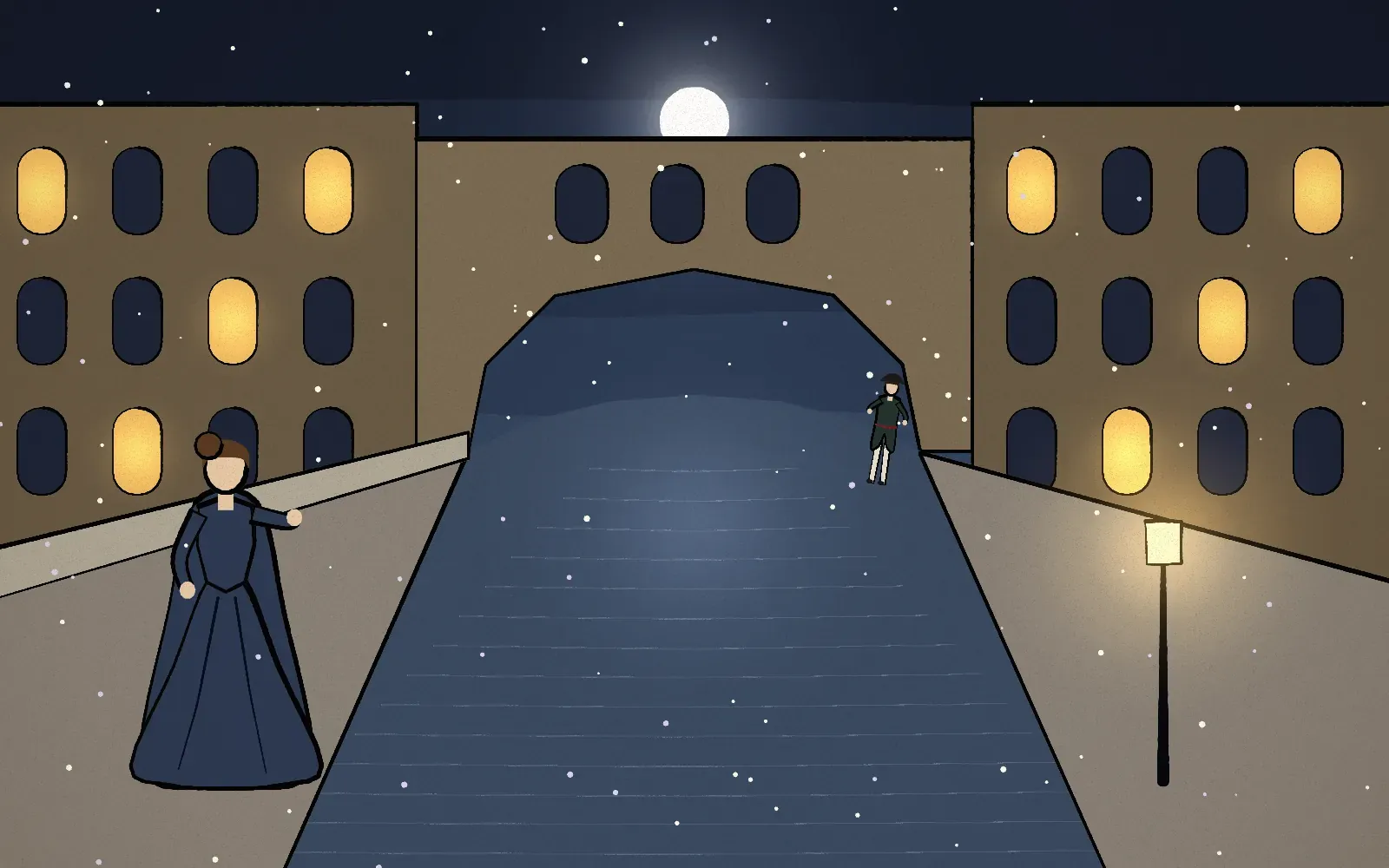
Near midnight Liza waits by the canal, under the arch. If Herman does not come, it will mean that he really is to blame for the Countess's death. The clock strikes twelve. He comes, and for a moment they are happy and talk of running away together.
But Herman can think only of the three cards and the gambling house. He hardly seems to know her any more. He pushes her away and runs off. Liza understands that he is lost to her, and throws herself into the icy water.
The gambling house
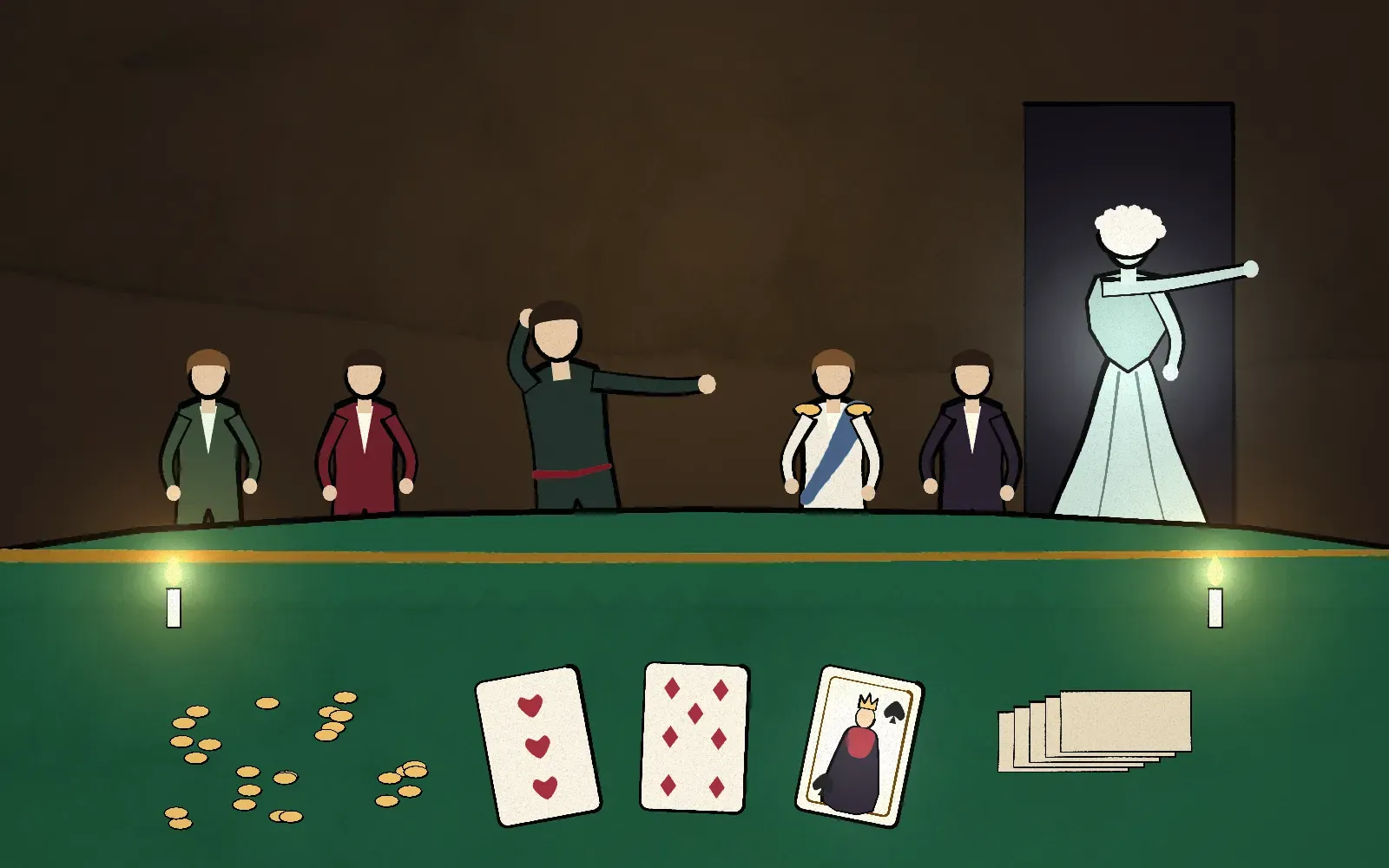
The officers are playing cards and singing. Yeletsky, who has lost Liza, has come to gamble too. Herman arrives and bets a fortune on the three. He wins. He doubles everything on the seven, and wins again. Glass in hand, he sings that life is only a game: today's winner is tomorrow's loser.
He wants to bet once more, and Yeletsky takes him on. Herman calls the ace, but the card he turns up is the queen of spades. The ghost of the Countess appears, laughing. Herman stabs himself, and as he dies he asks Yeletsky, and Liza, to forgive him.
How the versions differ
- Pushkin's story (1834) is short, cool and ironic. His Hermann, an army engineer, never loves Liza: he courts her only to reach the Countess. After the queen of spades he goes mad and ends in a hospital, muttering “three, seven, ace… three, seven, queen”. Liza marries a pleasant young man.
- Modest and Pyotr Tchaikovsky moved the story back to the reign of Catherine the Great, made Liza the Countess's granddaughter and Yeletsky's fiancée, made Herman truly in love with her, and ended it with two deaths.
- In Pushkin, Germann (Германн, with two n's) is a surname. The opera spells it Герман, a first name; in English it is usually Herman, as here.
About this work
Tchaikovsky wrote The Queen of Spades in Florence in early 1890, in about six weeks, to a libretto by his brother Modest after Pushkin's story. It was first performed at the Mariinsky Theatre in St Petersburg in December 1890.
Everything about The Queen of Spades: how it was written, letters, recordings
Sources
Retold for this site from the synopsis on Tchaikovsky Research and from Wikipedia.